6 most famous paintings in Scotland and where to see them
Some of the most famous paintings you can view in Scotland.
Christ of St John of the Cross
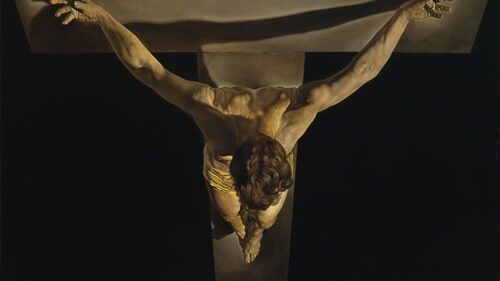
Positioned on a cross which hovers over a watery landscape, Salvador Dali’s 'Christ of Saint John of the Cross' is radically different from other crucifixions. Later explaining the painting, Dali recalled that he was so impressed by a drawing of the crucifixion made by the sixteenth-century Carmelite Friar Saint John of the Cross, that it inspired a dream. Dali saw Christ in a similar position to the drawing by Saint John, pictured from above. Christ was modelled by Hollywood stuntman Russell Saunders. A body double in more than 100 movies, including for Hollywood actors such as Gene Kelly, Saunders didn’t know who Dali was at the time, but agreed to pose for $35 a day, suspended from the ceiling. The figures in the fishing boats are based on two existing artworks, by Louis Le Nain and Diego Velázquez. Head to Kelvingrove Art Gallery and Museum to view the painting.
Christ of St John of the Cross by Salvador Dali © CSG CIC Glasgow Museums and Libraries CollectionThe Monarch of the Glen
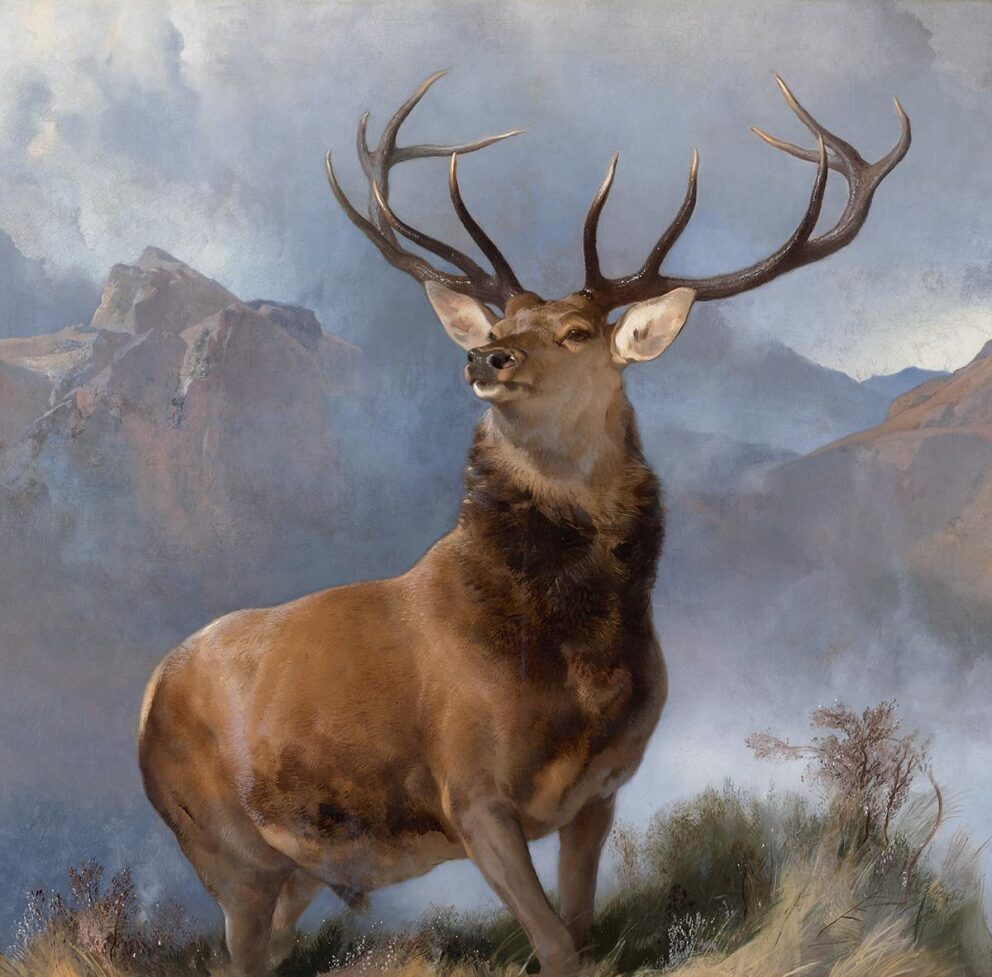
The Monarch of the Glen is one of the most celebrated UK paintings of the 19th century, capturing the grandeur, majesty and wild beauty of the Scottish Highlands. In this work, Landseer portrays a magnificent twelve-point stag, known as a ‘royal’, its impressive antlers reflecting its status. While many of Landseer’s paintings explore the relationship between humans and animals, here he presents a solitary, emblematic creature in a moment of strength and exhilaration. The painting gained widespread popularity during the 19th century through the reproduction of prints, before achieving even greater fame in the 20th century when it was adopted as an advertising image for a variety of products. This widespread commercial use helped transform the painting into an internationally recognised symbol of Scotland.
National Galleries of Scotland collection. Photo, National Galleries of Scotland.Olive Trees
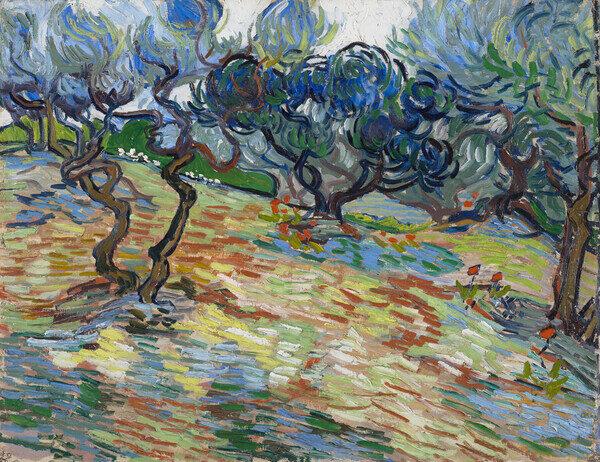
The expressive brushstrokes and vivid, contrasting colours give the painting its remarkable intensity and emotional power. Van Gogh was captivated by the twisted forms and shifting colours of olive trees, while also recognising their religious significance and connection to Christ’s Passion, particularly his time in the Garden of Gethsemane on the Mount of Olives. This work is one of at least fourteen olive tree paintings he created during his stay at the asylum in Saint-Rémy. Its restless energy and dramatic character may also reflect the artist’s own troubled state of mind during this period. Olive Trees can be viewed at the National Gallery of Scotland on the Mound.
National Galleries of Scotland collection. Photo, National Galleries of Scotland.The Red Ballet Skirts
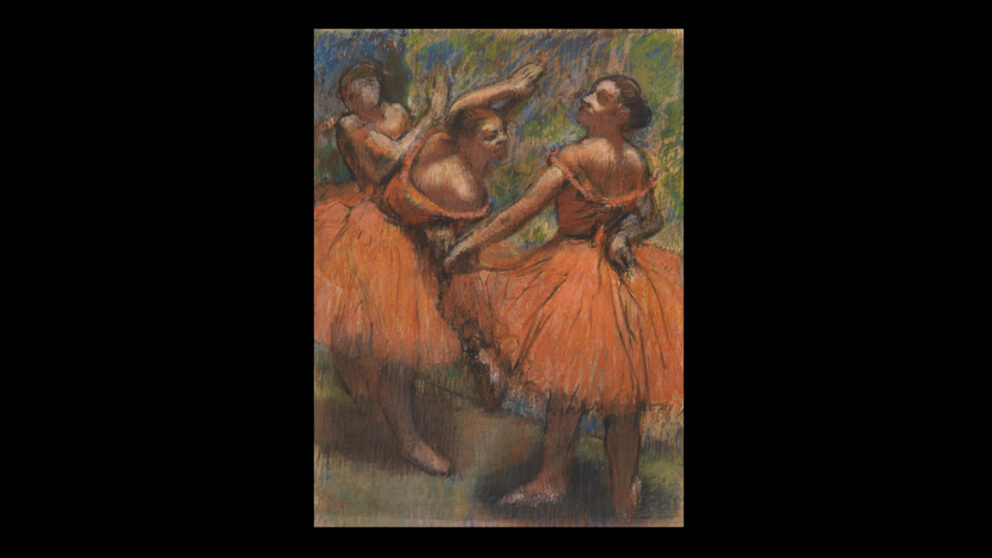
Degas captures ballet dancers resting and stretching in the wings, away from the glamour of the stage. Rather than depicting rehearsed movements, he explores their natural, spontaneous gestures, revealing the physical demands and exhaustion behind the performance. The dancers’ vivid orange-red skirts contrast beautifully with the green background. Degas repeatedly revisited the subject, experimenting with different colours and tones, often leaving works such as The Red Ballet Skirts unfinished. This offers a fascinating insight into his experimental working process and his pursuit of artistic perfection.
Collection: Burrell Collection: Pictures [Oils, Pastels and Watercolours]La Falaise à Fécamp
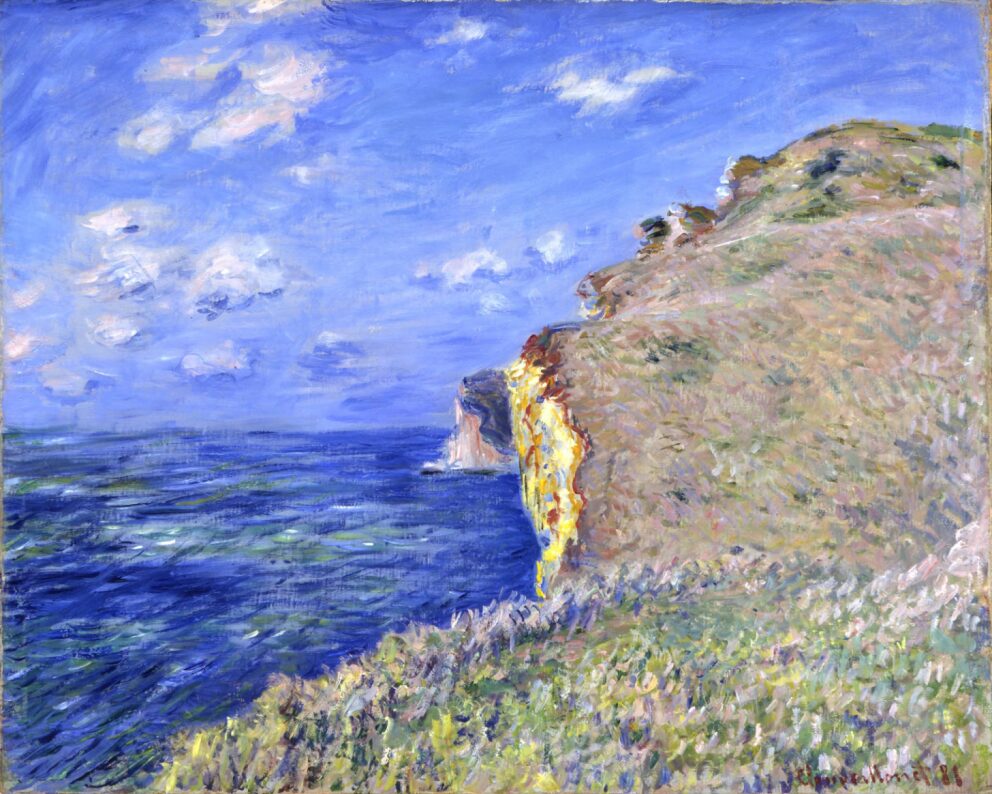
La Falaise à Fécamp is an 1881 Impressionist oil painting by Claude Monet held in the permanent collection of the Aberdeen Art Gallery. The gallery purchased the piece in 1927.
Aberdeen Art GalleryThe Skating Minister
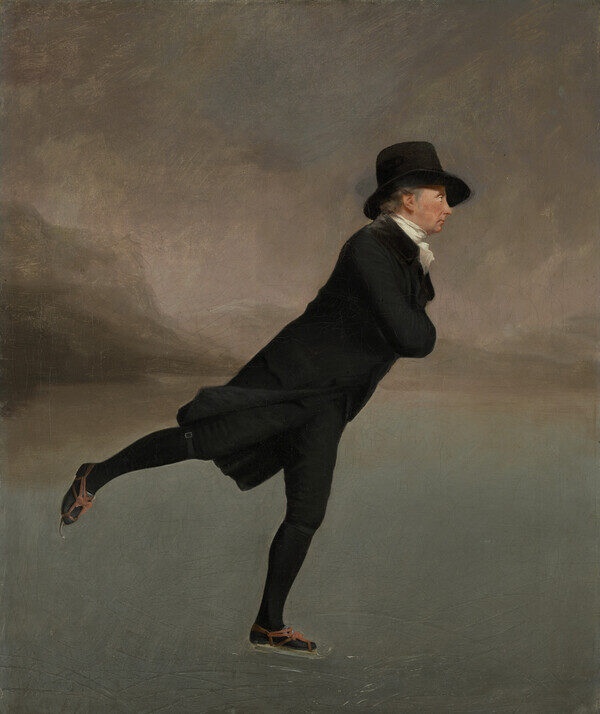
The elegantly poised skater is believed to be the Reverend Robert Walker, minister of Canongate Kirk and a member of the Edinburgh Skating Society, the oldest skating club of its kind in Britain. The society regularly gathered on the frozen waters of Duddingston or Lochend Loch on the outskirts of Edinburgh. Although Walker's movement appears effortless as he glides across the ice, it is actually a highly skilled and sophisticated manoeuvre that would have been recognised by fellow skaters. Unlike Raeburn's more traditional portraits, this small painting captures its subject in motion, making it a particularly distinctive work. It is widely known as The Skating Minister.
National Galleries of Scotland collection. Photo, National Galleries of Scotland.