“A fresh start”: Cafe Gandolfi clarifies change of ownership
One of Glasgow’s oldest restaurants, Cafe Gandolfi, will remain open for business. The restaurant and assets have been sold as a going concern by Cafe Gandolfi Limited, currently in compulsory liquidation. A petition to wind up that company was presented to Glasgow Sheriff Court on 13 April by the Advocate General for Scotland on behalf of HM Revenue and Customs.
A new company, CG2026 Ltd, was registered with Companies House on 16 April. The sole director is Seamas MacInnes, also a director of Cafe Gandolfi Limited and the owner of the building on Albion Street that is home to the restaurant.
Colin Murdoch, Insolvency Practitioner at Murray Stewart Fraser Limited, was appointed as interim liquidator of Café Gandolfi Limited on 7 May 2026. A statement from the restaurant says: “With the support of the business’ management, staff, suppliers and landlord, a going concern sale of the business and assets was successfully concluded shortly after appointment. The new owners, CG2026 Ltd, have traded successfully since taking over in early May 2026.”
Café Gandolfi’s owner Seumas MacInnes says the restaurant remains open and continues to welcome customers as normal. The restaurant has been open in the Merchant City since 1979 and currently has 31 staff.
Seumas said: “This has been an incredibly challenging period, but our priority has always been to keep Café Gandolfi open and protect everything we’ve worked so hard to build over the decades. I offer my sincere thanks to everyone involved in finding a practical solution. As a result, we have been able to secure a fresh start through CG2026 Ltd.
“Most importantly, we have managed to keep this much-loved and historic café – one that has been an institution for so long in Glasgow’s Albion Street – open uninterrupted.
“Lastly, I really have appreciated the overwhelming gesture of love and goodwill that came from the public who mistakenly believed that Café Gandolfi was shutting for good. Now that the situation has been made clear, and we have put this chapter behind us to focus on a new future, we hope to see them in their droves coming to eat in the café which they know and love.”
A spokesperson for HMRC said it does not comment on individual businesses because of taxpayer confidentiality, but did say: “We take a supportive approach to dealing with customers who have tax debts and only file winding-up petitions once we’ve exhausted all other options, in order to protect taxpayers’ money.”
Café Gandolfi occupies a special place in Glasgow’s restaurant history.
It was opened in 1979 by photographer Iain MacKenzie in the former offices of Glasgow’s old cheese market. At that time, the Merchant City was very different from the busy restaurant and nightlife district it would later become.
Many of its historic buildings were neglected and there were few reasons for diners to venture east of the traditional city centre. MacKenzie nevertheless saw the potential of the Albion Street premises and created a cafe influenced by European food, art and design.
The restaurant’s name was inspired by Gandolfi cameras, reflecting its founder’s background in photography. It introduced Glasgow’s first cappuccino machine and helped establish a new style of informal café culture in the city. It was not unusual to see Billy Connolly, Annie Lennox or members of The Blue Nile queuing to get a table in the 1980s.
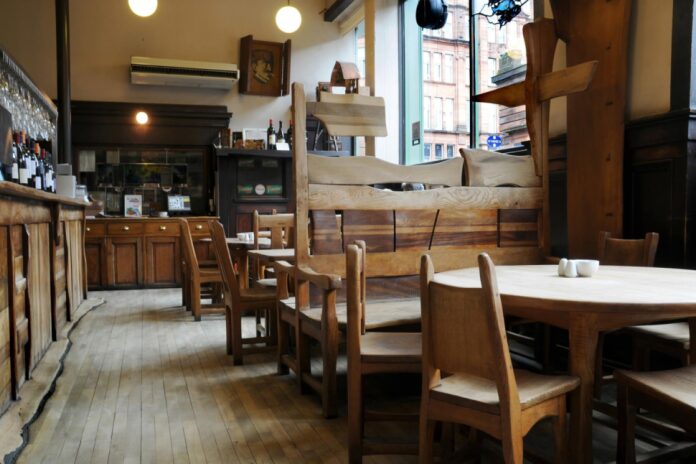
Its distinctive dining room became almost as recognisable as its food. It features heavy, hand-crafted furniture by the late Scottish sculptor and furniture maker Tim Stead, alongside photography, artwork and stained glass.
The original furniture dates from the restaurant’s opening and was among Stead’s earliest major commissions. The room also contains the stained-glass installation A Flock of Fishes by artist John Clark.
Seumas MacInnes joined Café Gandolfi in 1983, initially working as a kitchen porter. He progressed through the business, becoming manager and then a partner before eventually taking over from MacKenzie.
MacInnes brought influences from his family background in Barra to the menu. Café Gandolfi became known for treating traditional Scottish ingredients with confidence, serving dishes featuring haggis, seafood, Arbroath smokies, Cullen skink and Stornoway black pudding.
Bar Gandolfi opened in the loft above the restaurant in 2002. The former cheese store was converted by architect John MacLeod while retaining historic tiles and introducing more of Stead’s remarkable furniture.
One of Glasgow’s oldest restaurants, Cafe Gandolfi, will remain open for business. The restaurant and assets have been sold as a going concern by Cafe Gandolfi Limited, currently in compulsory liquidation. A petition to wind up that company was presented to Glasgow Sheriff Court on 13 April by the Advocate General for Scotland on behalf of HM Revenue and Customs.
A new company, CG2026 Ltd, was registered with Companies House on 16 April. The sole director is Seamas MacInnes, also a director of Cafe Gandolfi Limited and the owner of the building on Albion Street that is home to the restaurant.
Colin Murdoch, Insolvency Practitioner at Murray Stewart Fraser Limited, was appointed as interim liquidator of Café Gandolfi Limited on 7 May 2026. A statement from the restaurant says: “With the support of the business’ management, staff, suppliers and landlord, a going concern sale of the business and assets was successfully concluded shortly after appointment. The new owners, CG2026 Ltd, have traded successfully since taking over in early May 2026.”
Café Gandolfi’s owner Seumas MacInnes says the restaurant remains open and continues to welcome customers as normal. The restaurant has been open in the Merchant City since 1979 and currently has 31 staff.
Seumas said: “This has been an incredibly challenging period, but our priority has always been to keep Café Gandolfi open and protect everything we’ve worked so hard to build over the decades. I offer my sincere thanks to everyone involved in finding a practical solution. As a result, we have been able to secure a fresh start through CG2026 Ltd.
“Most importantly, we have managed to keep this much-loved and historic café – one that has been an institution for so long in Glasgow’s Albion Street – open uninterrupted.
“Lastly, I really have appreciated the overwhelming gesture of love and goodwill that came from the public who mistakenly believed that Café Gandolfi was shutting for good. Now that the situation has been made clear, and we have put this chapter behind us to focus on a new future, we hope to see them in their droves coming to eat in the café which they know and love.”
A spokesperson for HMRC said it does not comment on individual businesses because of taxpayer confidentiality, but did say: “We take a supportive approach to dealing with customers who have tax debts and only file winding-up petitions once we’ve exhausted all other options, in order to protect taxpayers’ money.”
Café Gandolfi occupies a special place in Glasgow’s restaurant history.
It was opened in 1979 by photographer Iain MacKenzie in the former offices of Glasgow’s old cheese market. At that time, the Merchant City was very different from the busy restaurant and nightlife district it would later become.
Many of its historic buildings were neglected and there were few reasons for diners to venture east of the traditional city centre. MacKenzie nevertheless saw the potential of the Albion Street premises and created a cafe influenced by European food, art and design.
The restaurant’s name was inspired by Gandolfi cameras, reflecting its founder’s background in photography. It introduced Glasgow’s first cappuccino machine and helped establish a new style of informal café culture in the city. It was not unusual to see Billy Connolly, Annie Lennox or members of The Blue Nile queuing to get a table in the 1980s.
Its distinctive dining room became almost as recognisable as its food. It features heavy, hand-crafted furniture by the late Scottish sculptor and furniture maker Tim Stead, alongside photography, artwork and stained glass.
The original furniture dates from the restaurant’s opening and was among Stead’s earliest major commissions. The room also contains the stained-glass installation A Flock of Fishes by artist John Clark.
Seumas MacInnes joined Café Gandolfi in 1983, initially working as a kitchen porter. He progressed through the business, becoming manager and then a partner before eventually taking over from MacKenzie.
MacInnes brought influences from his family background in Barra to the menu. Café Gandolfi became known for treating traditional Scottish ingredients with confidence, serving dishes featuring haggis, seafood, Arbroath smokies, Cullen skink and Stornoway black pudding.
Bar Gandolfi opened in the loft above the restaurant in 2002. The former cheese store was converted by architect John MacLeod while retaining historic tiles and introducing more of Stead’s remarkable furniture.