
There is something wonderfully convincing about Christmas in the Scottish Highlands. The pine forests, the mountains, the cold air and the possibility of snow make it easy to believe that Santa Claus might have chosen this particular corner of Scotland as his winter retreat.
And, of course, there are the reindeer.
Cairngorm reindeer, descended from animals brought across the North Sea more than 70 years ago to roam the mountains.
For children, the connection between the animals and the man in the red suit requires little explanation. For adults, there is a good story behind their presence.
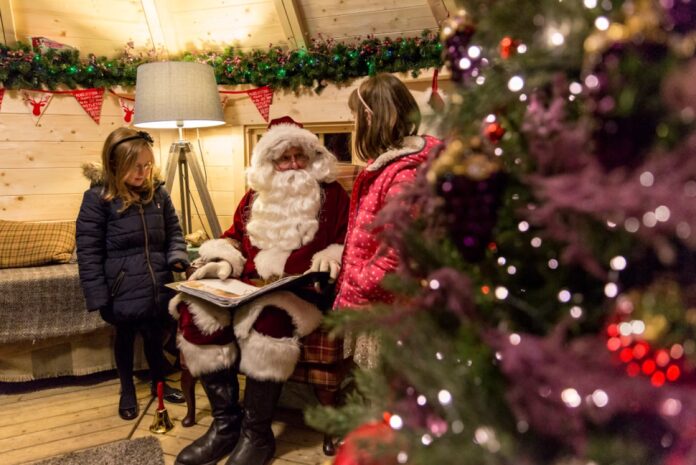
I have taken the kids to Aviemore a couple of times in the past for a family weekend at the Macdonald Aviemore Resort, where Santa takes up residence in a woodland grotto during November and December. His elves are waiting to welcome families, there are presents to be handed out and visitors can meet some of the reindeer that have made their home in these mountains.
I have fond memories of family holidays here when I was young, and there is a nice sense of continuity in returning with children of my own. Much has changed, not least the sprawling holiday centre that once dominated the village, but the natural attractions of Aviemore remain exactly where they have always been.
The Cairngorms rise to the east, Rothiemurchus Forest stretches across the valley and a short drive takes you to Loch Morlich, where a sandy beach looks towards the mountains. On a clear winter morning, it can feel like an Alpine landscape transported to Scotland.
Aviemore was a Highland railway village long before anyone considered turning it into a ski resort. The arrival of the railway in 1863 helped establish it as a gateway to Strathspey, attracting visitors who came for the scenery, fishing and mountain air.
Skiers had been venturing into the Cairngorms since the late 19th century, but the sport required considerable determination. There were no convenient mechanical lifts to carry people uphill. Anyone hoping to ski down a mountain first had to climb it.
That changed in 1961 with the opening of the chairlift on Cairn Gorm, making skiing accessible to a much wider public.
Aviemore was suddenly at the centre of Scotland’s winter sports boom. Holidaymakers arrived with skis strapped to their cars, eager to discover whether the Highlands could offer something approaching the experience of the European Alps.
The opening of the Aviemore Centre in 1966 took the idea further. A vast, purpose-built holiday complex offered hotels, restaurants, an ice rink, swimming pool, cinema and entertainment, transforming the village into a destination for families as well as serious skiers.
For a generation, the centre was practically synonymous with Scottish family holidays. Its architecture eventually fell out of favour, and much of the original development was demolished and replaced, but the ambition behind it survived.
Modern Aviemore still offers the appealing possibility of a mountain holiday without requiring everyone in the family to own a pair of skis.
Our Christmas weekends are a good example. There is swimming, festive entertainment, films, food and enough activities to occupy children who might otherwise find themselves becoming restless in a hotel as the Highland afternoon turns dark.
Then there’s the main event. Meeting Santa Claus takes place in woodland within the resort, where families make their way to a grotto and an elves’ workshop before their audience with Father Christmas.
It is a familiar festive ritual, with presents and excited children, but the surroundings give it an atmosphere of its own.
The forests around Aviemore are part of the experience. Even without a covering of snow, there is something about the tall Scots pines and the mountains beyond them that makes this feel like a convincing place for Santa to spend a few weeks.
The kids also have a chance to meet the reindeer, which have a history in the Cairngorms that predates Aviemore’s transformation into a skiing destination.
Their arrival can be traced to a Swedish Sámi reindeer herder called Mikel Utsi, who visited the Highlands in April 1947 with his wife, Dr Ethel Lindgren, an anthropologist.
Standing on the railway bridge at Aviemore, Utsi looked across Rothiemurchus Forest towards the Cairngorm Mountains and recognised a landscape that reminded him of home.
The vegetation, climate and terrain bore striking similarities to the reindeer grazing grounds of Lapland. Lichens, an important part of the animals’ natural diet, grew abundantly across the mountains.
Utsi knew that reindeer had once lived in Scotland before disappearing centuries earlier. He became convinced they could survive here again.
Reindeer had not roamed freely through the Scottish mountains for generations, and the practical difficulties of transporting animals from northern Sweden were formidable. Utsi and Lindgren persevered.
In 1952, the first eight reindeer made a journey by ship from Sweden to Scotland. Following a rough crossing, they arrived in Glasgow and were taken to Edinburgh Zoo for quarantine before continuing north.
On 27 May 1952, the first group finally reached the Cairngorms. They adapted to their new surroundings, and further animals arrived from Sweden to establish a breeding herd.
The experiment became a success. Today, around 150 reindeer form the UK’s only free-ranging herd, managed by the Cairngorm Reindeer Centre, with animals roaming the mountains and grazing on the vegetation that first caught Utsi’s attention.
Visitors can see them at the centre in Glenmore and, at certain times of year, join guided trips onto the hills to meet them in their natural environment.
During the Christmas season, some of the herd make appearances at festive events, including the Santa weekends in Aviemore.
One of the attractions of staying at the resort is that so much is organised. There are meals, children’s activities and entertainment throughout the weekend, allowing parents to surrender some of the usual responsibility for keeping everyone occupied.
There’s the festive events programme, with the swimming pool providing a welcome break from the cold. A family roast dinner is another highlight. After a busy day, returning to the hotel without having to organise another excursion or find somewhere to eat feels like a small luxury.
Aviemore’s greatest advantage is the extraordinary landscape waiting just beyond the village.
The road towards Glenmore passes through Rothiemurchus, with forest stretching away on either side. Loch Morlich is among the most beautiful places in the Cairngorms, its sandy shore offering a remarkable view towards the mountains.
In summer it attracts swimmers, paddleboarders and families enjoying the beach. During winter it is quieter, and arguably even more beautiful.
The Cairngorms themselves are never far away. Skiing remains an important part of Aviemore’s identity, although changing weather patterns mean snow conditions are less reliable than in the resort’s heyday.
There are other attractions within easy reach. The Strathspey Railway offers a journey through the valley on a heritage steam train, while Highland Wildlife Park at Kincraig makes a worthwhile stop on the journey home.
The village may not have fulfilled the ambitions of 1960s developers, but it has established something perhaps more valuable: a tradition of Highland family holidays that passes from one generation to the next.
There are few places in Scotland where the approach of Christmas feels quite so appropriate.
For Christmas 2026, Macdonald Aviemore Resort is advertising two and three-night Santa Breaks on selected dates from 20 November to 21 December. Packages include accommodation, breakfast and dinner, the Santa grotto, Cairngorm reindeer experience, pantomime, children’s entertainment, cinema screening and use of the resort pool.