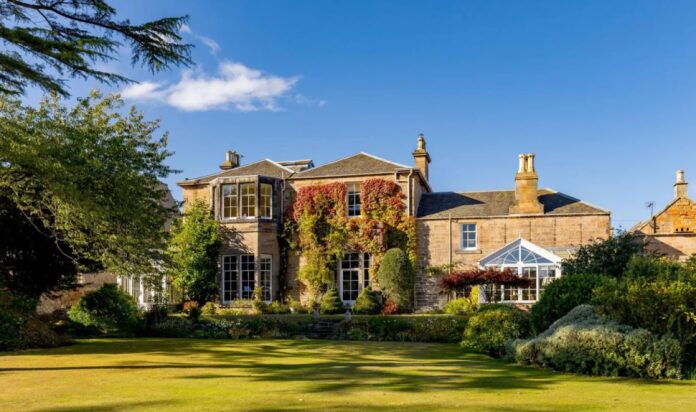
More than half of the Scottish homes expected to face higher council tax bills under the Scottish Government’s proposed mansion tax are in Edinburgh, according to new figures.
Around 6,920 properties in the capital could be affected by plans to introduce two new council tax bands for homes worth more than £1 million.
That compares with 1,200 properties in Glasgow and an estimated 13,600 across Scotland.
The figures were published alongside the Council Tax (High Value Dwellings etc.) (Scotland) Bill, introduced at Holyrood on Wednesday, 18 November.
If approved by MSPs, the changes would take effect from 1 April 2028.
The legislation would create two new council tax bands above the existing Band H, with higher annual charges based on property values as of 1 April 2026.
The Scottish Government estimates that 6,510 Edinburgh properties would fall into Band I, covering homes worth more than £1 million and up to £2 million. A further 420 would enter Band J for properties valued above £2 million.
The concentration of high-value homes in Edinburgh means the city would account for approximately 51% of all properties affected in Scotland.
East Lothian would also see an impact, with an estimated 950 properties entering the new bands. Fife has 770, East Dunbartonshire 580 and East Renfrewshire 450.
How much will homeowners pay?
The new system would increase council tax bills for properties valued above £1 million.
Scottish Government modelling, using average council tax charges for 2026-27, illustrates the proposed rates:
-
Band I – homes worth more than £1 million and up to £2 million would pay approximately £4,770 annually, around £720 more than Band H.
-
Band J – homes worth more than £2 million would pay approximately £7,650 annually, around £3,600 more than Band H.
Actual bills would vary depending on the council area and its Band D rate.
Transitional protection would limit annual increases for eligible main residences to £1,500 or 50% of the previous year’s council tax bill, whichever is lower, until the full new charge is reached.
The proposals would also retain existing discounts and exemptions, while further support is planned for lower-income households affected by the changes.
Millions in additional revenue for Edinburgh
The Scottish Government estimates the new bands could generate £17.1 million in additional council tax liability across Scotland in 2028-29, before transitional protection and other adjustments.
Edinburgh alone accounts for £9.35 million of that projected amount.
By 2031-32, the estimated annual additional liability rises to £19.3 million nationally, including £10.5 million in Edinburgh.
These are gross estimates rather than forecasts of the amount councils would actually collect.
The money would be retained by local government to support public services.
Deputy First Minister and finance secretary Jenny Gilruth said: “This is an important milestone for this legislation, which will further improve the fairness of taxation for local services, by adding two bands to the top of the council tax system for properties valued at over £1 million and £2 million.”
The proposals have also attracted criticism over their potential impact on households whose properties have increased substantially in value but whose incomes have not risen at the same rate.
An analysis of the Scottish Government’s consultation found concerns about affordability, particularly among pensioners and families living in expensive properties with limited disposable income.
The proposed reforms would affect fewer than 1% of Scottish homes.
They would not involve a general revaluation of council tax bands. Most Scottish properties would remain within the existing eight bands, which are based on valuations dating back to April 1991.
A targeted valuation exercise will now identify which homes are expected to qualify for the two new bands, with the final numbers to be established by independent Scottish assessors.