Construction of Edinburgh’s £162 million Dunard Centre has reached a major milestone, with excavation of its 10-metre-deep basement now complete.
The ambitious project will create the capital’s first purpose-built concert hall in more than 100 years, with a 1,000-seat auditorium and a permanent new home for the Scottish Chamber Orchestra.
Located behind the historic Royal Bank of Scotland building on St Andrew Square, the new venue is expected to be completed in 2029.
The latest construction work has involved removing 16,000 cubic metres of material from the city centre site – equivalent to around 480 double-decker buses or 2,750 grand pianos.
The excavation has revealed the full footprint of the building, including the distinctive curved outline of its main auditorium.
Temporary supports are now holding the basement walls in place while concrete works continue to form the ground and lower basement levels.
The underground space will accommodate dressing rooms, backstage facilities, operational infrastructure and a lower ground floor bar.
Jo Buckley, chief executive of the Dunard Centre, said: “It’s great to be past what can often be a particularly challenging phase in any construction project, digging into volcanic rock laid down thousands of years ago. To be able to see the full shape and outline of our future venue – from the footprint of the box office, to the curve of the auditorium, and even the first hints at stairwells – is really thrilling.
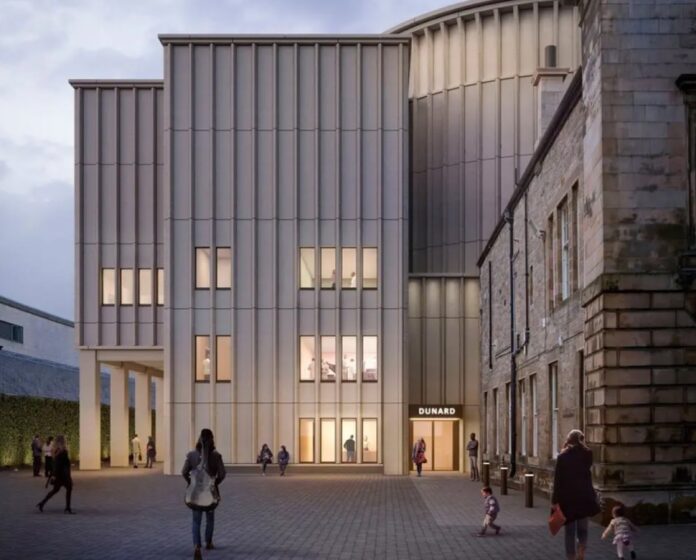
“Not only can we now appreciate the scale and depth of the venue, we can start to picture how it will actually be used: where audiences will arrive, how people will flow through the building, and how the new public pathways that hug our walls will connect our venue with the restaurants, bars, hotels and shops in this vibrant corner of the city. Most importantly, it helps us imagine what this place will become: a venue buzzing with life, people, music and culture.”
The next stage of construction will involve installing the structural cores containing staircases and service shafts.
Steelwork is expected to begin early in 2027, when the new concert hall will start to rise above ground level.
The Dunard Centre is being developed by IMPACT Scotland, with construction led by Balfour Beatty and designs by David Chipperfield Architects in collaboration with Edinburgh-based Reiach and Hall Architects.
The venue will feature a five-storey steel frame and a façade of precast concrete panels. Inside, bespoke solid oak panelling will help create the acoustic conditions required for live performances.
It is intended to accommodate classical music, folk, jazz, rock and pop, while also providing a new performance space for the Edinburgh International Festival.
The project is expected to attract around 200,000 visitors annually and will include public spaces, a café and bar.
Martin McGough, project director at Balfour Beatty, said: “Completing the main excavation marks a significant milestone for the Dunard Centre and is testament to the expertise and dedication of our project team and specialist supply chain partners. With works to form the basement structure now well underway, we look forward to building on this progress as the Dunard Centre begins to rise above the ground in the new year.”
Construction officially began in December 2025, following years of planning and fundraising.
The project is being supported by a combination of private philanthropy and public investment, including funding from the Scottish and UK governments and City of Edinburgh Council.
Among its principal supporters is philanthropist Dr Carol Colburn Grigor, whose contributions have helped make the development possible.
Alongside the construction programme, Balfour Beatty has been working with Scottish Pathways to Construction to provide opportunities for young people, supporting grassroots musical talent through the Edinburgh Festival Fringe Community Stage and welcoming students on social impact placements.
The building remains on schedule for completion in 2029.