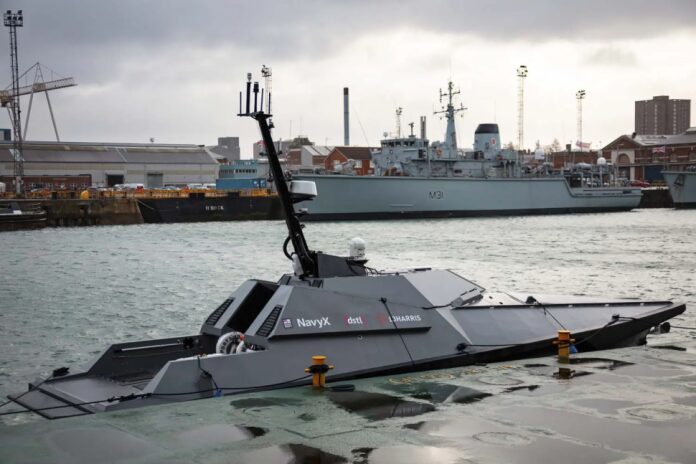
Ferguson Marine could target a new generation of uncrewed naval vessels as the Port Glasgow shipyard looks to expand its defence work.
The publicly-owned yard is examining whether it could become a specialist builder of hulls for autonomous ships, which would then be fitted with technology and systems by defence contractors.
The idea forms part of Ferguson Marine’s search for new commercial opportunities as it attempts to secure a longer-term pipeline of work beyond its existing ferry programme.
Board minutes from July reveal that directors discussed opportunities in the growing autonomous vessel sector, including its potential defence applications.
One possibility would see Ferguson Marine become a “secure hull-building partner” for specialist companies responsible for the sophisticated technology used to operate uncrewed vessels.
The board also identified the yard’s shipbuilding heritage, Scottish supply chain and future modernisation as possible advantages if it entered the market.
Further work is now being carried out to examine what skills, equipment and capacity would be needed.
No talks have taken place over a specific contract and Ferguson Marine has stressed that the proposal remains at an exploratory stage.
A spokeswoman said: “This is simply a paper on what markets the yard could enter in the future and no discussions have taken place. The yard is currently focused on the delivery of MV Glen Rosa.”
The move would nevertheless represent an expansion of Ferguson Marine’s growing involvement in defence shipbuilding.
The yard has already produced sections for Royal Navy Type 26 frigates being assembled by BAE Systems on the Clyde.
Ferguson Marine announced in July that it had completed three units for HMS Birmingham after previously carrying out similar work on HMS Belfast.
Th UK is putting greater emphasis on autonomous technology at sea. The Royal Navy is developing what it calls a “hybrid” fleet in which conventional crewed ships operate alongside drones and uncrewed vessels.
Recent trials have included the launch of a strike-capable drone from a Royal Navy ship, while autonomous surface and underwater craft are expected to play a growing role in surveillance, mine hunting and combat operations.
For Ferguson Marine, the potential market comes as the yard attempts to rebuild its order book and secure its future following years dominated by problems surrounding the construction of CalMac ferries.
The Scottish Government announced earlier this year that it intends to directly award Ferguson Marine work on four new vessels – two small ferries, a marine research vessel and a fisheries protection ship – subject to the required checks.
Ministers said those vessels could occupy most of the yard’s capacity for around five years while still allowing Ferguson Marine to chase additional commercial work.
The company has also strengthened its commercial operation, appointing maritime industry executive Mark Preston to its board in June with a remit that includes helping the yard secure new business.