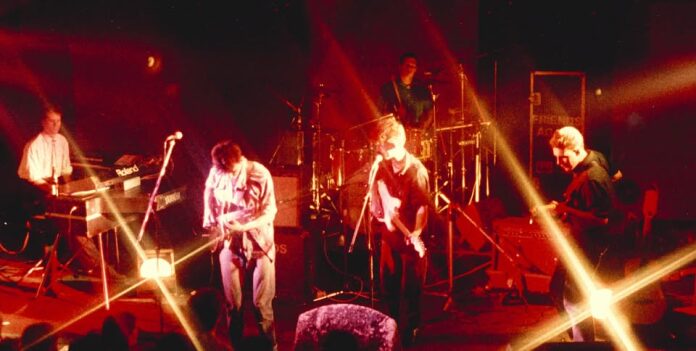
By the time Friends Again released their debut album in November 1984, the band had already split up.
Trapped & Unwrapped was supposed to be their breakthrough. Instead, it became a fascinating footnote in the story of Glasgow’s extraordinary 1980s music scene.
More than four decades later, the songs have found a new lease of life, the musicians have reunited and Friends Again are preparing to headline Glasgow’s Barrowland Ballroom on Wednesday 16 December.
Friends Again emerged from the same fertile musical landscape that produced Orange Juice, Aztec Camera, The Bluebells and Lloyd Cole and the Commotions. Their sophisticated guitar pop, soulful vocals and restless musical ambition attracted considerable attention from the record industry.
They were signed to a major label, recorded with acclaimed producers and looked destined for the charts. Things did not work out that way.
The origins of the band can be traced to a group of school friends growing up around Bothwell and Uddingston in Lanarkshire.
Chris Thomson had started writing songs in his bedroom as a teenager. A chance encounter with fellow Uddingston Grammar pupil Paul McGeechan, who was returning from a Glasgow record shop carrying David Bowie albums, helped set things in motion.
They recruited school friend Neil Cunningham on bass and began playing together in a succession of groups, including The Craniums, A Choir Holy and Future Daze.
Their early rehearsals took place in a ramshackle outbuilding at the bottom of the Cunningham family garden.
A short distance away, another group of young musicians was rehearsing. Ken and David McCluskey would eventually find success with The Bluebells, part of a remarkable generation of Scottish musicians whose careers began in bedrooms, community halls and borrowed rehearsal spaces.
As punk gave way to post-punk, Friends Again began developing a more individual sound. Thomson’s literary influences and fascination with Bowie and Roxy Music were joined by McGeechan’s interest in electronic music.
Their line-up changed as their ambitions grew. James Grant, a young guitarist from Castlemilk, joined in 1982 after meeting the group at Café Gandolfi in Glasgow’s Merchant City.
Grant was already an accomplished musician, having worked at the Washington Street Arts Centre and playing in several bands. He was immediately impressed by Thomson’s songwriting, particularly a composition called State of Art.
His arrival gave Friends Again another formidable musical talent, although the creative differences that would eventually divide the band were already taking shape.
With Stuart Kerr on drums, Friends Again became an increasingly accomplished live act, attracting attention during a period when record company scouts were making regular visits to Glasgow.
Their breakthrough came through Radio Clyde DJ Billy Sloan. McGeechan and Grant took a cassette of recordings to the station’s offices at Anderston Cross and asked if they could leave it for Sloan, whose programme was an important showcase for emerging Scottish musicians.
He played Honey at the Core the following week. Grant later recalled: “We were jumping around like we’d just scored a No.1 hit.”
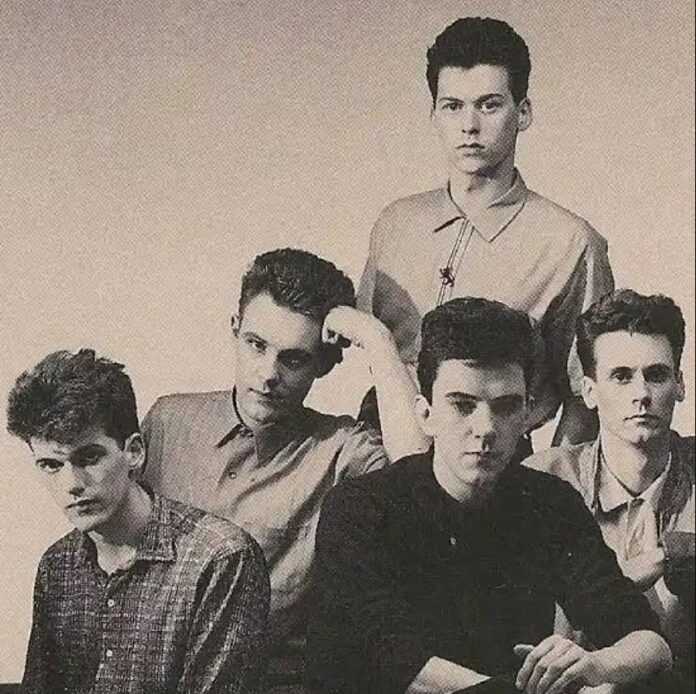
Within months, Friends Again had signed to Phonogram Records. The deal was celebrated at Bothwell Castle, a location already immortalised in the lyrics of Honey at the Core.
Their early singles, including Sunkissed, State of Art and Lucky Star, mixed the chiming guitars associated with Glasgow’s independent pop scene with funk, soul and more elaborate arrangements.
Recordings involved producers including Bob Sargeant, Jon Turner and Tom Verlaine, the influential American guitarist and frontman of Television.
The results were distinctive. Thomson’s expressive voice and romantic songwriting contrasted with Grant’s muscular guitar playing and McGeechan’s keyboards.
The group could sound delicate and melancholy on one song, then bright and kinetic on the next.
In a 2019 interview with Penny Black Music, McGeechan explained how the members’ different musical tastes had shaped their work.
Grant was listening to Led Zeppelin and Chic, Thomson loved Bowie and Roxy Music, while McGeechan was fascinated by Gary Numan and Kraftwerk.
Their contrasting influences helped produce a sound that was difficult to categorise. Despite the quality of the recordings, commercial success proved elusive.
State of Art reached number 93 on the UK singles chart in 1983. Phonogram delayed the album, hoping that another single would establish the band.
The Friends Again EP reached number 59 in 1984, while further releases failed to provide the breakthrough everyone wanted.
By the summer of that year, frustration was growing within Friends Again. Their debut album was on hold and James Grant was increasingly keen to pursue his own musical ambitions.
After discussing his plans with the other musicians, Grant telephoned Chris Thomson to tell him he was leaving. The news came with a further blow – the rest of the band were going with him.
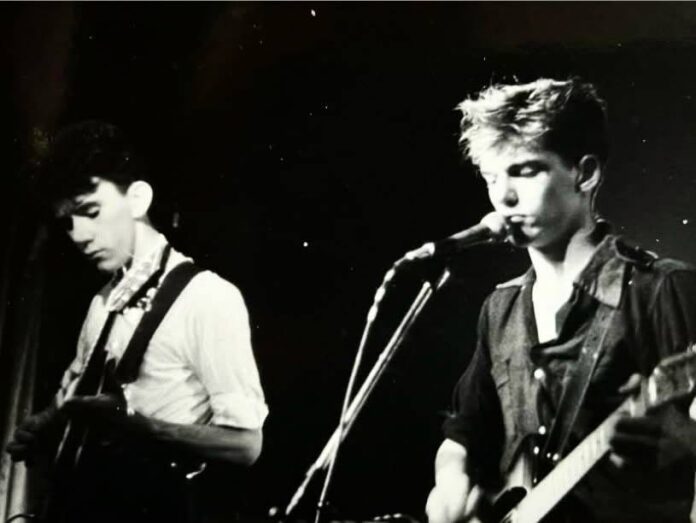
There was one final twist. Friends Again had spent months trying to secure an appearance on Channel 4’s influential music programme The Tube. When the invitation finally came, the band had already decided to split.
The musicians discussed performing on the programme before going their separate ways, but the record company pulled the appearance over concerns that announcing their break-up immediately afterwards would damage its relationship with the show.
McGeechan later reflected on the missed opportunity, suggesting that performing together again might have changed the course of their history.
Trapped & Unwrapped finally reached record shops in November 1984. Their long-awaited debut album had arrived, but there was no longer a band to promote it.
Its cover artwork was created by Glasgow School of Art graduate Fraser Taylor, who has gone on to have a successful career as an artist in Glasgow and the United States. Its 12 songs captured a band whose potential had never been fully realised.
The musicians went on to make a substantial contribution to Scottish music.
Grant, McGeechan and Kerr became part of Love and Money, whose albums included Strange Kind of Love and Dogs in the Traffic.
Thomson formed The Bathers, developing the ambitious, deeply romantic songwriting that would characterise albums including Lagoon Blues, Sunpowder and Kelvingrove Baby.
McGeechan also built a career as a producer and composer, later creating the orchestral project Starless.
The original friendships and musical connections were never entirely lost. Grant played on the first Bathers album, Unusual Places to Die, while Thomson and McGeechan eventually worked together again.
Over the years, Trapped & Unwrapped acquired a reputation that its initial sales had never suggested.
Reissues introduced the songs to listeners who had been too young to encounter them in the early 1980s. Old recordings, demos and concert performances became available again.
Friends Again eventually reunited in January 2026. Thomson, Grant and McGeechan appeared together at Glasgow’s Old Fruitmarket as part of Celtic Connections, joined by guitarist Rob McLaughlin, drummer Stuart Kidd and bassist Douglas MacIntyre.
The concert sold out, bringing together people who had followed the band in the 1980s and others who had discovered their music decades later.
There was a surprise appearance from Lloyd Cole, another musician whose career had developed during Glasgow’s early 1980s pop explosion.
Cole performed a solo opening set of songs from his years with the Commotions before returning to join Friends Again during their encore.
The reunited group performed all 12 songs from Trapped & Unwrapped, alongside B-sides and covers of David Bowie’s Kooks and The O’Jays’ Love Train.
For some of the songs, it was among their first live outings.
Friends Again continued performing this year, including an appearance with The Bluebells at Kelvingrove Bandstand in August.
Their return has now brought them to the Barrowland, a venue with its own connections to their musical history.
Love and Money played a farewell concert there on 23 December 1994, billed as Love and Money: RIP, before eventually reforming years later.
Now it is Friends Again’s turn to take the stage under their original name.
In 1984, there was a record without a band. 42 years later in Glasgow, an audience will hear songs that have proved more durable than anyone might reasonably have expected.
Friends Again play the Barrowland Ballroom, Glasgow, on Wednesday 16 December 2026. Doors open at 7pm.