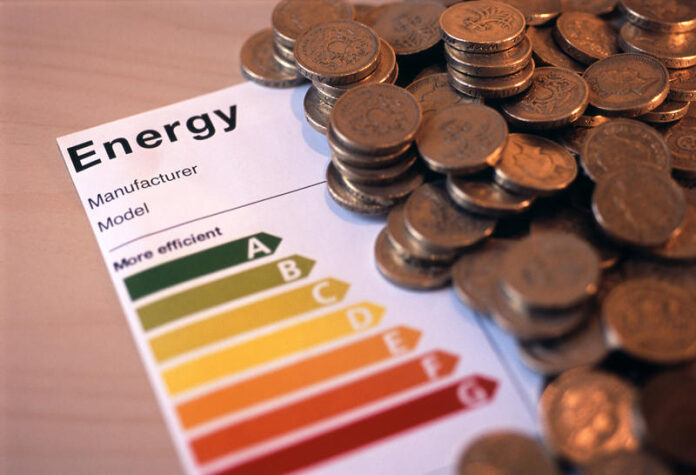
On Wednesday morning regulator Ofgem announced a 26% rise in energy prices for the average household.
From 1 January to 31 March 2027, the price cap will be £2,166 per year, an increase of around £37 per month.
However, cost will depend on energy used and could be closer to £60 in the winter months for many in Scotland, with cold and windy weather a given.
Here’s what you need to know.
Why has the cap gone up so much?
The price of gas has gone up hugely, 33% in the last three months, thanks to the war in Iran and have more than doubled since late 2025.
Around 35% of the world’s crude oil transits via the Strait of Hormuz, which has been alternately blocked by Iran and the United States, as does 20% of liquid natural gas (LNG).
Russia, which is also at war and has been sanctioned, is the world’s second largest producer of LNG and third biggest extractor of crude oil and prices first spiked substantially after it invaded Ukraine.
Oil and LNG are traded on global markets so when supply goes down, the price goes up.
Will my bills come down after the winter?
No, they’ll probably go up again.
Ofgem will publish its next price cap levels by February 23 next year, with the current prediction putting it at £2,192 which would be an increase of £26.
Even if does go down slightly, bills are expected to stay around £2,000 for the rest of 2027.
How does the price compare to other countries?
Figures for 2024 show that the UK had among the highest domestic electricity prices in Europe in pence per kilowatt hour.
Ireland generally had higher prices before taxes, as did Germany after taxes were considered, while some countries had higher prices for medium and large consumers, a breakdown in the data that was not included in the UK numbers.
In addition, Italy for example has zonal pricing - of which more later - whereby the market is divided into seven bidding zones with its own price reflecting local supply, demand and transmission limits. That means that if you’re in Turin in November you would pay €295.46 per MW/h but in Naples it would be €251.88.
The numbers are not, therefore, directly comparable but it’s fair to say that all things considered for the average person the cost of electricity is the second or third highest in Europe.
The Italian website GlobalPetrolPrices has figures from March which put the UK third in the world for electricity costs behind only Ireland and Bermuda.
Back in 2016, when the United Kingdom was in the European Union and a direct comparison could be made, Sweden, Austria, Spain, Portugal, Ireland, Italy, Belgium Germany and Denmark all had higher prices.
How do other countries run their energy?
In the UK, the energy network is almost entirely privatised with generation, retail supply and grid ownership private but regulated by bodies such as OFGEM and the National Grid.
The rest of Europe uses a largely mixed system, with governments retaining major or controlling stakes in energy companies.
The balance between public and private varies.
The French government owns 100% of Électricité de France, while in Italy companies like ENEL and ENI were privatised in the 1990s but the state remains the largest shareholder, having a golden share in the latter which allows it to outvote all other shareholders.
In most countries the largest generators or suppliers are either partially or wholly owned by the state. In the UK, private suppliers pay to buy from private generators and often pass the cost of that purchase on to the consumer.
Prime Minister Andy Burnham said in September a taskforce would be established to look at bringing housing, water, energy and transport into “public control”.
Following the Russian invasion of Ukraine, France limited energy companies to a 4% rise in 2022 followed by 15% the following year which meant EDF, which has around 80% of the market sold to consumers at a loss.
The company lost £16bn in 2022 and had debts of £50bn but prices were lower for consumers, though they have risen in the intervening years.
A study by the University of Greenwich found that nationalising the energy grid could save the average household £142 per year, while trade union Unite calculated as saving of £1,800 per household for the year 2022.
However, the Institute for Fiscal Studies noted that in the event of nationalisation existing shareholders would have to be compensated, meaning signifcant up-front costs.
Doesn’t Scotland have a lot of renewable energy?
Yes, but there is a single wholesale pricing model in Great Britain, where one uniform electricity price applies across the island - Northern Ireland is connected to the Irish grid.
Household bills are subject to the Ofgem price cap, which applies across the board, so while there is plenty of wind and hydro power generated in Scotland it doesn’t reduce bills.
That has proven controversial, with consumer groups and the supplier Octopus Energy calling for a zonal pricing scheme where areas which generate more electricity pay less for it.
That plan was first floated by the Conservative government as a way of encouraging heavy users to relocate to areas where there is often an oversupply to the point that wind farms have to switch off.
It was abandoned by Ed Miliband last year.
Supporters of zonal pricing say it would lower bills - and Scots can end up paying more because it’s colder and wetter - but most energy companies claimed it would scare off investment, while other opponents argued it could see heavy industry relocate to rural areas of natural beauty.
What has the reaction been?
Derek Mitchell of Citizens Advice Scotland said: “This staggering increase will make them unbearable for thousands of people across Scotland - particularly those on the lowest incomes, with disabled people and those in rural communities facing real harm. It is especially devastating that this massive increase will come at the coldest point of the year.”
First Minister John Swinney said: “I have never seen a more compelling argument for the energy wealth of Scotland to be in the hands of the people of Scotland from the failure of the Labour Government to reduce energy prices.
“And my simple message to people in Scotland is: if the UK Labour Government will not reduce the energy bills of people in Scotland, our energy resources in Scotland should be in the hands of the people of Scotland.”
Consumer Scotland chief executive Sam Ghibaldan said: “Too many households across Scotland are already struggling to afford their energy bills, and many are falling behind on payments.
“This increase risks pushing more consumers into debt, forcing others to cut back on essentials, and leaving some unable to heat their homes to a comfortable level, or putting their health at risk, during the coldest months of the year.”
UK energy secretary Miatta Fahnbulleh said: “I know people are deeply concerned by another rise in energy bills.
“For too long, British families have been paying the price for conflicts overseas and volatile fossil fuel markets.
“To help this winter, we’re stepping in to give families some breathing space, so from January, the majority of households will get £100 towards their energy costs.
“But there is more to do to take the pressure off families and bring bills down for good.”