
Billy Connolly embarked on a personal journey around Scotland in the spring of 1994, taking his comedy to village halls, theatres and concert venues across the country.
The resulting six-part BBC television series, Billy Connolly’s World Tour of Scotland, was first broadcast that summer. It established a format that would then take the comedian to Australia, New Zealand, Ireland and North America.
The series was one of the first times I watched Billy be more than the character he had created in the Scottish psyche, the comedian who had carved out his own personal place in the country’s sense of humour.
His Scottish travels combined a fascination with history, a love of the country’s landscapes and introduced places associated with his childhood and working life. It opened a new chapter in his life as a storyteller on television and in books.
Connolly explored ancient monuments, fishing communities, Highland wildernesses and the Glasgow streets where he grew up.
As the Big Yin celebrates his 84th birthday on 24 November, we rewatched the series to remember the places he explored during his World Tour of Scotland.
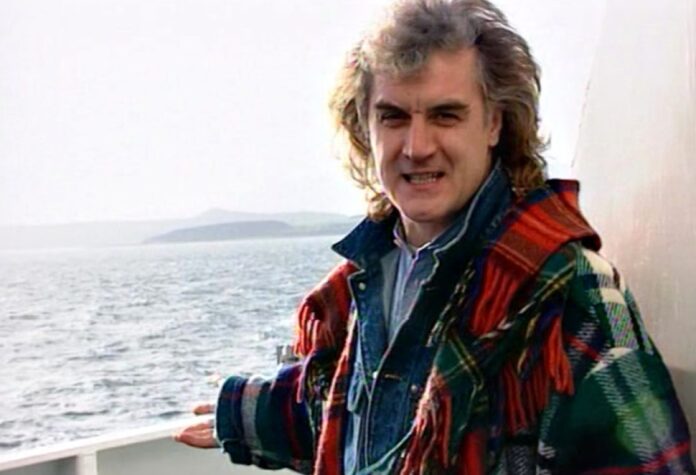
Brodick, Isle of Arran
Connolly’s journey began on the west coast, with Arran providing one of the first backdrops to the series.
The comedian spent time playing his banjo with friends on the island, revisiting his musical roots. Before becoming one of the world’s most successful stand-up comedians, Connolly had been a fixture on the Scottish folk music circuit. He also had a deep affinity with the River Clyde and the seaward journey towards the west coast of Scotland from his time working on the shipyards and summer holidays growing up.
His performance at Brodick Village Hall captured the spirit of a tour that took him to small communities as well as the country’s biggest cities.
Anderston and the East End, Glasgow
Connolly returned to Dover Street in Anderston, where he was born in a tenement flat in 1942.
His journey through Glasgow also took him to Provand’s Lordship, Glasgow Cross and the Necropolis, exploring the history and architecture of the city that had shaped his outlook on life.
Built in 1471, Provand’s Lordship is one of Glasgow’s oldest surviving buildings. The nearby Necropolis, with its elaborate Victorian monuments and views across the city, remains one of the most atmospheric places to explore Glasgow’s past.
Loch Lomond
Connolly ventured out of Glasgow towards Loch Lomond, stopping at Auchengillan Outdoor Centre, near Blanefield, which he had visited as a Cub Scout.
The excursion through one of Scotland’s most celebrated landscapes were punctuated by some of Connolly’s own memories of growing up in Scotland.
Partick and Govan, Glasgow
The second episode saw Connolly return to the Clyde and reflect on his years working in the shipyards.
He had trained as a welder, experiencing the particular brand of Glasgow humour that flourished among the men working in heavy industry.
Connolly’s visits to Partick and Govan offered a glimpse of the industrial city he knew before finding fame as a musician and comedian.
He has previously said about growing up in Glasgow: “I only had to leave our home and walk over the tramlines to Partick Library and a whole new world opened to me. Reading books showed me that there was something better, something other, out there.”
Stirling and Bannockburn
On his way to a performance at the Macrobert Arts Centre at the University of Stirling, Connolly turned his attention to the Battle of Bannockburn. The victory of Robert the Bruce over the army of Edward II in 1314 remains one of the defining events in Scottish history.
Visitors can explore the story of the battle at the National Trust for Scotland’s Bannockburn visitor centre on the outskirts of Stirling.
Scone Palace, Perthshire
Connolly continued his exploration of Scottish history at Scone Palace, the ancestral home of the Earls of Mansfield.
Scone was the crowning place of Scottish kings, including Robert the Bruce, and the original home of the Stone of Destiny, which is now on display at Perth Museum. The palace and its grounds are among Perthshire’s best-known historic attractions.
South Queensferry
The Forth bridges provided another opportunity for Connolly to celebrate Scotland’s engineering heritage.
When he visited South Queensferry in 1994, the Forth Bridge and Forth Road Bridge dominated the landscape. The Queensferry Crossing would not open until 2017. The waterfront beneath the red railway bridge remains one of the most recognisable views in Scotland.
Blair Atholl and Loch Garry
The third episode took Connolly north through Perthshire and into the Highlands, where the winter landscape was still in evidence. He stopped at the frozen Loch Garry, near the Pass of Drumochter, where he entertained himself by skimming stones across the ice.
His Highland travels also took him through the countryside around Dalwhinnie and Laggan, while he tried his hand at salmon fishing on the River Oich, near the southern end of Loch Ness.
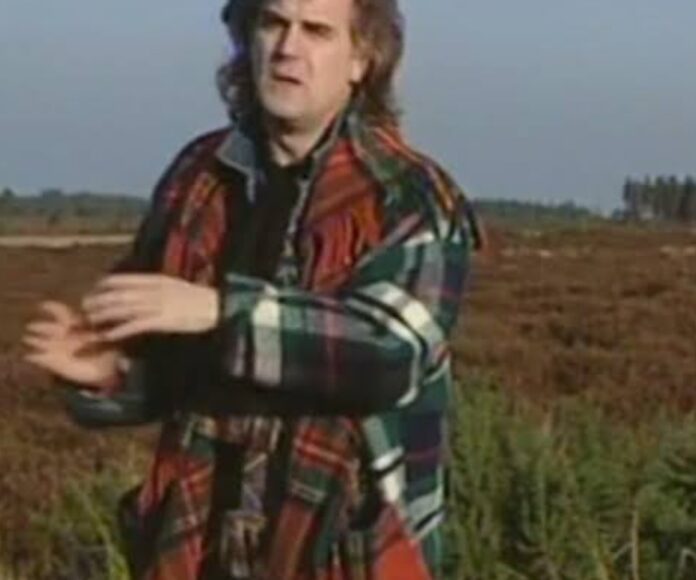
Culloden, near Inverness
One of the more reflective moments in the series came when Connolly visited Culloden Moor.
It was here, on 16 April 1746, that the Jacobite army of Charles Edward Stuart was defeated by government forces commanded by the Duke of Cumberland. The battlefield, with its memorial cairn and stones commemorating the clans, remains a poignant place for contemplation.
The Whaligoe Steps, Caithness
Connolly ventured down one of Scotland’s more remarkable coastal landmarks near Ulbster, south of Wick.
The Whaligoe Steps descend the steep cliffs to a natural harbour once used by fishing boats. Generations of women carried baskets of fish up the steps from the harbour before taking the catch to market.
The secluded location, surrounded by dramatic cliffs, is a reminder of the once thriving fishing industry along this stretch of the Caithness coast.
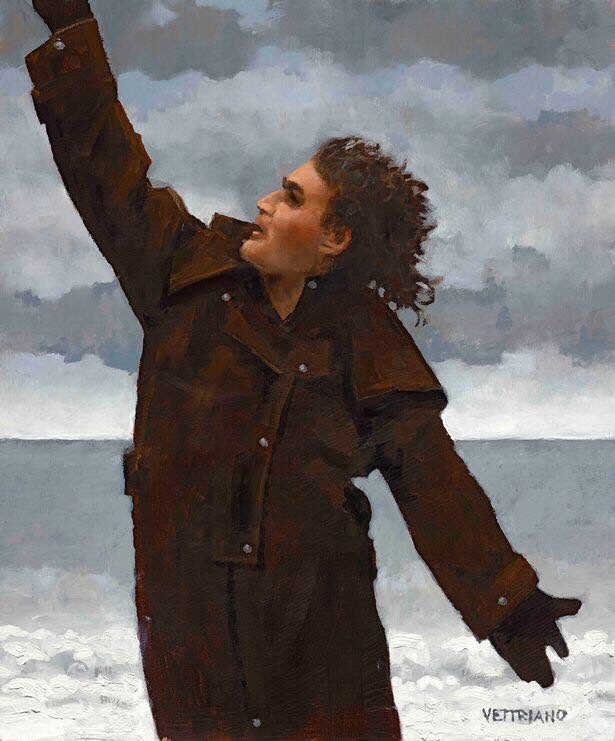
Billy Connolly in the series as painted by Jack Vettriano
Ring of Brodgar, Orkney
The Big Yin travelled to Orkney, where he contemplated the mystery of the ancient standing stones at the Ring of Brodgar.
The Neolithic stone circle, believed to have been constructed between 2500 and 2000 BC, stands on a narrow stretch of land between the lochs of Harray and Stenness. It now forms part of the Heart of Neolithic Orkney UNESCO World Heritage Site.
Connolly also visited Kirkwall and travelled by fishing boat to Scapa Flow, the vast natural harbour that played an important role in both world wars.
Lerwick, Shetland
The northernmost stop on Connolly’s television tour took him to Shetland. He performed twice in one evening at the Garrison Theatre in Lerwick, with the second show continuing beyond midnight.
Arbroath
Connolly stopped in Arbroath to sample the town’s famous smokies and revisit a landmark of personal significance – the spot where he lost his virginity. Returning decades later, he discovered a garage now occupied the site.
The Angus fishing town is synonymous with its distinctive smoked haddock, prepared in pairs over hardwood fires. Visitors can still find some family-run smokehouses around the harbour, while the ruins of Arbroath Abbey provide a link to one of the most significant chapters in Scottish history – the signing of the Declaration of Arbroath in 1320.
Dundee Law
One of the most memorable sequences in the series saw Connolly standing on Dundee Law in a snowstorm, reciting William McGonagall’s notoriously bad poem, The Tay Bridge Disaster.
Connolly delivered the verses with admirable solemnity as the snow fell around him, with the Tay and its railway bridge providing the backdrop.
He also performed at Dundee’s Caird Hall. The Law, the prominent hill overlooking the city, is one of the best places to take in views across Dundee, the Tay and towards Fife.
Kelso, Scottish Borders
Connolly’s journey south took him to Kelso, where he was charmed by the more tranquil surroundings of the Scottish Borders.
He performed at the town’s Tait Hall and explored the surrounding countryside.
With its cobbled market square, Georgian buildings, ruined abbey and riverside walks, Kelso retains much of the character that made an impression on Connolly more than three decades ago.
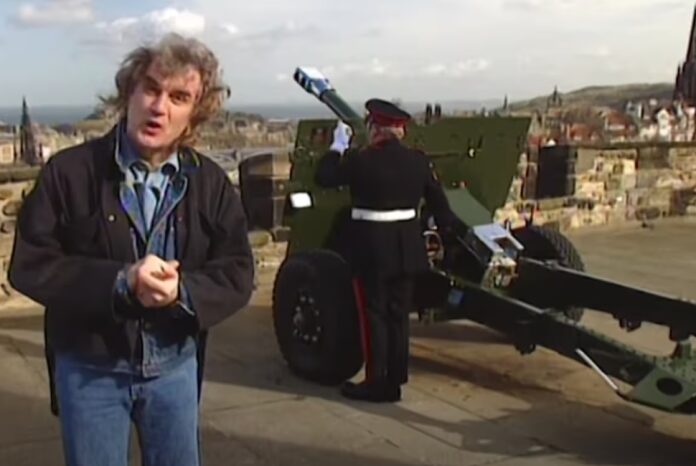
Edinburgh Castle and the Royal Mile
The final episode was devoted to Edinburgh, where Connolly visited the castle and witnessed the firing of the one o’clock gun.
He made his way along the Royal Mile, stopping around St Giles’ Cathedral and observing the local tradition of spitting on the Heart of Midlothian, the pavement mosaic marking the site of the former Old Tolbooth.
He also ventured beneath the city streets into Mary King’s Close, discovering a surviving fragment of old Edinburgh that has since become one of the capital’s most popular visitor attractions.
Usher Hall, Edinburgh
The television series concluded at the Usher Hall, where Connolly reflected on his earlier experiences of performing at the Edinburgh Festival.
His rendition of Van Morrison’s Irish Heartbeat, recorded at the venue, accompanied the closing credits throughout the series.
More than 30 years later, Billy Connolly’s World Tour of Scotland remains an affectionate portrait of the country, preserving something of the Scotland he grew up in alongside the landscapes, history and people that continued to fascinate him long after he became an international star.