Inside Scotland’s oldest surviving cinema as it competes to be named UK’s best
The 114-year-old Hippodrome in Bo’ness has reached the final five of a prestigious national award, more than a century after audiences first took their seats.
The Hippodrome
Scottish Historic Buildings TrustOne of Scotland’s most remarkable picture palaces is in the running to be named the best cinema in Britain, 114 years after it first opened its doors.
The Hippodrome in Bo’ness, near Falkirk, is the oldest surviving purpose-built cinema in Scotland. Opened in March 1912, it has entertained generations of filmgoers and survived closure, years of dereliction and a painstaking restoration.
Now the historic venue is the only Scottish finalist for Cinema of the Year at the 2026 British Independent Film Awards.
More than 70 cinemas entered the competition, with almost 50,000 public votes helping to determine the five-strong shortlist. The winner will be announced on Sunday 6 December.
A remarkable piece of Scottish cinema history
Step inside the Hippodrome and it is easy to see why the building has become such a treasured part of Scotland’s cultural heritage.
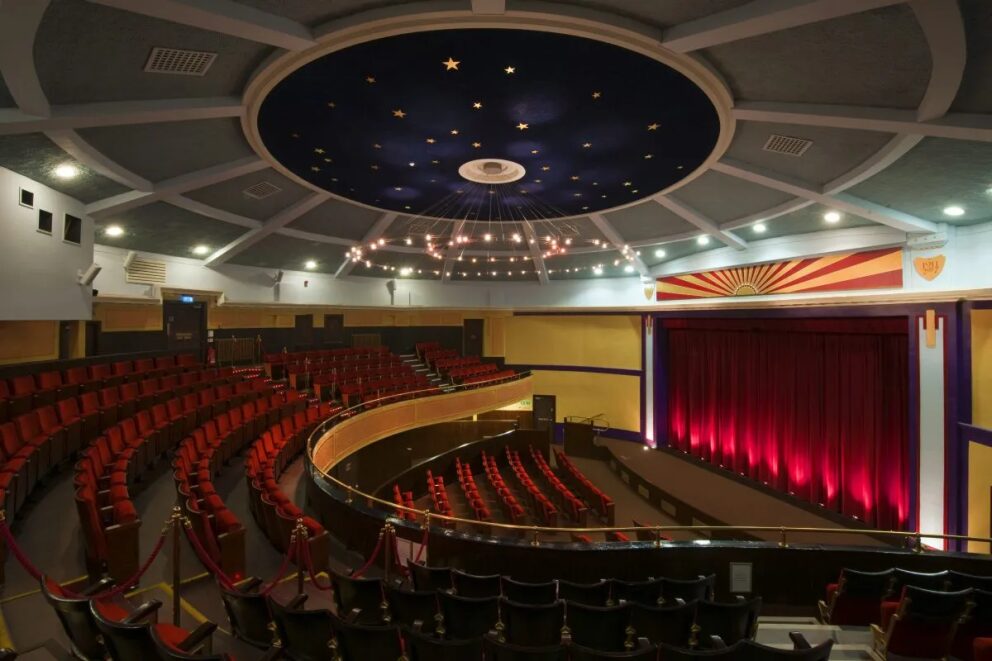
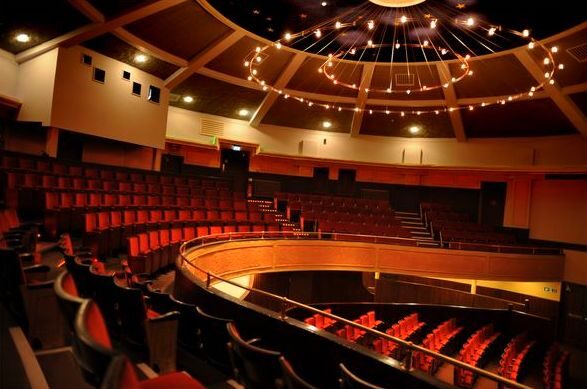
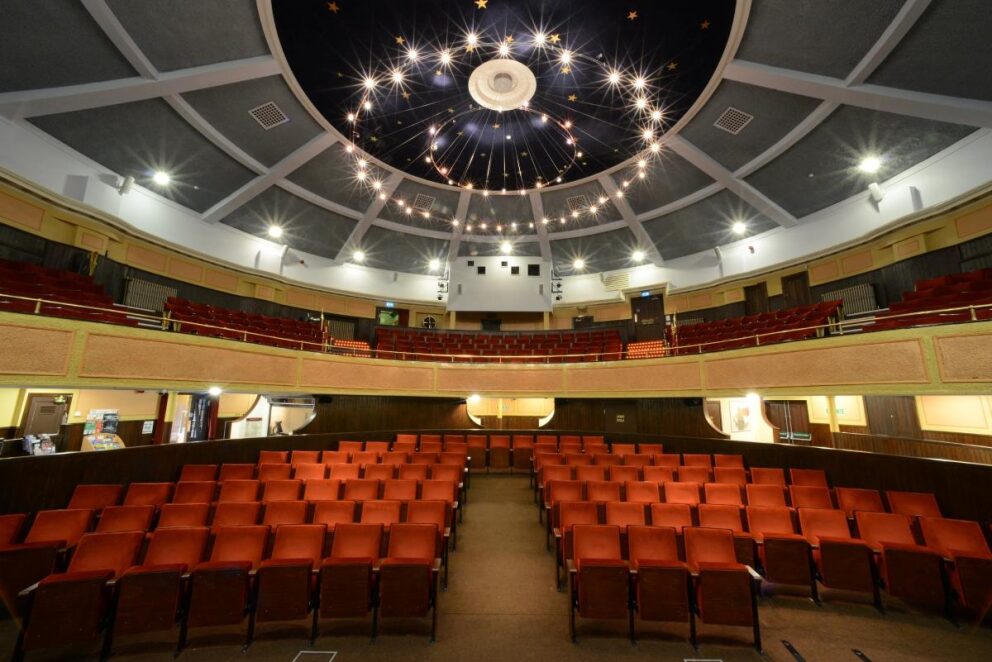
Falkirk CouncilIts auditorium is circular, with a sweeping curved balcony, rows of red seats and a striking domed ceiling decorated with stars and lights.
The building was designed by local architect Matthew Steele for film pioneer Louis Dickson, who wanted to bring the excitement of the emerging movie industry to the town.
It opened on 11 March 1912, at a time when cinema was still a relatively new form of mass entertainment.
The original plans, dating from 1911, show that it was conceived as a picture palace from the outset, although its unusual shape also allowed for other forms of entertainment.
The Category A-listed building is now recognised as a rare surviving example of pre-art deco cinema architecture.
From silent films to Hollywood blockbusters
Falkirk CouncilThe Hippodrome continued showing films until August 1975, when it ceased operating as a cinema and subsequently became a bingo hall. By 1980, the building had fallen out of use.
For decades, its future was uncertain.
A major restoration led by the Scottish Historic Buildings Trust eventually brought the historic picture palace back to life. The work reinstated its 1920s decorative scheme and introduced modern projection and sound equipment.
In April 2009, the Hippodrome reopened to the public, with local residents choosing Mamma Mia! as the film to mark its return.
The restoration, costing around £2.15 million including the cinema fit-out, saved an important piece of Scotland’s architectural and cultural history.
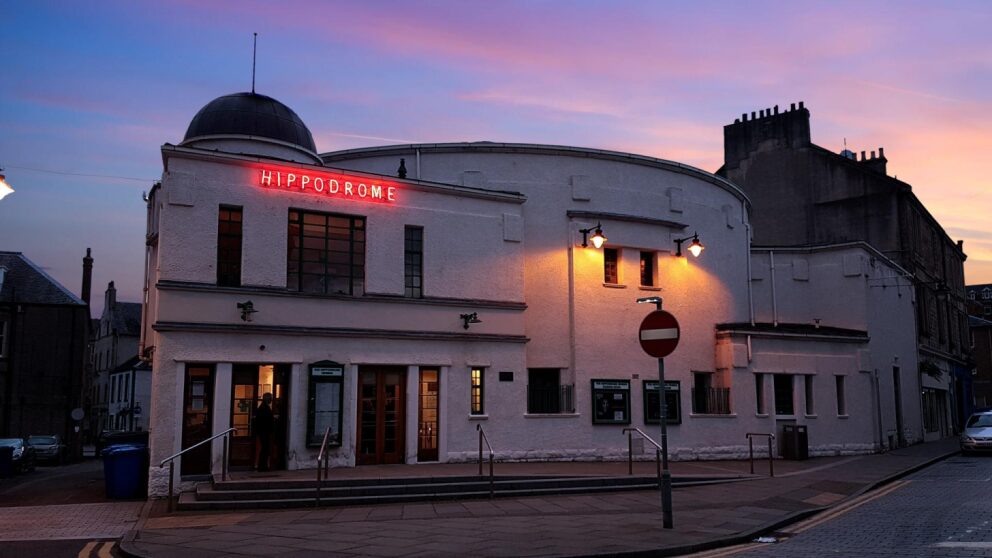
Hippodrome
National Theatre of ScotlandToday, the Hippodrome combines its historic surroundings with a modern cinema programme, showing everything from Hollywood blockbusters to independent productions, archive films and international releases.
It also hosts HippFest, Scotland’s only festival dedicated to silent cinema with live musical accompaniment.
The 2026 festival, its 16th edition, sold almost 4,000 tickets and attracted audiences from across Britain and overseas.
Another initiative, New Found Sound, gives young musicians the opportunity to compose and perform live soundtracks for historic silent films.
The cinema has even enjoyed a moment on the big screen itself, appearing as a filming location in I Swear, the acclaimed film about Scottish Tourette's syndrome campaigner John Davidson.
The Hippodrome has previously been named Scotland’s highest-rated cinema in research based on Tripadvisor reviews and won Best Cinema Experience at the Scottish Hospitality Awards in 2019.
Alison Strauss, arts development officer at the venue, welcomed its latest recognition. She said: “Our programme is shaped by the people who come through the doors.”
Councillor Paul Garner, acting leader of Falkirk Council, said the nomination “puts Bo’ness firmly in the national spotlight”.
The Hippodrome faces competition from Abbeygate Cinema in Bury St Edmunds, Kinema in the Woods in Lincolnshire, Campus West in Welwyn Garden City and the Ultimate Picture Palace in Oxford.
A judging panel will now decide which venue has made the greatest contribution to its community, with the winner revealed at the British Independent Film Awards on 6 December.
Falkirk Council
For a building that once stood empty and threatened with permanent decline, reaching the final five represents another remarkable chapter in its history.