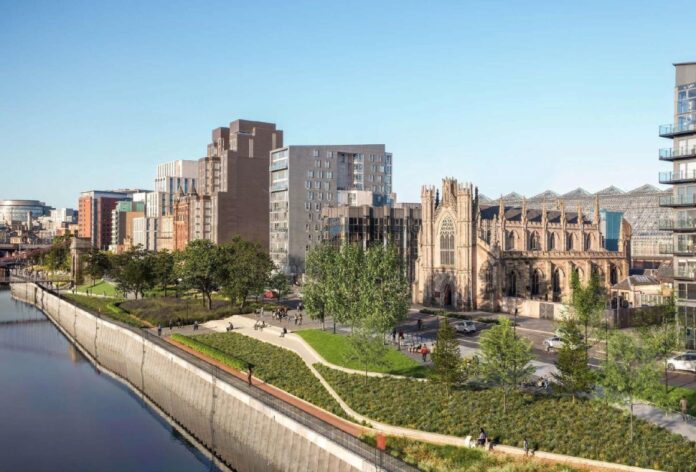
Ambitious plans to transform the banks of the River Clyde with new waterfront parks, homes, leisure attractions and public spaces have taken another step forward following approval of a major regeneration strategy.
The Glasgow City Region Cabinet has endorsed the Clyde Mission Strategic Masterplan, establishing a long-term vision for the river from Lanark to Dunoon.
The proposals aim to reconnect communities with the Clyde, opening up neglected stretches of waterfront and creating opportunities for housing, tourism, culture and investment.
Five priority locations have been identified for the first phase of the programme, including the Glasgow City Centre Waterfront and the stretch of river between Govan and the Kingston Bridge.
The latest decision follows the approval of plans for a new riverside park in Glasgow city centre, alongside separate developments at Yorkhill Quay, Govan Graving Docks and North Laurieston.
Together, the projects could bring some of the biggest changes to the Clyde since the regeneration of former shipbuilding and industrial sites began.
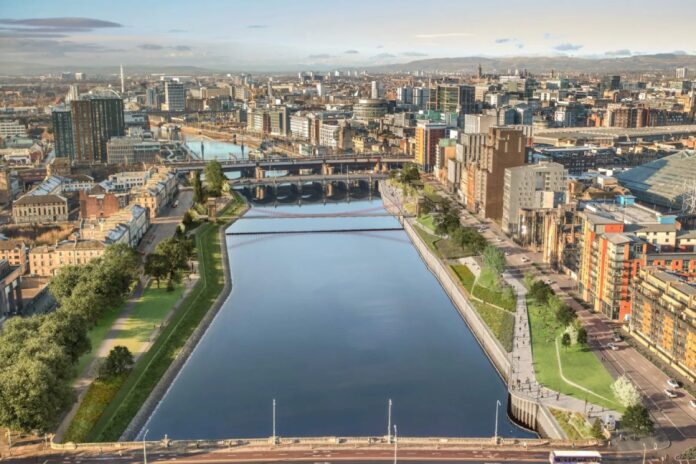
A new riverside park in the city centre
One of the most advanced projects is the transformation of Custom House Quay and Carlton Place, covering more than seven hectares on opposite banks of the river between Glasgow Bridge and Victoria Bridge.
Glasgow City Council’s Meet Our Waterfront project has secured planning permission and is approaching the completion of its detailed design phase.
The development will create new pedestrian and cycling routes, landscaped areas, play spaces and locations for outdoor events.
Custom House Quay, on the north bank, will be transformed with improved access to the water, public seating, planting and space for activities.
Across the river, the existing open space at Carlton Place will be redeveloped as an accessible urban park.
The project will also tackle the deteriorating condition of the quay walls, including substantial engineering work designed to protect the waterfront for future generations.
The proposals include around 80 new trees, with areas for recreation and spaces where people can sit and enjoy views across the Clyde.
Designs have also explored a stepped performance space near Dixon Street and a new use for the historic Ladies Waiting Room building on Clyde Street.
The work is expected to be delivered in phases, with Custom House Quay likely to be prioritised. Construction has previously been anticipated between 2027 and 2030, subject to final funding and delivery arrangements.
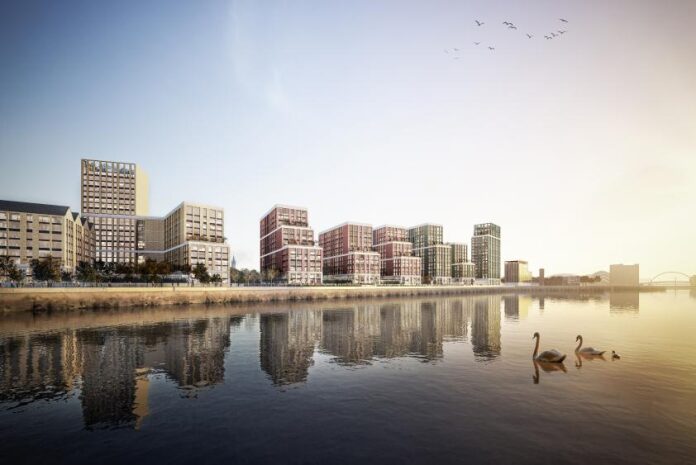
New homes at Yorkhill Quay
Further west, the Glasgow Waters development is intended to transform former industrial land between the Riverside Museum and the Clydeside Distillery into a new residential and leisure district.
Developer Peel Waters is progressing plans for four waterfront neighbourhoods at Yorkhill Quay, Merklands Quay, Meadowside Quay and Castlebank Quay.
A planning application submitted in October proposes 89 new homes at Yorkhill Quay, alongside commercial space, terraces and a riverside promenade.
The proposed building could also feature a large public artwork celebrating Glasgow’s maritime heritage.
The wider project includes new walking and cycling connections, while infrastructure work costing £4 million is already under way to prepare land for future development.
Longer-term ambitions include Therme Scotland, a proposed wellbeing and leisure destination at Castlebank Quay, with water-based experiences and family attractions.
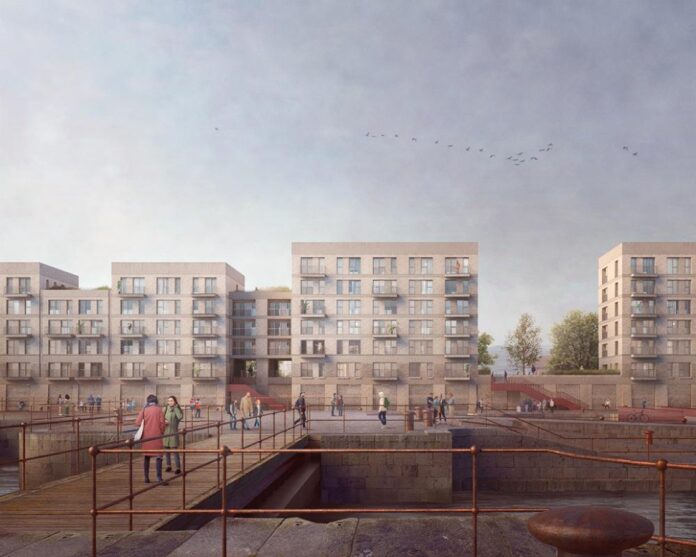
Govan’s historic docks brought back to life
On the south bank, the regeneration of Govan Graving Docks is another important part of the waterfront’s transformation.
The historic docks, which date from the late 19th century, were once central to Glasgow’s shipbuilding industry but remained derelict for decades after closing in the 1980s.
Plans approved by Glasgow City Council include up to 304 homes, the restoration of historic dock structures and new public spaces.
The proposals also envisage returning Dock No 1 to use as a working dry dock, preserving an industrial function alongside the new residential neighbourhood.
Much of the 22-acre site is intended to remain available for public and community use.
The project builds on the success of the Govan–Partick Bridge, which opened in September 2024 and connects Water Row in Govan with the Riverside Museum.
That crossing has helped establish new walking and cycling links between communities on opposite banks of the Clyde.
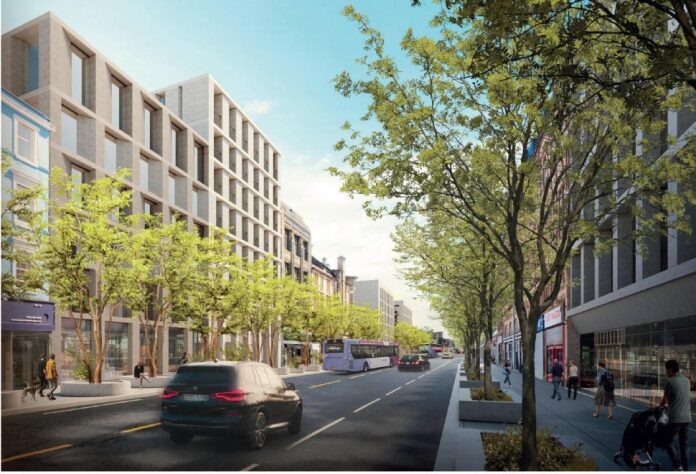
A new vision for North Laurieston
The council has also approved a masterplan for North Laurieston on the south bank of the Clyde near Glasgow city centre.
Developed with New Gorbals Housing Association and Elder & Cannon Architects, the plan aims to create a more attractive residential district while preserving its architectural heritage.
Proposals include the restoration of vacant listed buildings on Carlton Place, new housing, improved streets and public spaces, and better connections between Laurieston, Tradeston, the Gorbals and the river.
The masterplan is intended to guide regeneration over several years, rather than deliver all the changes through one construction project.
It could also help complete the transformation of the wider Gorbals area, which has undergone substantial redevelopment over the past three decades.
A bigger vision for the Clyde
The individual developments now form part of a wider ambition to make the Clyde a central feature of economic and community life rather than a barrier between neighbourhoods.
The Clyde Mission Strategic Masterplan covers the river corridor from Lanark to Dunoon, extending approximately 500 metres from each bank.
It identifies three principal areas for economic development: tourism, leisure and culture; maritime and river-based industries; and clean, affordable energy.
The programme also aims to address challenges including contaminated industrial land, flooding, poor transport connections and limited access to the waterfront.
Ross Nimmo, Head of Place at Glasgow City Region, described the approval as an important milestone.
He said: “This is a major milestone for an incredible programme with immense possibilities. The Strategic Masterplan will bring renewed coherence, focus and vigour to what is a nationally significant strategic development opportunity.”
“It’s now time for us to work with partners to bring the Growth Programmes and Signature Locations to life across the River Clyde corridor.”
The Clyde Mission will bring together local authorities, businesses, developers and other organisations to identify investment opportunities and coordinate future projects.
Much of the work will take years to complete, and funding, detailed designs and construction programmes still need to be agreed for several of the more ambitious schemes.
The approved city-centre park and ongoing development at Yorkhill Quay offer some of the clearest indications of what could emerge in the future.
After decades in which Glasgow often developed with its back to the river, the ambition is to make the banks of the Clyde a place with a new sense of purpose.