Plans for one of Scotland’s biggest artificial intelligence developments have come under fresh scrutiny after the company behind the £8.2 billion project confirmed its data centres will rely on the National Grid rather than a proposed direct supply of renewable electricity.
DataVita, which is developing a major AI campus at Chapelhall near Airdrie, previously outlined plans for more than one gigawatt (GW) of renewable energy capacity, including wind farms, solar installations and battery storage.
The electricity was intended to reach the data centres through private wire connections, bypassing the public electricity network.
The Lanarkshire AI Growth Zone was announced in January with the backing of the UK Government. It was presented as a major investment that could create up to 3,400 jobs and establish Scotland as a leading location for artificial intelligence infrastructure.
However, an investigation by The Guardian has highlighted a significant difference between the company’s original renewable energy proposals and its current plans.
DataVita has now confirmed that its data centres will be supplied by the National Grid, while direct connections to nearby renewable energy developments remain a possibility for the future.
In an updated explanation published on its website this month, the company states: “Our data centres are fully grid served, and that does not depend on any particular generator.”
It adds that renewable generation planned nearby could eventually supply the campus directly, although the layout and capacity of those developments will be determined through separate planning applications and environmental assessments.
The position contrasts with DataVita’s announcement on 29 January, which described a development combining 500MW of AI data centre capacity with more than 1GW of renewable energy infrastructure connected directly to the facilities.
At the time, the company said the renewable system would generate more electricity than the data centres consumed, allowing surplus energy to be exported to the National Grid.
The original proposals also anticipated electricity costs below 10p per kilowatt-hour and particularly low carbon emissions.
DataVita disputes suggestions that it misrepresented its intentions.
Responding to The Guardian, a spokesperson said: “Our commitment to renewable energy is unchanged.”
The company explained that its grid electricity would be purchased through a renewable power purchase agreement.
Such agreements allow companies to contract for electricity generated from renewable sources without requiring a direct physical connection to a particular wind or solar farm.
DataVita also points to Scotland’s relatively low-carbon electricity supply, arguing that locating energy-intensive computing facilities in Lanarkshire offers environmental advantages over other parts of Britain.
The distinction between the original proposals and the company’s latest explanation has nevertheless raised questions among environmental campaigners.
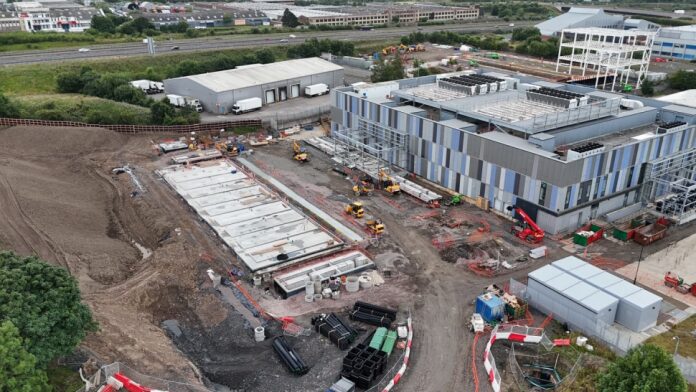
Kat Jones, director of Action to Protect Rural Scotland, questioned the feasibility of relying entirely on renewable generation to supply enormous AI facilities, which require a continuous and reliable electricity supply.
She told The Guardian that the development illustrated concerns about the scale of renewable energy claims being made by data centre operators.
The latest explanation does not necessarily indicate a change to the planning application for DataVita’s proposed DV4 facility at Chapelhall.
Planning analysis published on Saturday (7 November) found that the energy statement submitted for DV4 in August already identified a grid connection as its electricity supply. A future private wire connection was described as a possibility rather than a requirement for that development.
The wider Lanarkshire project has attracted substantial financial backing.
In August, DataVita secured a financing package worth around £300 million to expand its existing DV1 data centre and construct another facility, DV3.
The arrangement was supported by a £202 million financial guarantee from the UK Government-owned National Wealth Fund.
The guarantee supports lending from a consortium of banks and is not a £202 million cash grant to the developer.
Both facilities have been contracted to American AI infrastructure company CoreWeave under 15-year agreements.
The financing is expected to support around 600 construction jobs and approximately 100 permanent skilled roles at the two facilities.
Further development is proposed across the wider AI Growth Zone, including the DV4 data centre and an innovation park.
DataVita has also proposed a community benefit programme worth up to £543 million over 15 years, with the funding dependent on data centres becoming operational and generating revenue.
The revised energy plans come as Scotland faces growing questions about how the rapid expansion of artificial intelligence infrastructure will affect electricity demand and the environment.
New planning requirements introduced in September mean proposed data centres exceeding 50MW must undergo environmental impact assessment where the relevant development criteria apply.
DataVita maintains that its Lanarkshire development will use low-carbon electricity and that its commitment to renewable energy remains unchanged.
The company says its proposed renewable energy developments will be subject to separate applications, with public consultation before decisions are taken.