
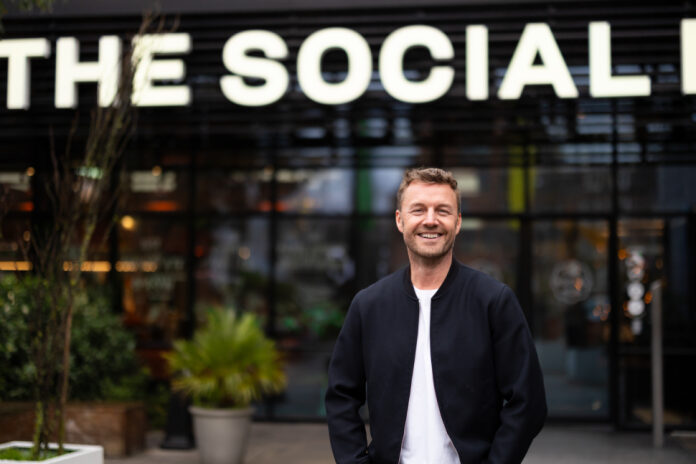
The Scottish entrepreneur behind one of Europe’s fastest-growing hospitality businesses is preparing to make his biggest investment yet in his home city, with ambitious plans to transform a derelict site in Edinburgh.
Charlie MacGregor, the founder of The Social Hub, is the driving force behind a proposed £200 million development at Fountainbridge that will bring a huge new hotel, student accommodation, restaurants, a rooftop bar and hundreds of co-working spaces to the capital.
For the Edinburgh-born businessman, it is a homecoming more than four decades in the making.
MacGregor grew up in an entrepreneurial family in the city. His father was a pioneer in the student accommodation business, developing one of Edinburgh’s earliest purpose-built student housing projects in partnership with the University of Edinburgh in the early 1980s.
As a boy, Charlie would accompany his father to meetings. He would eventually build on the family business idea to create The Social Hub, an Amsterdam-based company that now operates 21 properties across Europe, from Glasgow and Paris to Barcelona, Rome and Vienna.
His latest ambition is to bring that international success back to the Scottish capital.
The company has submitted plans to transform part of the former Fountain Brewery site, which has lain vacant for around 20 years, into a nine-storey hospitality and community destination.
The £200 million project would be one of the most significant new developments in Fountainbridge, creating up to 100 jobs and becoming a focal point for the wider regeneration of the former industrial district.
MacGregor said: “Edinburgh is my home city, and bringing our model here is something I’ve dreamed of for years.”
It is a return to the city where his understanding of the property business began.
In a recent interview with hospitality technology company Mews, MacGregor recalled spending much of his childhood watching his father establish the family accommodation business: “I literally grew up in his meetings.
“I spent a lot of time in university offices, and I was a little kid being dragged along, so I used to have to sort the keys out just to keep me happy. And as he slowly started to develop these buildings, I was a bit older then, so I got press-ganged into carrying furniture down from the old, whatever it was, then carrying the new furniture in or painting walls and all that type of stuff.
“So, it was hardcore startup stuff back in those days. But what really struck me was that I saw his business was expanding from Edinburgh, where we were born, up to Aberdeen, but right down to Plymouth.
“And I used to go to all these places with him, and they were all the same. The colour of the walls was the same, the furniture was the same. I saw that once the university had taken it over, then they would put all these notices up saying, “Don’t do this. Don’t do that. You’ll be fine if you do this.” And I kind of grew up in that environment, and it always struck me that it was always negative. You know, there wasn’t a sign saying, “Hey, have a nice day,” or anything like that.
“It was always just a stick. You just had a stick. If you do something, you’ll be punished in some way. And I remember asking him, I said, ” Hey, Dad, why is all the furniture the same? Let’s decorate.” This is somebody who’s going to live here. This is somebody’s home. They’re coming from the first moment they leave their parents. And I’m not sure I fully understand the significance of that step, but I wanted to make it a bit more personal.
“And he said, “Well, look, why bother? I have a lease with the university; I’m not directly involved in the students. And who cares? It’s only students, right?” And he didn’t mean it in a nasty way. It was just the way that the industry started, and it started with property developers.
“And property developers are not the most customer-friendly. So, when I had the chance to do it by myself, that’s exactly what I did. I started making flats.
“I wanted to create homes for people and decorate their stuff. And people told me in those days that I was crazy, that I was wasting money. And indeed, the first building I ever built, way before TSH, The Social Hub or the student hotel, was in London, and I didn’t get any higher rent. My lease or my contract was indeed exactly as it was expected. Nobody paid a premium for the fact that I had pictures on the walls and nice waste bins and, you know, really tried to make it at home.”
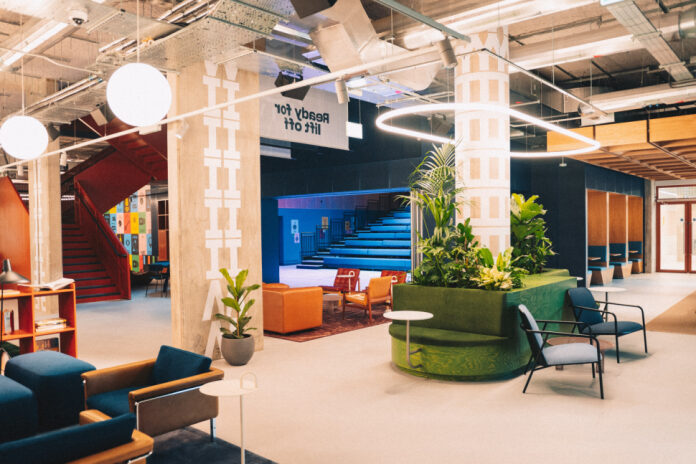
The Social Hub
MacGregor wanted to create places where people could feel comfortable, make friends and enjoy the experience of living away from home.
He did not attend university himself, instead beginning his working life on building sites as a teenager.
At 25, he bought a small student accommodation company, which he would sell a decade later.
He also began developing property in London, experimenting with the idea that student rooms could be more welcoming and comfortable without losing their commercial appeal.
One early project in Rotherhithe involved 72 rooms that he furnished and decorated to make them feel more like homes.
Although the improvements did not initially command higher rents, the accommodation subsequently became one of the university’s most popular properties, with a waiting list.
Recalling the moment he discovered its success, MacGregor said he telephoned his father: “I was super excited because I was like, yes, people do want to live in a nice environment. Yes. So, I called my dad. I said, “I told you so.” So, that’s kind of how it started.
“It just almost struck me that two things, I guess: if you want to stimulate the right type behaviour, don’t wield only a stick because it doesn’t work for me. So, why would it work for other people?
“And if you want to indeed work on the other side of that, then create an environment where people feel that they’re respected and trusted and safe and then you can have a conversation.
“And again, I’m talking now, 30-odd years later, so I understand that. But this was something that was just inside of me, intuitively inside of me.”
After moving to the Netherlands, he developed the concept that would become The Student Hotel, opening its first property in 2008.
The idea was to put students, hotel guests, entrepreneurs and local residents together in one building?
The business eventually became The Social Hub, with shared working areas, gyms, restaurants, cultural events and communal spaces all playing a role.
His belief was that good design and hospitality could create places where people wanted to spend time, rather than simply somewhere to sleep.
The business has since attracted major international investors, including Singapore’s sovereign wealth fund GIC and Dutch pension investor APG. A 2022 investment valued the company at approximately $2.1 billion.
The Social Hub made its UK debut in April 2024, when MacGregor opened a £90 million development at Candleriggs Square in Glasgow’s Merchant City.
The building combined almost 500 bedrooms with more than 200 co-working spaces, a restaurant, bar, gym and event facilities.
Speaking to me at the time, MacGregor said that the city had become an attractive destination for students, creative businesses and entrepreneurs.
He wanted the hotel to become a gathering place for local people, rather than somewhere reserved for paying guests: “This building is beautiful, but it needs the energy of all those youngsters and professionals, locals and hotel people” he said.
The company says the Glasgow venue now hosts more than 600 events annually, ranging from cultural activities and film screenings to workshops and community gatherings.
Edinburgh would take that concept further.
The proposed development at Fountainbridge would provide between 574 and 580 bedrooms, with space for students, conventional hotel guests and people making extended stays in the city.
The balance of accommodation could change throughout the year, allowing rooms to serve different markets depending on demand.
There would be a dedicated co-working facility for 300 people, alongside additional flexible working areas, a gym, clubhouse, theatre, meeting rooms and communal kitchen.
The plans also feature a rooftop bar, café and neighbourhood restaurant, with the ground floor designed to encourage activity around the new Leamington Square.
The café and restaurant would occupy prominent corners of the building, with the potential for outdoor seating.
MacGregor’s vision is that local residents should feel as comfortable visiting for a coffee, attending an event or using the shared facilities as guests staying overnight.
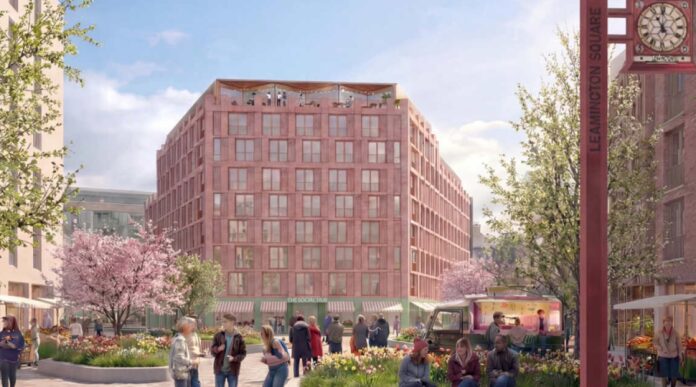
The proposal forms part of the wider Fountainbridge masterplan, which includes new homes, shops, offices and public spaces on land once occupied by Edinburgh’s brewing industry.
The wider regeneration proposals include 464 homes, with 186 designated as affordable, as well as improvements around the Union Canal.
The Social Hub says its Edinburgh scheme could deliver a £15.5 million boost to the local economy, while supporting more than 280 jobs in addition to those directly created by the business.
Its plans have received backing from organisations including the University of Edinburgh, Edinburgh Chamber of Commerce and technology incubator CodeBase.
MacGregor has also sought to make social impact part of the company’s identity. The certified B Corporation pledges one per cent of its annual revenue to its Talent Foundation, which supports young people facing barriers to opportunity.
Away from the business, he is a co-founder of Movement on the Ground, a non-profit organisation working with refugees and displaced people, including on the Greek island of Lesvos.
The entrepreneur’s company’s expansion has taken him across Europe, yet Scotland remains an important part of the story.
More than 40 years after watching his father develop student accommodation in Edinburgh, he wants to create a very different kind of building for the next generation.
This time, the investment could help reshape an entire neighbourhood.