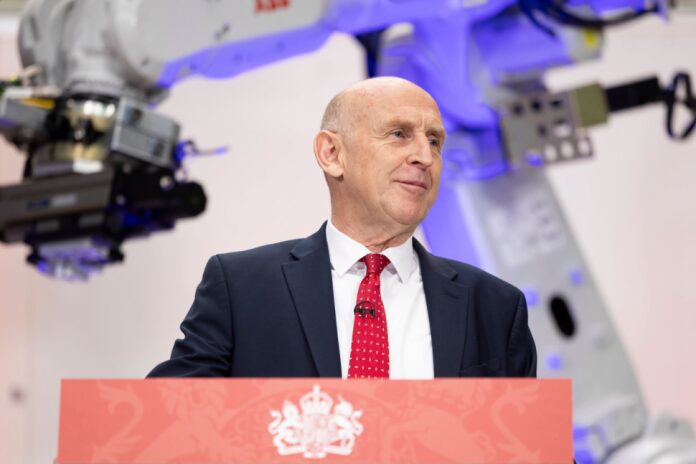
A cabinet battle over the future of the Rosebank oil field is intensifying ahead of Wednesday’s Budget, with Chancellor John Healey signalling support for continued North Sea production while Energy Secretary Miatta Fahnbulleh is understood to have serious reservations about approving the development.
Rosebank, around 80 miles west of Shetland, has become one of the most difficult energy decisions facing the UK Government after ministers last week gave the go-ahead for the Jackdaw gas field east of Aberdeen.
Reports today suggest Healey and Business Secretary Jonathan Reynolds are strongly in favour of Rosebank proceeding, arguing that the project could protect North Sea jobs, generate tax revenues and help fund the transition towards renewable energy.
There have also been briefings suggesting Prime Minister Andy Burnham is sympathetic to that argument, although Downing Street has been careful publicly to stress that the Rosebank application is being considered through a formal regulatory process.
Fahnbulleh has meanwhile insisted that she will make the ministerial decision and that the process has to follow a tightly defined legal framework.
That is important because the previous consent for Rosebank was effectively overturned by the Court of Session in January 2025 after legal challenges over the way emissions created when the oil and gas were eventually burned had been assessed.
A fresh application has since been submitted and subjected to another environmental assessment and public consultation.
Fahnbulleh has also drawn a clear distinction between Rosebank and Jackdaw.
Jackdaw is overwhelmingly a gas development and ministers argued its output would contribute directly to Britain’s domestic energy supply at a time when homes and businesses remain reliant on gas.
Rosebank is expected to produce around 90 per cent oil and 10 per cent gas, with much of the oil likely to be sold into the international market.
The Energy Secretary said last week that Jackdaw was a gas field serving the domestic market while Rosebank was principally an oil field whose output would be exported: “It is right that we judge each application in its own right, and it is absolutely critical that the decision is consistent with our climate obligations, our carbon budgets and the end destination we need to get to with the energy transition.”
That distinction has led to reports that Fahnbulleh is leaning towards rejecting Rosebank, although she has publicly insisted no final decision has been taken.
The Treasury appears to be making a different argument. During a visit to the St Fergus gas terminal in Aberdeenshire last week, Healey repeatedly referred to future “oil and gas” revenues being paid into the government’s new Energy Wealth Fund.
That choice of words attracted attention because the project approved that day, Jackdaw, is predominantly a gas field.
Speaking to ITV’s Robert Peston, the Chancellor said the government wanted the proceeds generated by North Sea energy production to help finance investment for future generations. His repeated references to oil as well as gas were interpreted as a sign that he expects – or at least wants – Rosebank to proceed.
The argument could become relevant when Healey delivers his first Budget on Wednesday.
The government has already announced that the Energy Wealth Fund will receive an initial £2 billion, with North Sea tax revenues flowing into it over time. The money is intended to support renewable and low-carbon energy projects, including infrastructure capable of creating new work for communities currently dependent on oil and gas.
Healey is expected to provide more detail about that funding in the Budget as part of a wider increase in investment through the National Wealth Fund.
That gives the Chancellor an opportunity to set out what could become the government’s political justification for allowing continued production from existing North Sea fields: the UK will still need oil and gas during the energy transition, while some of the tax revenue generated by those fields can be recycled directly into renewable energy and new industries.
It would allow ministers to present North Sea oil not as a way of helping to finance net zero aspirations.
Rosebank is potentially enormous. House of Commons Library analysis says that under an optimistic production scenario it could produce around 437 million barrels of oil and 10.7 billion cubic metres of gas.
Its scale is also why environmental opposition is much stronger than it was to Jackdaw. Estimates presented during the political debate suggest the lifetime emissions associated with Rosebank could be around seven times those of Jackdaw.
Unite and GMB unions have argued that Rosebank should be approved to protect jobs and domestic energy production, while the Conservatives and Reform UK are pressing ministers to go further by encouraging investment across the North Sea.
A group of other trade unions, including Unison and the PCS, has urged the Prime Minister to reject the project, illustrating how the dispute cuts across the Labour movement as well as the Cabinet.
The Scottish Parliament last month backed an amended Labour motion recognising that oil and gas would remain part of Scotland’s energy mix for decades while insisting that the transition must protect workers and build new industries.
The SNP has argued that Rosebank should be assessed under the legal framework while calling for future North Sea revenues to be invested in a Future Generations Fund.
Wednesday’s Budget will not necessarily settle Rosebank’s future. It may, however, reveal which side of the argument is gaining the upper hand.