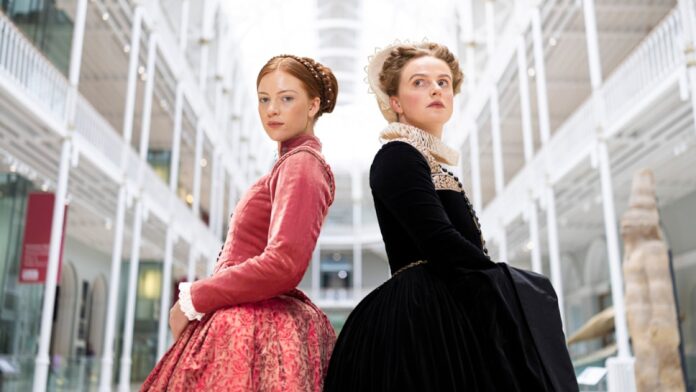
A major new exhibition at the National Museum of Scotland will challenge perceptions of one of Scotland’s most renowned monarchs.
Mary, Queen of Scots: Renaissance and Resistance will bring together around 100 loans from across Europe, some never seen before in Scotland. The exhibition will present a vibrant Renaissance monarch on a European stage and a Scottish queen fiercely resisting those who conspired to take her crown, and ultimately, her life.
In 1561 the widowed teenager Mary, Queen of Scots returned from France to a Scotland riven by the Protestant Reformation. This revolution had seismic consequences for Mary and for the Scottish people as the iconoclastic kirk’s tentacles extended throughout daily life and Protestantism became a key marker of Scottish nationhood. Six years later, Mary was overthrown and Scotland was transformed.
This decade of disruption was also shaped by the European Renaissance. Mary’s royal Stewart forebears had encouraged its influences in Scotland, and it formed the backdrop to her upbringing at the French court. Scots made, gave and wore beautiful objects, such as the remarkable Penicuik jewels, linking them to the ideas of the Renaissance circulating throughout Europe.
The exhibition will explore the vibrancy of 16th century Scotland alongside pivotal moments that changed its history. Amidst religious revolution, political faction and English meddling in Scottish affairs, powerful men jostled for control over Mary’s government, then that of her infant son James.
When one group forced her abdication in 1567 they rewrote Scottish history to read as a triumphal narrative of Scottish Protestantism. In doing so they depicted Mary as a guilty, unstable adulteress, and implicated in her second husband Darnley’s murder. These tracts both demonised Mary and helped to legitimise a political rebellion, and have since detrimentally influenced her reputation as a ruler. Letters from this tumultuous period will be shown alongside a spectacular silver casket that is believed to have once held the correspondence and sonnets which played a dramatic role in Mary’s downfall.
Today we are familiar with her life’s dramatic events and its tragic ending on the executioner’s block. However given the constraints of a patriarchal world, for nearly a decade Mary did well to negotiate her leading place within it. For too long, Mary in the popular imagination has been dressed in black, her life seen through the lens of her violent death. This exhibition will instead capture Mary clothed in Renaissance pink and dripping with pearls, as she was depicted in a highlight loan to the exhibition, an exquisite portrait by François Clouet, lent by His Majesty The King from the Royal Collection. A dynamic, educated, sophisticated queen and a monarch on a European stage.
Dr Anna Groundwater, Principal Curator of Renaissance and Early Modern History at National Museums Scotland, said: “Mary’s story is so often told through the words of the men who sought to defeat her in the 1560s, and her autonomy downplayed or dismissed entirely, but she was far from passive. She was famed for her beauty, vivacity and ability to charm. Raised at the sophisticated French court, she was well-educated, had an extensive library and spoke several languages. This exhibition will explore different versions of Mary, those she inhabited and those portrayed by others, telling a story of Renaissance and resistance.”
The exhibition will be accompanied by a programme of events at the National Museum of Scotland and will run between 12 June – 14 November 2027.