Five new Royal Navy warships being built in Scotland could face delays of up to two years, Babcock has admitted.
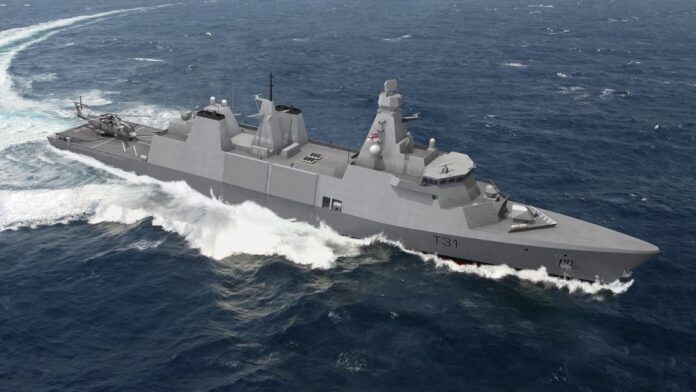
The defence giant is building the Type 31 frigates at its Rosyth shipyard in Fife as part of a £1.25 billion programme to replace ageing Type 23 vessels.
Sir Nick Hine, chief executive of Babcock’s marine division, said the company was trying to contain delays across the programme, with the first ship, HMS Venturer, now expected to be delivered to the Royal Navy in 2028.
Asked about the timetable for all five vessels, Sir Nick said there could be a delay of “somewhere up to about two years” across the programme.
He said the timetable for HMS Venturer had effectively moved by “a couple of years”, although Babcock hopes to limit the impact on later ships.
The admission comes as the Royal Navy attempts to modernise its surface fleet amid growing concern over its ability to maintain enough operational warships.
HMS Venturer had previously been scheduled to be ready for operations in 2027. The Ministry of Defence confirmed in 2023 that the date had formed part of the programme since its investment decision in 2019. At that point, ministers also expected all five Type 31 frigates to have been delivered by the end of 2028.
The timetable has since slipped.
In a parliamentary answer on 19 October this year, defence minister Luke Pollard said HMS Venturer was now scheduled to be handed over to the Royal Navy “by the end of the decade”, with the programme remaining under continual review.
Babcock is now giving a more specific target of 2028 for delivery of the first ship.
Sir Nick blamed a combination of inflation, rising labour and energy costs, supply-chain pressures and disruption caused by events including Covid and the war in Ukraine.
He said the fixed financial envelope available for the programme meant delays were one of the few ways of absorbing increased costs while retaining the required capability.
The programme has also been hit by problems during construction.
Babcock announced a £140 million charge earlier this year after higher than expected levels of rework were required on the first two ships, HMS Venturer and HMS Active.
The company said design changes and work being carried out later in the construction process had made the problems more complicated and expensive to resolve. Its cumulative losses on the Type 31 contract have risen above £300 million.
Despite the difficulties, work continues at Rosyth.
HMS Active, the second vessel in the class, was rolled out of Babcock’s assembly hall in February. Construction has also begun on HMS Bulldog, while HMS Formidable and HMS Campbeltown are at different stages of the programme.
The five Inspiration-class frigates are intended to carry out duties including maritime security patrols, escort operations, anti-piracy missions and support for Royal Navy carrier groups.
The programme supports thousands of jobs across Scotland and the wider UK supply chain. The Ministry of Defence said earlier this year that around 2,500 skilled jobs are supported by the Type 31 programme, including hundreds of apprenticeships.
Sir Nick said one of the biggest concerns for Rosyth was ensuring further work followed the Type 31 programme so the shipyard did not lose the skills and workforce developed to build the new frigates.
The Royal Navy still says all five Type 31 ships are planned to be in service by the early 2030s.