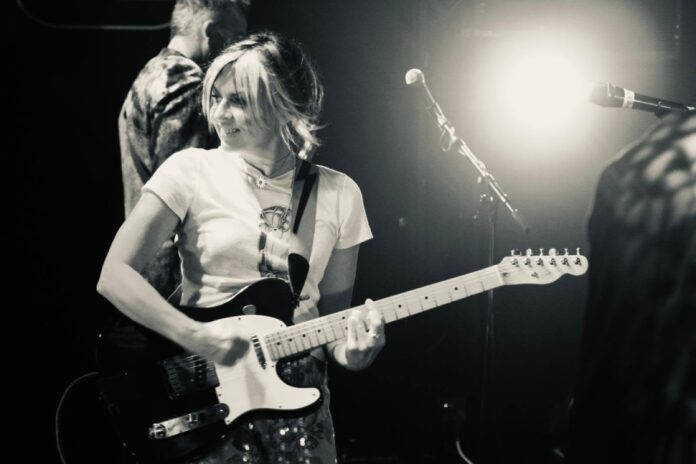
Louise Wener remembers arriving in Glasgow in a little yellow van, travelling through the snow with her bandmates sitting on benches in the back and no roadies to help unload their equipment.
Sleeper were making their way in the music business, playing early gigs at King Tut’s and building an audience that would stay with them long after the Britpop years were over.
More than three decades later, Wener is preparing to return to Glasgow for a concert at the Barrowland Ballroom on Saturday 20 March 2027.
The show is part of a UK tour supporting Sleeper’s forthcoming sixth studio album, End of the World, which is released in February. Turin Brakes will join them as special guests.
For Wener, whose songs including Inbetweener, Sale of the Century and Nice Guy Eddie helped establish Sleeper among the most recognisable bands of the 1990s, returning to the stage has brought an unexpected sense of freedom.
The singer and songwriter once believed she had left the band behind for good. After Sleeper split in 1998, she established herself as a successful author and had no intention of revisiting her former life.
A family illness in 2017 changed her perspective and prompted her to pick up where she had left off.
Today, she finds herself more comfortable performing than she was at the height of Britpop, when the demands of the music industry could make it difficult to enjoy the experience.
Speaking to Scottish News, Wener reflects on the band’s early Scottish shows, the pressures of fame, the enduring appeal of the 1990s and the emotional connection she now feels with audiences who have followed Sleeper for more than 30 years.
You wrote about your experiences in Britpop in your memoir. Did looking back on that period bring back memories or make you see things differently?
It was a strange process. I think I’d been asked to do a book on several occasions over the years before I finally did it, and my feeling was that I had to get to a point where I looked back on it fondly and with sort of humour.
So it’s quite a humorous book, I think. It took me a while to be able to do that. But I was able to look at it really through a pretty happy lens, I think.
When Sleeper originally split up, did you imagine you would ever return to the band? What brought you back?
The exit was really, I felt like I had to walk away and I was done with it, and I had to start something utterly new.
I really had no intention to come back to it at any point in my life, I think.
My sister got very sick in 2017. She was diagnosed with cancer, and I had a sort of strange reaction amongst many other things I was feeling at that time, that I wanted to have a slight jump off a cliff moment and go back and play again and see how it felt.
So that was the genesis of it.
Sleeper have been back together for several years now, playing to audiences who remember you from the 1990s alongside younger fans. How has the experience been?
It’s been amazing mostly, and I think when you first come back you’re not really sure how it’s gonna feel or how you’re gonna relate to it after all that time.
But I genuinely think it’s best not to overanalyse it either, so you have to very much enjoy it in the moment at this point, rather than plan for it too much.
What memories do you have of playing in Scotland in the early days of Sleeper?
I remember really early gigs at King Tut’s and when we were driving in this little yellow van which had no proper seating in it. It just had benches in the back.
It was the most unsafe possible way to travel. And we didn’t have roadies or anything very flash and expensive like that.
We would just turn up and hump our gear from the van to the stage.
And I remember it snowing and freezing in Scotland and just pulling our amps out.
But playing almost always to amazing crowds. So yeah, very fond memories of that.
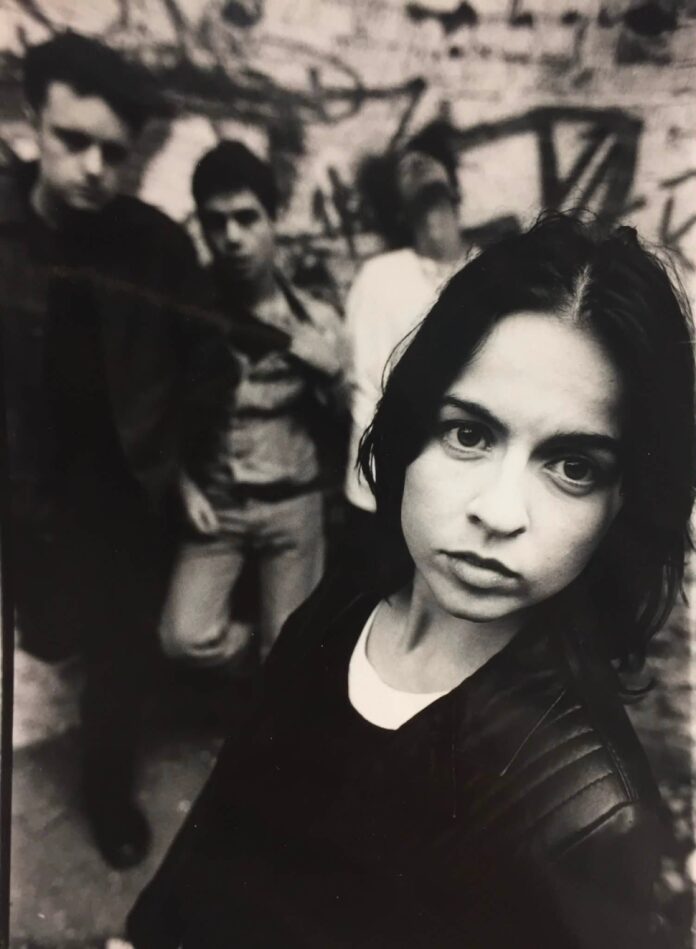
The Barrowlands has always been famous for its connection between bands and audiences. With people now filming gigs on their phones, do you think that sense of immediacy is still there?
Yeah, absolutely. I get that it sometimes feels filtered and there are always people at the front, and there are sometimes people at the front that will just film the whole thing and not literally move off the spot, and that’s quite strange.
I can’t believe anyone ever goes and watches those bits of film that they’re taking. It seems so odd to me.
But I think in some ways there’s even more of a connection between the audience and the band than there was even back in the heyday of it.
Because I think we’re all enjoying those moments of connection so much more because, you know, the world has never been more connected, right?
But I think we also feel this slight disassociation from one another nevertheless, because we’re filtering our lives through screens so much.
I was talking to Rick Witter from Shed Seven recently about how the 1990s felt like being part of a juggernaut, constantly moving from one place to the next. He says he enjoys performing more now because he can appreciate the experience. Do you feel the same way?
I think Rick’s absolutely right, and I think you speak to a lot of artists from that era and they feel the same.
You felt part of a process. And you’re also in some ways a bit more self-conscious because you’re always constantly aware of what is your position in this movement? How are you gonna continue? What’s the next record release gonna be?
It was frantic.
I feel much more comfortable on stage than I did when I was in my 20s, which is maybe an odd thing to say because you expect that in your 20s your confidence is at its absolute peak.
But I genuinely feel more comfortable now than I ever did, and I lose myself in a performance.
And that sounds like, you know, you are standing with 1,000 people looking at you, but in some ways you know that it’s working when you’re not really conscious of yourself anymore and you’re just part of the moment.
Maybe I’ve turned into a hippie in my old age. I don’t know.
Sleeper always seemed more interested in making music than embracing the celebrity and rock ‘n’ roll lifestyle. Was that how you approached it?
I think it very quickly became that.
But I mean, I grew up in a very boring, beige, ordinary house and little town, and there was nothing interesting or bohemian or rock ‘n’ roll about it.
No one was interested in music. It wasn’t part of what I grew up with.
And I, as a kid, like lots of kids, I wanted to be famous.
I thought that would cure everything, and that would be the most amazing moment, that would be what would be wonderful about this whole process.
You very, very quickly learn, or at least I did, that that is not what’s enjoyable about it in the least.
And what’s enjoyable is the process of making music, of writing songs, of recording, of creating something that you really care about.
So all the paraphernalia is the least enjoyable part of it, I suppose.
I learnt very quickly that that was not the thing that I was chasing.
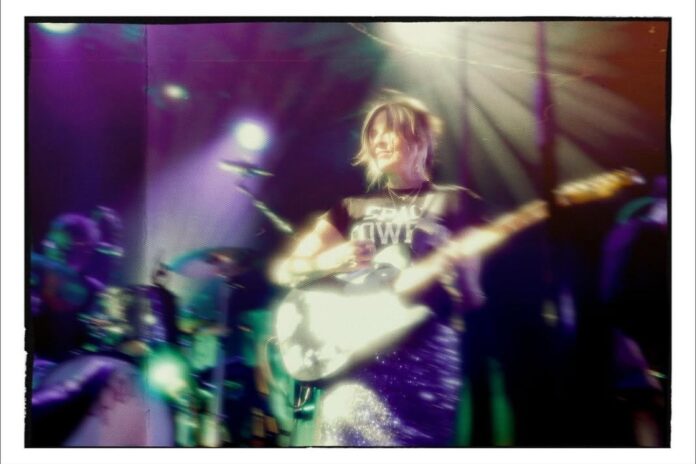
After everything you’ve experienced together, are there moments on stage now when you particularly appreciate being back with the band?
Entirely, yeah. Those moments on stage are the best moments.
It’s over very fast, you know? So it’s kind of like the moment you walk off and the bright lights shine on you, it’s gone.
So these are very ephemeral moments, I suppose, if that makes sense.
But yeah, that’s why you do it.
In Glasgow, music has often provided an escape for young people growing up in ordinary towns and villages. Would you like to think Sleeper’s music might inspire someone to pick up a guitar and follow a similar path?
I don’t necessarily think it has to be that journey.
You want to connect with people. If you think, all art is about communication.
If I make someone feel something, so whether it makes them wanna dance or cry or punch the air, if you connect in some way, there are a million journeys that come from that, whether that’s joining a band and all the difficulties that come with that.
I mean, it’s a pretty hard road to encourage someone on, I think, especially now.
So I don’t really think about it in those terms, but I think, have I written a song that someone has connected with?
There’ll be a million journeys that might stem from that in very subtle ways, I suppose.
When you’re out touring or playing festivals, do you find yourself meeting people from the old Britpop days who are also performing again?
Yeah, over the years for sure, and I think everyone is much more centred than they were back in the day.
Is that the right phrase to use?
And I think that’s because people are a lot less paranoid. There was a lot of paranoia in the ’90s and a lot of pretty heavy drug use, so it was a different atmosphere.
It was quite febrile. Is that the right word? I don’t know.
But everyone’s a grown-up now. The grown-ups are in the room, I guess.
Do you have particular memories of playing the Barrowland Ballroom itself?
Yeah, I think I do.
That must sound strange to say, but sometimes all those things just blur into each other, you know?
Very often you would just be travelling through, so you’d be in, you’d be on the stage, you’d be back in the van, and you’d be driving away.
There are so many places in so many parts of the world that I feel that about, that I almost need to go back and spend time in.
And I think coming back at this stage of the game, we will spend time, and we always take it in much more.
You appreciate it much more than you did.
There’s a renewed interest among younger music fans in vinyl records, live gigs and music from the 1990s. Do you think they are attracted to something that feels more tangible than the digital world?
I don’t think we have ownership of what is real, and that means different things to different generations.
I don’t think we have any ownership over that. I just think people love that music.
Perhaps they have a slightly romanticised view of what the ’90s was and how they feel about it, but it was the last analogue age, and I think it has a unique position in people’s memories, identities, histories.
And I think it resonates in a way that really means something to even a younger generation.
Even when Sleeper weren’t together the music didn’t go away, did you ever find yourself unexpectedly hearing one of your songs in a supermarket or somewhere completely ordinary?
Yes, that happens. That does happen, and it’s a strange feeling.
Because you feel like almost, it’s like someone’s… I don’t know.
It’s a strange feeling. It’s a strange feeling.
How does it feel to sing songs that were written about emotions and experiences from your life 30 years ago?
I think you have to reconnect with them in a different way.
We’ve all lived lives since then, right? So I’m a completely different person than I was in 1995.
I relate to the songs differently.
We’ve been through some… I’m going to say that most of us have been through some pretty difficult stuff over the course of those years, as well as some wonderful stuff.
So you reinterpret the songs in a way, and you find a different route to them.
How do you put together a Sleeper setlist these days? Is it difficult balancing the songs people remember with newer material?
We just put together a set that we think pleases us and will please a crowd, you know?
So you want to absolutely connect with the songs that people love and reintroduce those, and also bring some new stuff into it as well that means a huge amount to us now.
So it’s always a mixture of those things.
Finally, what would you like to say to the Scottish fans who have supported Sleeper over the decades and will be coming to see you at the Barrowlands?
I think it’s an amazing thing. You can’t overestimate what a lovely feeling that is.
They’ve always been amazing crowds when we’ve come up to Scotland, and I just think it’s quite an emotional experience to reconnect with people over such a long period of time.
I think the crowds mean as much to us as us as a band might mean to them.
It’s very much a two-way thing these days, I think.