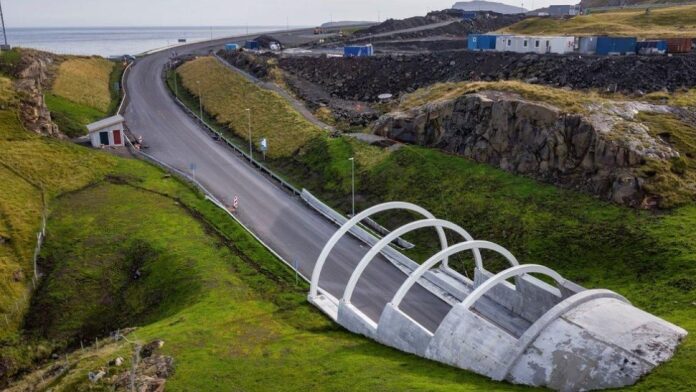
An ambitious network of tunnels beneath the sea could transform transport across Scotland’s islands, allowing residents to travel between communities without relying on ferries for the first time.
Plans are gathering pace in Shetland, where a series of subsea tunnels could connect some of the country’s most remote communities, while proposals for permanent road links are also being considered in the Outer Hebrides.
The developments could bring an end to decades of dependence on ferry timetables for thousands of islanders, opening up new opportunities for tourism, employment, housing and business.
In Shetland, plans for a network of four undersea tunnels, estimated to cost around £1.5 billion, have taken a significant step forward after the Scottish Government committed £23 million towards preparatory work.
Meanwhile, a Westminster report has urged the UK Government to consider helping fund new tunnels and bridges, warning that Scotland’s ageing ferry network is placing unacceptable restrictions on island communities.
The Scottish Affairs Committee concluded that permanent road links could help reverse population decline and transform the economies of remote islands.
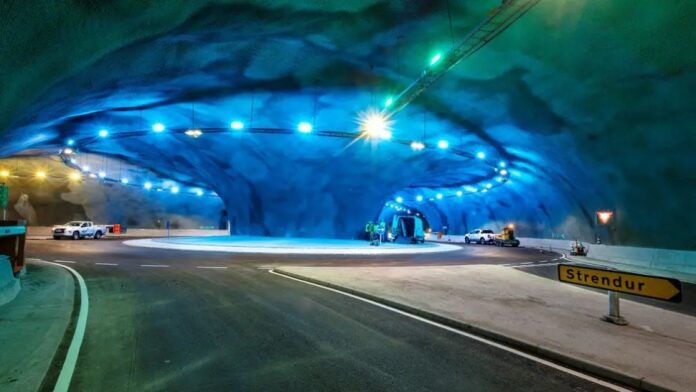
The idea may sound futuristic, but a network of subsea tunnels already operates in the Faroe Islands, where communities previously separated by ferry journeys can now travel directly between islands.
Scotland already has examples of how permanent transport links can change island life, from the Skye Bridge to the causeways connecting communities across the Outer Hebrides.
Shetland’s ambitious £1.5 billion tunnel network
The most advanced proposals are in Shetland, where the local authority has approved a long-term strategy that could eventually deliver four subsea tunnels.
The first priority is a road tunnel beneath Yell Sound, connecting mainland Shetland with the island of Yell.
A second tunnel would link Yell with Unst, Scotland’s most northerly inhabited island, creating a continuous road connection between Unst and mainland Shetland.
Further fixed links to Whalsay and Bressay are being considered for the longer term.
Shetland Islands Council approved an implementation route map in September, setting out the sequence of projects over approximately 30 years.
The first tunnel, connecting mainland Shetland with Yell, has been estimated to cost around £525 million. Consultants have suggested it could be completed as early as 2034, with a connection to Unst potentially following in 2036.
These dates remain dependent on securing the substantial funding needed for construction.
The Scottish Government has committed £23 million over three years to support initial work on the Yell Sound project, including the development of its business case and pre-construction activity.
The wider programme also includes plans to replace eight inter-island ferries.
Council leader Emma Macdonald described the approval of the route map as a major step forward.
She said: “Our most significant challenge now is to secure funding to allow implementation of these plans to move forward.
“Inter-island transport is the key to unlocking the potential of Shetland, and both the Scottish and UK Governments have a vested interest in helping that happen.”
The proposals would be important for Unst, home to the SaxaVord Spaceport, as well as Shetland’s seafood, tourism and renewable energy industries.
Instead of depending on connecting ferries, businesses would be able to move goods and equipment by road between the linked islands.
For residents, the benefits could be even more immediate – from reaching medical appointments to travelling for work, shopping or visiting family without planning journeys around sailing times.
Completing the road network through the Outer Hebrides
Hundreds of miles to the west, another ambitious idea could create a continuous road route through much of the Outer Hebrides.
The Western Isles already have an extensive network of causeways and bridges connecting communities across Lewis, Harris, the Uists, Benbecula, Eriskay and Barra.
But two stretches of water still interrupt the route.
The Sound of Harris separates Harris from Berneray and North Uist, while the Sound of Barra separates Barra from Eriskay.
At present, both crossings depend on ferries operated by CalMac.
Comhairle nan Eilean Siar has backed the principle of permanent links across both sounds, potentially using bridges, tunnels or other fixed-link infrastructure.
Transport Scotland has committed to further appraisal of the proposals as part of its long-term transport strategy.
The estimated cost of a fixed link across the Sound of Harris alone is between £109.6 million and £145.1 million.
The Western Isles Council has also suggested that a future link could incorporate renewable energy infrastructure, with electricity generation potentially helping offset the construction costs.
Such an addition would require significant further investment.
If both crossings were eventually completed, drivers could travel through the Outer Hebrides from Vatersay and Barra to Lewis without needing an inter-island ferry.
It could be one of the most significant changes to transport infrastructure in the islands for generations.
However, the proposals remain at an early stage. Detailed appraisals and consultation with island communities would be required before decisions could be taken on whether to proceed and what form the crossings might take.
The council has not supported the idea of a tunnel or bridge connecting the Western Isles directly to mainland Scotland, arguing that those journeys should continue to be served by improved ferry and air connections.
Could Mull and Orkney follow?
The Scottish Government is also examining the possibility of a permanent connection between the Isle of Mull and the Scottish mainland.
The proposal is one of three potential fixed links identified for further assessment in the second Strategic Transport Projects Review, alongside the crossings in the Outer Hebrides.
No decision has been taken on whether a bridge, tunnel or another form of crossing would be appropriate.
There is growing interest in similar ideas in Orkney.
Previous studies have explored permanent links between Rousay and Egilsay, as well as potential bridge connections involving Eday, Faray and Westray.
Orkney Islands Council has made clear that replacing its ageing inter-island ferries is its immediate priority, while remaining open to exploring fixed links in the future.
The authority has also warned that Orkney’s geology and the distances between some islands could make subsea tunnels more difficult and expensive than those proposed in Shetland.
The Faroe Islands offer a glimpse of the future
One of the strongest arguments for Scottish island tunnels comes from a small archipelago in the North Atlantic.
The Faroe Islands, situated between Scotland and Iceland, have spent decades developing an extensive network of bridges and tunnels.
The islands now have 23 tunnels, including four subsea connections.
The most recent major developments include the Sandoy Tunnel, which opened in 2023 and dramatically reduced the time needed to travel between Sandoy and the Faroese capital, Tórshavn.
During a visit earlier this year, members of Westminster’s Scottish Affairs Committee heard how improved transport connections had encouraged housebuilding, supported businesses and made smaller communities more attractive places to live.
The committee was told that the journey from Sandoy to Tórshavn had been reduced from as much as six hours to around 30 minutes.
It also heard evidence that communities with permanent road connections had experienced more stable populations than islands still dependent on ferries.
Scotland has its own examples. The opening of the Eriskay causeway in 2001 created a permanent road connection with South Uist.
According to evidence presented to MPs, Eriskay’s population had declined by 60% during the 50 years before the causeway opened. It subsequently increased by almost 20% over the following two decades.
Such figures do not prove that fixed links alone reverse population decline, but they demonstrate why the projects are attracting increasing interest.
Who will pay for Scotland’s island tunnels?
The biggest obstacle remains the enormous cost of construction.
Shetland’s proposed four-link network carries an estimated £1.5 billion price tag, while even a single crossing in the Western Isles could require more than £100 million.
Potential funding arrangements include contributions from the Scottish and UK Governments, local authority borrowing, private investment and tolls.
A study of Shetland’s proposals by engineering consultancy COWI concluded that the tunnels were both technically feasible and potentially attractive to investors.
The Scottish Affairs Committee has called on Westminster to take a more active role in supporting such projects, particularly where they could benefit industries including renewable energy, seafood production and space exploration.
Committee chair Patricia Ferguson MP said: “Scotland’s island communities deserve better than their unreliable ferry services, which place intolerable limitations on islanders going about their daily life.”
She stressed that decisions on permanent connections must ultimately be led by islanders.
There are concerns that tunnels could increase traffic, place additional pressure on infrastructure, alter the character of island communities and encourage some services to move to larger population centres.
The committee has also warned that bridges and tunnels will only be practical for a relatively small number of shorter crossings. Most Scottish islands will continue to depend on reliable ferries.
For the communities where permanent connections are possible, the potential change is profound.
The prospect of travelling between islands at any time of day could reshape everything from the local economy to where people choose to live and work.
Scotland’s island tunnels are still years away from becoming reality, but the latest developments in Shetland suggest the idea is moving beyond a distant ambition and into serious infrastructure planning.