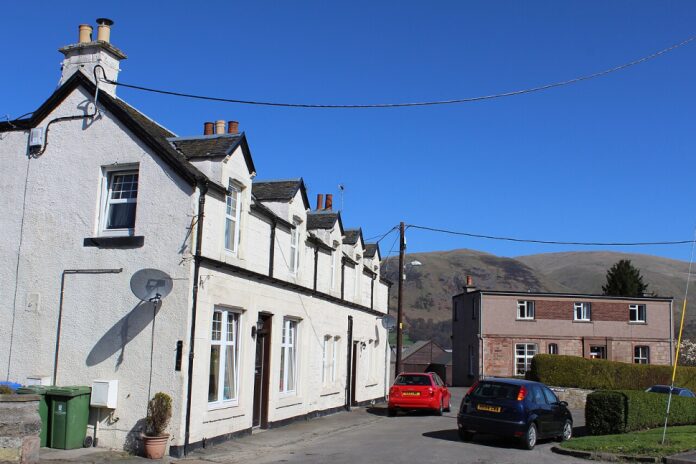
The reason this Scottish village is sinking revealed as government pledges support
Nearly 100 properties have been evacuated in Coalsnaughton, with officials warning that some residents may never be able to return.
For more than two months, residents in a small village in Clackmannanshire have watched roads buckle, pavements split and cracks appear in the walls of their homes. Investigators have now confirmed that the answer lies in the village’s industrial past.
The first warning came on 18 May when ground movement was reported at Benbuck View. Emergency services were called and 30 homes were evacuated.
The exclusion zone continued to grow. Residents were moved out of Dunmoss View, Nechtan Drive and Langour as new damage and movement were detected.
In total, 97 properties were evacuated. Streets were sealed behind fencing. Utilities were disconnected in parts of the affected area, while residents were allowed to return only during supervised visits to collect belongings.
Engineers examined drainage, the stability of the hillside, the condition of the buildings and the complicated network of abandoned mines beneath the village.
Now, after an eight-week investigation, the Mining Remediation Authority has confirmed that the movement is connected to historic coal mining.
The confirmation means the UK Government has a legal responsibility to fund work arising from the subsidence. It has also brought the village’s largely hidden underground history sharply back into view.
Mining was taking place in the area by the end of the 18th century, and the village grew alongside the pits and workings which spread across the Clackmannanshire coalfield.
Historic records show that the landscape around Coalsnaughton was crossed by shafts, underground passages and worked coal seams.
A cross-section prepared by the Mining Remediation Authority shows several coal seams beneath the housing development. These include the Mosie, Alloa Cherry and Alloa Splint seams, with the deeper Coalsnaughton Main and Wallsend seams beneath them.
The diagram shows the seams running below Nechtan Drive, Dunmoss View, Benbuck View and Langour as the ground slopes towards the River Devon.
The Government has said the Coalsnaughton investigation included borehole drilling, camera scans, geophysical work, underground surveys, monitoring equipment and weekly LiDAR surveys of the ground surface.
Monitoring has recorded more than 345mm of total movement at Dunmoss View. The area is still moving by between 5mm and 10mm a week.
At Benbuck View, 295mm had been recorded, with movement continuing at between 2mm and 5mm a week. One monitoring point at The Glen had moved by 245mm. The ground must stabilise before permanent repairs can begin, and it will continue to be monitored afterwards.
Under the Coal Mining Subsidence Act 1991, the Government has a duty to remedy qualifying damage caused by coal mining. That could involve repairing and stabilising homes or providing another solution when a property cannot reasonably be saved.
The UK Government has said it will reimburse eligible costs incurred by Clackmannanshire Council and the Scottish Government.
Residents whose homes have suffered the most serious damage could be offered the option of selling their properties to the Government at their full market value before the incident. Additional relocation support may also be available.
The Scottish Government had previously committed up to £1 million to cover immediate costs including temporary accommodation, welfare support and council staffing.
Energy Minister Michael Shanks said: “This has obviously been an extremely difficult situation for families over the past few months and I want to reassure all those affected that no one will be left to shoulder the burden alone.
“The UK government stands ready to do everything within our power to support those households affected, working side by side with the Scottish Government and Clackmannanshire Council.
“Unfortunately there is no quick fix but the Mining Remediation Authority is providing tailored advice and support for every household and our priority is to provide longer term certainty as quickly as possible.
“My thoughts are with all those caught up in this disruption which I know will be taking a real toll on families in the community.”
Carl Banton, Chief Operations Director at the Mining Remediation Authority said: “The safety and welfare of residents remain the priority for every partner involved in the response. We are working closely with Clackmannanshire Council and the Local Resilience Partnership to make sure that support remains in place and that everyone has a clear point of contact.
“We will be contacting affected residents directly to explain what this means for them personally, and to talk through the support that is available.
“We are committed to keeping you informed at every stage of this recovery phase, and we are working hard to ensure that this community is safe.”
Nearly 100 properties have been evacuated in Coalsnaughton, with officials warning that some residents may never be able to return.
For more than two months, residents in a small village in Clackmannanshire have watched roads buckle, pavements split and cracks appear in the walls of their homes. Investigators have now confirmed that the answer lies in the village’s industrial past.
The first warning came on 18 May when ground movement was reported at Benbuck View. Emergency services were called and 30 homes were evacuated.
The exclusion zone continued to grow. Residents were moved out of Dunmoss View, Nechtan Drive and Langour as new damage and movement were detected.
In total, 97 properties were evacuated. Streets were sealed behind fencing. Utilities were disconnected in parts of the affected area, while residents were allowed to return only during supervised visits to collect belongings.
Engineers examined drainage, the stability of the hillside, the condition of the buildings and the complicated network of abandoned mines beneath the village.
Now, after an eight-week investigation, the Mining Remediation Authority has confirmed that the movement is connected to historic coal mining.
The confirmation means the UK Government has a legal responsibility to fund work arising from the subsidence. It has also brought the village’s largely hidden underground history sharply back into view.
Mining was taking place in the area by the end of the 18th century, and the village grew alongside the pits and workings which spread across the Clackmannanshire coalfield.
Historic records show that the landscape around Coalsnaughton was crossed by shafts, underground passages and worked coal seams.
A cross-section prepared by the Mining Remediation Authority shows several coal seams beneath the housing development. These include the Mosie, Alloa Cherry and Alloa Splint seams, with the deeper Coalsnaughton Main and Wallsend seams beneath them.
The diagram shows the seams running below Nechtan Drive, Dunmoss View, Benbuck View and Langour as the ground slopes towards the River Devon.
The Government has said the Coalsnaughton investigation included borehole drilling, camera scans, geophysical work, underground surveys, monitoring equipment and weekly LiDAR surveys of the ground surface.
Monitoring has recorded more than 345mm of total movement at Dunmoss View. The area is still moving by between 5mm and 10mm a week.
At Benbuck View, 295mm had been recorded, with movement continuing at between 2mm and 5mm a week. One monitoring point at The Glen had moved by 245mm. The ground must stabilise before permanent repairs can begin, and it will continue to be monitored afterwards.
Under the Coal Mining Subsidence Act 1991, the Government has a duty to remedy qualifying damage caused by coal mining. That could involve repairing and stabilising homes or providing another solution when a property cannot reasonably be saved.
The UK Government has said it will reimburse eligible costs incurred by Clackmannanshire Council and the Scottish Government.
Residents whose homes have suffered the most serious damage could be offered the option of selling their properties to the Government at their full market value before the incident. Additional relocation support may also be available.
The Scottish Government had previously committed up to £1 million to cover immediate costs including temporary accommodation, welfare support and council staffing.
Energy Minister Michael Shanks said: “This has obviously been an extremely difficult situation for families over the past few months and I want to reassure all those affected that no one will be left to shoulder the burden alone.
“The UK government stands ready to do everything within our power to support those households affected, working side by side with the Scottish Government and Clackmannanshire Council.
“Unfortunately there is no quick fix but the Mining Remediation Authority is providing tailored advice and support for every household and our priority is to provide longer term certainty as quickly as possible.
“My thoughts are with all those caught up in this disruption which I know will be taking a real toll on families in the community.”
Carl Banton, Chief Operations Director at the Mining Remediation Authority said: “The safety and welfare of residents remain the priority for every partner involved in the response. We are working closely with Clackmannanshire Council and the Local Resilience Partnership to make sure that support remains in place and that everyone has a clear point of contact.
“We will be contacting affected residents directly to explain what this means for them personally, and to talk through the support that is available.
“We are committed to keeping you informed at every stage of this recovery phase, and we are working hard to ensure that this community is safe.”