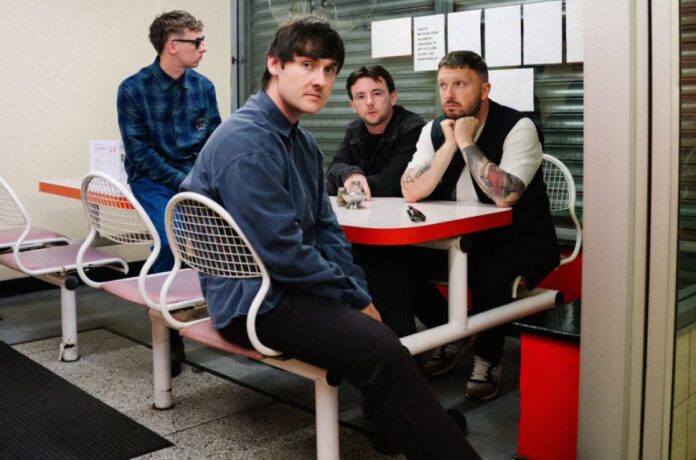
From playing £5 gigs in West Lothian miners’ clubs to topping the UK album charts, The Snuts have built one of the most successful careers in modern Scottish indie music. Now, with their fourth album - currently on track to debut within the top five of the UK chart - the band are rediscovering the friendships that started it all.
The four-piece from Whitburn have come a long way since school friends Jack Cochrane, Joe McGillveray, Callum Wilson and Jordan Mackay started making music together.
Their debut album, W.L., went straight to number one in 2021, famously beating Demi Lovato to the top spot. Follow-up Burn The Empire reached number three in 2022, while their first independently released record, Millennials, climbed to number two in 2024.
Along the way, The Snuts have graduated from selling homemade tickets for local gigs to playing major festivals and arenas, building a fiercely loyal following in Scotland and beyond.
Their new album, Joy In Short Moments, released through their own Happy Artist Records label, represents another turning point.
Written after the band stepped away from the relentless cycle of recording and touring, the album explores friendship, family, loss and the search for happiness in everyday life. It also marks a return to their roots, both musically and personally.
For bassist Callum Wilson, who has recently moved back to West Lothian after several years in Glasgow, making the record has been about reconnecting with his oldest friends and remembering why they started playing music in the first place.
He spoke to Scottish News about the new album, the pressures of the music industry, the Scottish bands that inspired them and the local venues that helped launch their career.
You’ve recently moved back to West Lothian. How important is that connection to home, and are there still people around the band who have been there from the beginning?
I’ve just recently moved back. I stayed in Glasgow for about four or five years, but I’m back in the motherland, back in West Lothian.
Our tour manager, Gary, has been there from the start. He’s from Armadale.
The reason we met Gary is we played Wintertainment. He was trying to do something special for his local town. He got a big load of funding off the council and put this big gig on.
It was Wagner headlining, Lewis Capaldi second support and us first support, and then a big firework night.
What he found was that the people of Armadale weren’t willing to pay the fiver to watch the fireworks because they could watch them from just outside the park.
It was a massive waste of council money, but it brought us together.
Then it turned out he’d bought our domain name. He messaged us saying, “Hi, you don’t know me, but I have your domain name. Do yous want it?”
At the time we were definitely more boisterous and more fond of a certain tonic wine.
We were like, “You need to come up to Jack’s flat. You need to drink a bottle of wine with us and then we’ll consider it.”
I think by the end of the night we were taps off, wrapped around each other, going, “We’ll be here forever.”
And now we can’t get rid of him.
He’s one of the local heroes who have allowed us to do this. Without Gary, it would have been impossible.
He’s always pushed us into bigger and better things. He’s always been that inspirational character.
Jack has told me about the early days of the band, playing local pubs and suddenly having busloads of people turning up. What are your memories of that period when The Snuts started to break through?
For us, it was all cricket clubs, miners’ welfare clubs, local football clubs. Those places with the red carpets where they only sell two pints. One of them’s Tennent’s and one of them’s John Smith’s or Belhaven Best.
That’s where we cut our teeth.
It was fiver tickets. The tickets were printed off our computer. We would run around and meet everybody.
I had a wee Citroën C2 and me and Jack would drive around dropping off fiver tickets to everybody.
The one that really sticks out is Fauldhouse Cricket Club.
I remember asking the guy, “What’s the capacity?” And he was like, “As many tickets as you can sell.”
Fire safety was less of a concern, and at least four of the venues have burnt down since.
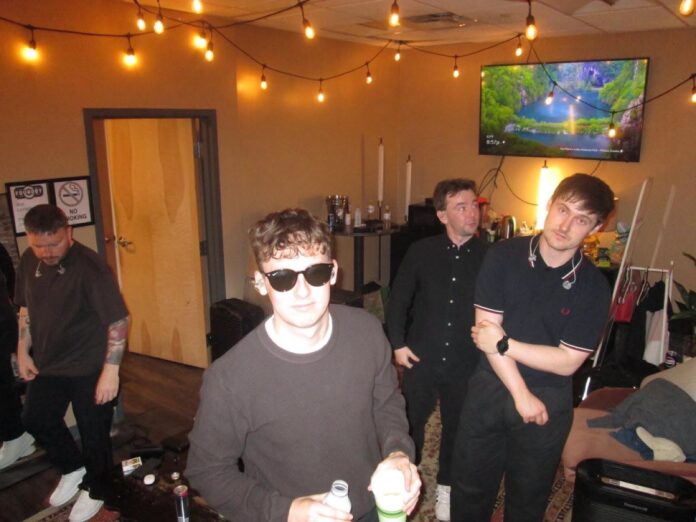
You’re at a very different stage in your lives now. Tell me about the new album and how it came about.
I think with this new album, it’s been a journey of refinding each other as pals.
By the time we were at the third record, we were moving into that colleague zone more than necessarily being friends or even brothers.
I’ve known Joe and Jordan since I was literally four or five years old. I went to nursery with them. I met Jack when I think I was 10.
We’ve been this constant in each other’s lives, and we were just drifting further and further apart.
We were living in these touring cycles and missing so much of the reality at home, people starting families, your mates.
We’ve always had a core group of mates that we’ve never left. We were hanging about the community centre with each other when we were maybe 12 or 13, and they’re still the mates we have today.
We’ve obviously got a much wider circle and met loads of new friends, but coming back has definitely recentered us in that zone of life continues even if you’re not in it.
If you want to miss everything, then you can.
But I think for us, we realised that we didn’t want to miss everything.
We didn’t want to miss our friends’ kids growing up. We wanted our kids to have a community around them rather than being insular and maybe alone in a city.
Moving back to West Lothian has been absolutely essential to this record even happening.
When you started making Joy In Short Moments, did you already know what kind of album you wanted to make, or did it take shape in the studio?
We do a lot of demoing before we go into the studio, and we always think we’ve got it figured out.
We’re like, “It’s got to sound like this. These are what the songs have got to be like.”
Then by the time you’re in the studio, all of that is turned on its head. Everything you thought you knew changes.
From the first demoing for this record, if you’d said to me it was going to be called Joy In Short Moments, I would never have believed you because we weren’t really in that space.
I think through the conversations about the record, recording it and finding each other again, we found that joy again.
Naturally the record just turned into something more.
I would say we have three albums where we were commentating on the world, and this is finally a bit of narration of who we are, what surrounds us and the people that surround us.
It’s a bit more of our lived experience rather than looking out into the world.
It’s much more a look inwards, I would say.
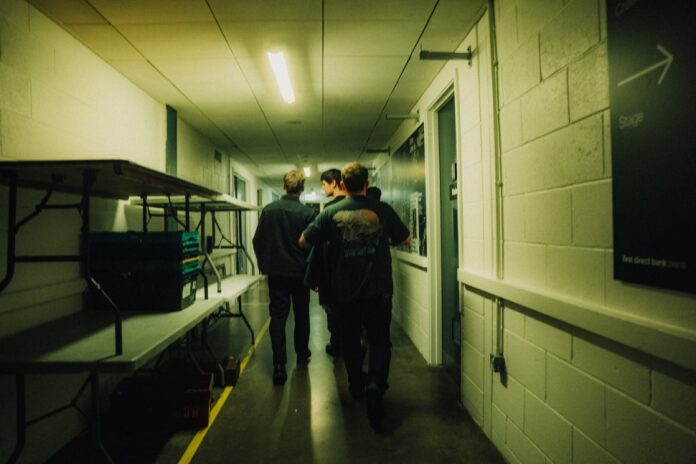
The first two records put you on a trajectory where everything seemed to happen at an incredible pace. Are you now making more decisions about how you want the band to work for you as people?
I think especially in the major label system, you’re really easy to manipulate when you’re scared of everything going away.
That’s definitely where we existed for years.
With our first record, they flew us straight out to LA, and I remember the producer telling us, “None of this matters. It’s okay. None of these songs need to work.”
And when you’re burning nearly 100 grand, for folk like us, 100 grand is a lot of money.
To these people it isn’t. It’s a drop in the ocean. It’s nothing. It’s like, “We’ve got to get this band to pop, and that’s how much it costs.”
For us, it just felt so do or die for two records.
We felt like we were either on a motorway or a hamster wheel that we had no control over.
We were making decisions based on information that was being fed to us by people whose best interests were us being sad, us being easy to manipulate.
Then on the third record, we broke free of that system, but we still very much had a point to prove.
We still had all these feelings from that time.
I would say this is the first record where we finally took a step back and considered, “Why did we do this? Did we do this to chase the glory or chase what somebody else expects of us? Or did we do this because we love it?”
Ultimately, we do this because we love it.
That’s why we got together. It’s why we’ve been playing music since we were 13 or 14 years old.
It’s why we were playing in forests with freezing cold hands on acoustic guitars when we were too young to be in a pub.
We did it because this is who we are. This is what we do.
Once we’d had that conversation and realised, “Let’s do this for each other. Let’s find each other again. Let’s do this to make each other proud,” everything became easier.
You look at some of the biggest bands in the world and you’re like, “What have they sacrificed to get there?”
Nobody talks about that.
It’s great to be doing your dream, but what suffers for your dream?
Your family, your relationships, your friendships. Everything just goes because of your dream.
You start to realise that maybe that dream isn’t a dream and it’s actually a f****** nightmare.
We decided that we didn’t want to live in that nightmare.
We’ve built an amazing community of fans who have taken us to chart-topping positions against people like Demi Lovato, Rod Stewart and George Michael, and now we’re going up against Queens of the Stone Age.
If you’d told me that when I was 15 years old, I would never have believed it.
We’re always punching above our weight. And we’ve not just got a puncher’s chance. We’re a contender.
Realising why we do it and what got us here has been a massive step for us in being content, being happy and being proud of what we’ve achieved, rather than chasing a dream that was quickly turning into a nightmare.
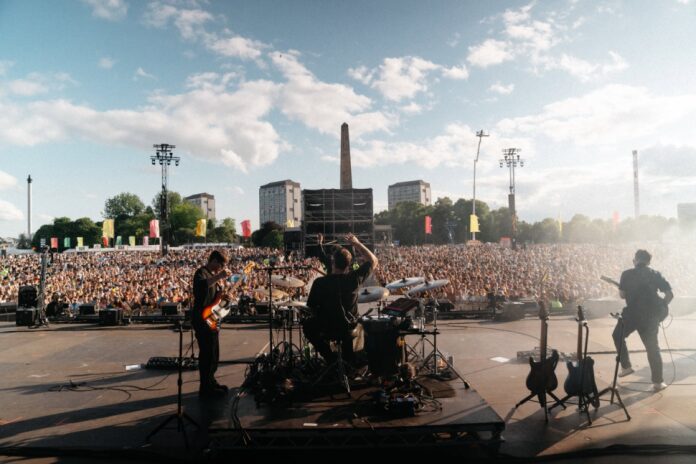
Touring brings its own demands, but The Snuts have always thrived on stage. Have you had to rethink how you approach playing live?
Definitely. We’ve totally reapproached the way we tour.
We used to just slog it out. Once we were on the road, we were on the road for weeks, months, whatever.
We would roll recording sessions into playing live, and it was all just one thing.
With this record, we very much separated both parts of that.
We record the record, then we tour the record.
I think it’s given us time to get to grips with the songs, to feel them a bit.
If you come and see us live now, you’ll see that I’ve constantly got a smile on my face. I’m truly enjoying it.
If you look around the boys, I know they are too.
Jack’s felt the weight of the world on his shoulders with having to continuously keep this up in a live show for however many years.
Now you turn around to him and we share a smile rather than an anxious glance.
The way we’ve approached touring has been completely different, and we’re all the better for it.
If you see us live now, we’re relaxed, we’re enjoying ourselves, and I think you hear that in the music.
We’re lucky enough to now have four records. We’ve got maybe a 25-song set, so there’s something for everybody.
Some fans just want to hear the old songs, and I’ve felt that myself when I’ve gone to see bands. You go, “Oh man, it’s a new one,” and go and get a pint.
But there’s something about connecting to the newer songs so much.
I think maybe on Millennials, on certain tracks, we were going through the motions.
There isn’t a song on this record that doesn’t have that connection.
Because it’s so personal, everything is about a friend, a lost loved one or your son. Every track has got an emotional connection.
You relive that every night on the stage.
I’m just so happy we’ve moved from that angry era where we were on the second record, when we were pissed off at everybody and everything was a challenge.
Now, four records in, it’s a pure joy to be on stage, especially with my three mates.
Going back to those early days, what were you listening to at house parties and playing on acoustic guitars in the forests around West Lothian? What were the musical building blocks for The Snuts?
Definitely Scottish bands like The View and Glasvegas.
We always talk about these bigger bands, but the bands that showed us we could do it were local bands.
There was a band called Dirty Souls. We followed them about. We actually used to support them and, for our last song, we’d play one of their songs before they went on.
Now I think about it, that’s insane.
There was Strawberry Ocean, The Apple Scruffs, Ewan Butler as well.
They were all local, or just local enough to Glasgow that we knew people in them, and they were the bands that showed us this could happen.
Then it would be bands like The View, Glasvegas, The Libertines, Babyshambles, Arctic Monkeys and Ocean Colour Scene.
Just these proper, absolute bread-and-butter indie bands that were the soundtrack to our lives growing up.
They translated amazingly on an acoustic guitar in a forest or if you were at a house party.
The great thing about those bands was they burnt bright, but they burnt fast.
Whereas for us, we wanted longevity.
We’d seen that, we respected it and we loved it, but we always wanted to create more of a career for ourselves as opposed to that burnout.
We took the necessary steps not to go the exact same way as our heroes.
Does it give you a buzz to think that there are now young people at house parties, in forests and at festivals picking up guitars and playing Snuts songs, just as you did with the bands that inspired you?
Definitely, mate. Definitely.
The Instagram message requests are a testament to that. It’s just mad wee guys absolutely doing that.
Even on the first record, I think we did a quite notorious Instagram Live when me and Jack were well oiled, just playing all these tracks terribly.
He was fretting the chords and I was strumming the guitar.
I think it’s so important for young folk to see that you can do it.
How important was it for you to see Scottish bands like Glasvegas succeeding and holding their own in the music industry?
A big one for us was Glasvegas especially.
One of the producers we worked with on the first record was an American guy who’d recorded a lot of Glasvegas’ first record, Rich Costey.
James from Glasvegas is pure, unadulterated, headstrong in what his songs need to sound like.
Just hearing that story from this guy – Rich Costey’s got multiple Grammys and stuff – and listening to him be completely humbled by a guy from Glasgow telling him, “No, we’re doing it this way. These are my songs. This is my vision.”
There’s just something about that.
As a fellow Scot, you can almost hear him say it. You can almost be in the room.
I think Scotland’s always been punching above its weight.
We’ve always brought much more to the world culturally than we get credit for.
It’s so inspiring to see folk like that from relatively humble beginnings just take on the world.
That’s so important for being Scottish, to see that we can do that, because we deserve a space on the stage just as much as anybody else.
If you had to map out the places in Scotland that tell the story of The Snuts, which locations would be most important?
I would definitely say starting local, the miners’ welfare, then The Clachan pub in Whitburn, which is now shut down.
Then we moved to Fauldhouse Cricket Club. We spread three miles up the road, which is crazy.
From that Fauldhouse gig, that’s when things started to change. That’s when folk started to become interested.
Then obviously Glasgow and Edinburgh. As we started to breach the cities, that’s when folk started to become really interested.
We were bringing these buses of 50 folk to anywhere we went.
I still remember the first tour we ever did.
We did Edinburgh, Glasgow, Dundee and Aberdeen.
To break any artist in Scotland, you have to tick off the four venues. It’s almost the gateway to moving up to that next level.
It’s hard not to name a single town in Scotland when we think about it.
Every single bit of it was a jigsaw puzzle that eventually gave us the tools we needed to go down to Manchester, go down to Liverpool and start to make an imprint on the music scenes down there.
And then London, which is a bit harder.
Then it goes everywhere.
Joy In Short Moments is out now. The Snuts begin their UK tour in Dundee on 19 November, followed by Aberdeen on 20 November, Edinburgh on 21 November and Dunfermline on 23 November.