
Tony Roper was sitting a few rows behind me at the King’s Theatre in Glasgow on Saturday night, chatting happily to other members of the audience as they waited for the final performance of The Steamie to begin.
Almost 40 years after writing the play that would become embedded in the Scottish psyche, the 85-year-old actor and playwright had come to watch the final night of the Scottish tour, which he has directed. From his vantage point in the stalls he would have been able to look across and up at a crowd enthralled by a play that continues to strike a chord.
By the end of the evening, he was on stage taking a bow alongside the cast, bringing his final production of The Steamie to a close in the city where it all began.
It was a wonderful Glasgow night at the theatre, with an audience that seemed to know every character, every song and many of the lines almost as well as the performers.
There was something approaching a carnival atmosphere as the evening progressed. Familiar lines were greeted with enthusiastic reactions, the songs were warmly received and the laughter grew as the audience settled into the company of old friends.
It was the sort of occasion where being part of the audience was almost as enjoyable as watching what was happening on stage.
Roper has always understood that relationship between the performers and the people watching.
Speaking to Scottish News ahead of the final performances, he reflected on the small details of the production that can prompt laughter or applause, even when they belong to a Glasgow that has largely disappeared.
He spoke with particular affection about watching people become absorbed in the characters and their conversations.
First performed in 1987, The Steamie follows four women spending Hogmanay in a Glasgow washhouse in the 1950s. Their stories about family, husbands, money and their hopes for the future have entertained generations of Scottish audiences.
Roper grew up in Anderston and drew the characters from people he encountered during his childhood.
He told me: “The characters I wrote, they’re not in my head. They are the characters I grew up with. The lot of them. I just wrote about people I knew and fortunately for me it worked out. I don’t remember coming up with a plan. I wrote from my experience and tried to make it entertaining as well.”
The success of the play has been remarkable, particularly for something that captures the everyday conversations of women doing their washing on the final day of the year.
It has survived changes in Glasgow, the disappearance of communal washhouses and the passing of generations who would have recognised every detail of its setting.
The latest production featured Louise McCarthy as Dolly, Ali Cleland as Magrit, Eden Barrie as Doreen, Lesley Mackie as Mrs Culfeathers and Paul J Corrigan as Andy.
There was clearly enormous affection for the performers on Saturday night, who brought such energy and humour to characters that many members of the audience have known for decades.
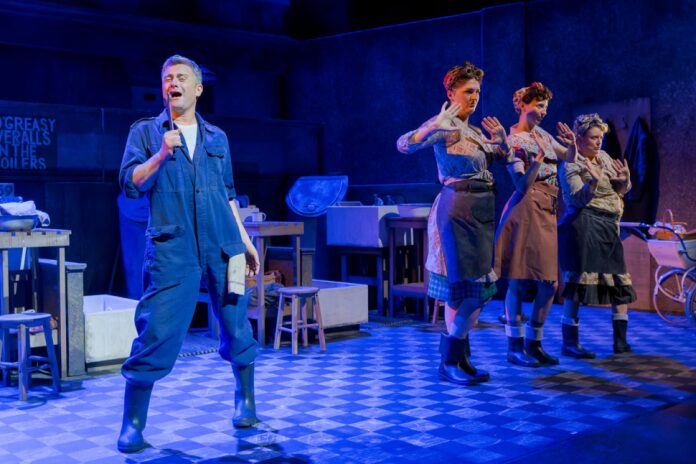
McCarthy has previously spoken about how the play was passed down through her family, from her grandmother to her mother and then to her. Cleland has also recalled watching The Steamie with her granny and dreaming of one day playing Magrit.
That connection between generations was part of what made the final performance such an enjoyable experience.
The songs, written by Dave Anderson, remain an important part of the show, providing some of the evening’s most enthusiastically received moments.
Roper has been candid about what The Steamie means to him personally.
“I know The Steamie is part of my legacy,” he told me.
His long career has included television, theatre, writing and directing, with Jamesie Cotter in Rab C Nesbitt providing another character that will forever be associated with his name.
He has described this latest production as among the best casts he has worked with and has been delighted by the response to the tour, which began in Dundee in August.
For Roper, returning to the King’s Theatre was particularly poignant. Before the final performances, he spoke about the people working at the venue whom he had known throughout his career.
On Saturday, he was able to share the occasion with the Glasgow audience that has helped keep his play alive for nearly four decades.
When he joined the performers on stage to take his final bow, it marked the end of another successful tour, as well as the end of an era with his last time directing The Steamie.
The play will undoubtedly continue to find new audiences.
For those at the King’s last night, the final moments saw a great Scottish writer and actor enjoy one last evening with the cast and audience who have taken his characters to their hearts.