Mention the Donbas or suggest ceding territory in Rivne, and heads turn away. Someone quickly shifts the subject.
People here want peace, but few want to speak its price aloud.
Under the air raids, what I heard was exhaustion, and anger at who carries the burden of the war.
Corruption in Ukraine, as in Russia, is rife. But to suggest it is confined to these two countries would be naive. It exists across the globe, although how openly it is acknowledged, and how much remains hidden, varies.
A local tells me there are two ways to get rich: steal from the government or start a business.
The latter is more difficult, they explain, because you have to survive raids by the tax office, which they describe as illegal.
War has created more opportunities for some, locals tell me, even as Donald Trump presents himself as someone capable of bringing peace.
Ukrainians I speak to have little regard for the US President. One local, who knows people in Russia, tells me that many Russians also want the war to end but are afraid to rise up, believing it would achieve nothing.
Our conversations repeatedly return to peace, Trump and what it would take to end the war. There is a strong desire for peace, but little certainty about how it might be achieved.
The conversation keeps returning to the war, but people rarely want to stay on the subject for long.
Men aged 18 to 22 can now leave the country, but locals tell me most of the men who want to leave are older and remain subject to restrictions.
I am told wealthy men pay bribes to get out and travel, and that the price at the border is $1,000.
There is anger: “These stupid drones and air raids. I can’t sleep. We can’t do anything.”
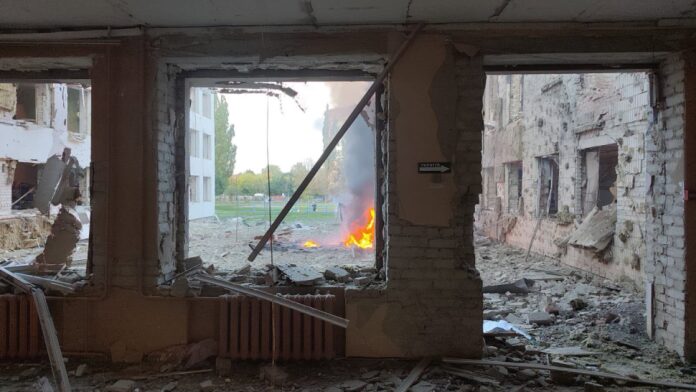
The air raids can last for hours, I am told. When the sirens sound, schools stop, even when lessons are being held online. Parents are increasingly reluctant to let their children go outside.
“Maybe in the past, I’d have liked children. But I tell my wife it is not fair for our children when I don’t know what tomorrow will bring. I don’t know what life will look like in five or even ten years.
“I can’t even leave this country while my wife can leave and travel. I have to stay while the wealthy can leave. It is the poor who are fighting this war. War has only been good for the rich. There is so much corruption in Ukraine. It is worse now, I believe.”
The sense of injustice runs through many of the conversations.
“Trump is good for money,” one local tells me. “He is prolonging the war. This war will last until the rich are no longer able to make money.”
When we return to the question of how the war might end, there is no consensus. People want it to end so they can get on with their lives, but the question of giving up the Donbas divides opinion.
Some refuse to accept the loss of the territory, arguing that ceding it would mean the men who died fighting for it had done so for nothing.
Others point out that no referendum has been held on whether the country would accept the Donbas being ceded as part of a negotiated settlement.
There is another view, expressed by those who believe the war will continue for as long as there is money to be made from it.
When the money runs dry, they suggest, the war may finally end. In the meantime, it is the poor and the young who disappear along the way.
I am also told that those who did not want to live in Russia came to Ukraine, while those who did not care stayed behind.
To illustrate the point, locals refer to an interview with an elderly woman living in the Donbas who said she spoke only Russian and had never accepted the Ukrainian language.
At the bus stops and market stalls in Rivne, most of the people I see are women. The men are almost all in their late forties or older. The younger ones, locals tell me, are fighting, dying or studying abroad.
Again, the conversation turns to inequality. Locals tell me it is not the rich who are fighting, but the poor.
They also bring up Elon Musk, echoing sentiments he has expressed in an interview about the financial elite and political class being insulated from the consequences of war while ordinary people bear its burden in the trenches.
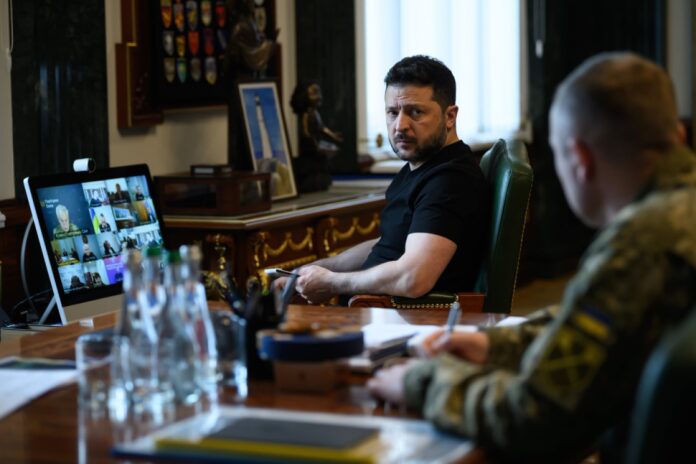
Among those I speak to, there is deep disillusionment with Volodymyr Zelensky.
Conspiracy theories have taken hold among some Ukrainians, with claims that the president is either a warmonger or a Russian asset helping Vladimir Putin.
When I ask who might replace him, there is hesitation. Locals say Ukrainians see their President differently from the rest of the world.
What I hear is discontent, anger and exhaustion, but little agreement about what should come next.
“The polls claiming Zelensky would win in a landslide or is popular is just propaganda. I seriously doubt many people support him unless they are wealthy and benefiting from this war,” one local tells me.
The published polling presents a more complicated picture. A survey by the Kyiv International Institute of Sociology, conducted from 8 to 16 October, found that 54% of Ukrainians trusted Zelensky, while 41% did not.
Trust was unchanged from the institute’s previous survey in late August and early September, although responses shifted during the October polling period.
One local raises the possibility of Petro Poroshenko, the billionaire businessman, founder of Roshen and former president, returning to power.
There was widespread discontent with Poroshenko’s presidency, they tell me, but compared with Zelensky, he was “the master of two faces”.
They believe Poroshenko knew how to handle both Putin and the West. In their view, the former president understood the delicate balance required to protect Ukraine’s sovereignty while avoiding the wrath of the Russian leader.
Poroshenko lost to Zelensky by a landslide in 2019, when voters were frustrated by corruption, economic stagnation and the continuing war in the Donbas.
Zelensky, a political outsider and former television actor, was seen by many as a break from the established political class.
Money remains another point of contention. In Ukraine, presidential candidates must pay a deposit to stand for election.
At the last election, in 2019, it was two and a half million hryvnia, around £40,000. The law now sets it at 650 times the minimum monthly salary at time of election, around £90,000 or more, currently.
Such sums are beyond the reach of most ordinary Ukrainians. Zelensky, a wealthy actor, had the means to stand.
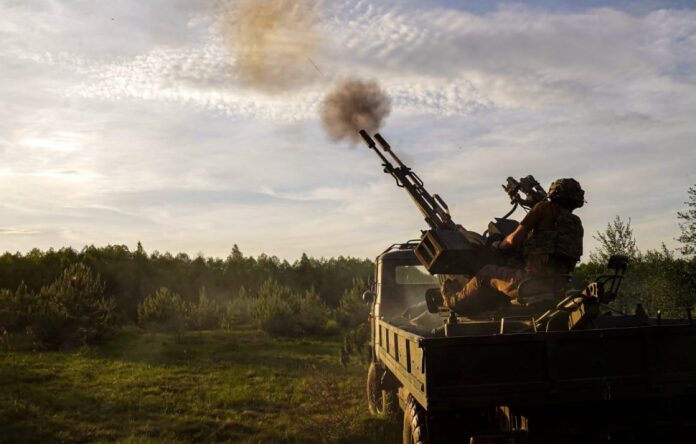
Cities are bombed, and jets and drones pass overhead. Sirens sound in the middle of conversations.
During one conversation, more than a dozen explosions occurred in nearby villages.
Around midnight on Saturday, an F-16 shot down a Shahed drone about 15 kilometres from where we were staying.
The explosion was powerful enough to make the building and its windows shudder.
I assumed the noise was a storm, because of the heavy rain that night.
I dread to think what it would have been like had it been much closer.