8 fascinating historic places that tell the story of Scotland
Scotland’s history can be explored in the remains of a prehistoric village in Orkney, along the route of a Roman frontier and in the ruins of abbeys where monarchs were buried and the future of a kingdom was debated..
From prehistoric settlements and medieval strongholds to battlefields and seats of royal power, these sites reveal how Scotland emerged as a nation and how its people, culture and identity evolved over the centuries.
To mark St Andrew’s Day on 30 November, we look at eight historic places that offer a fascinating insight into the events and generations that shaped the Scotland we know today.
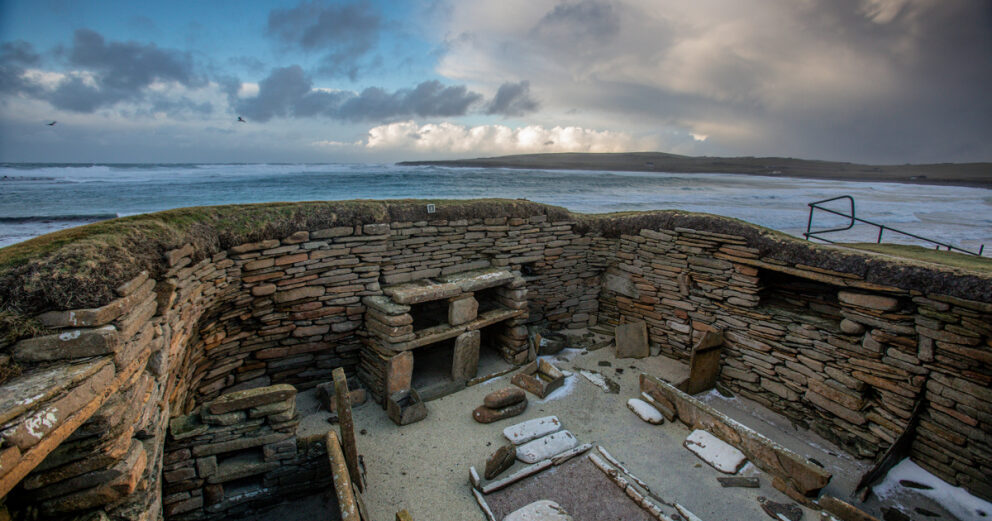
1. Skara Brae, Orkney
Historic Environment ScotlandIn a large storm in 1850, the sea and wind stripped away layers of sand and vegetation near the Bay of Skaill on Orkney’s Mainland, revealing stone structures that had remained concealed for centuries.
Archaeological investigations would eventually establish that the remains belonged to a prehistoric village dating back around 5,000 years.
Skara Brae was inhabited before the construction of Stonehenge and the Great Pyramid of Giza.
Its remarkably preserved houses contain stone furniture, storage spaces and hearths, providing evidence of domestic life long before written records existed in Scotland.
Nobody knows precisely why the settlement was abandoned around 2500 BC.
Today, Skara Brae forms part of the Heart of Neolithic Orkney UNESCO World Heritage Site, alongside Maeshowe, the Ring of Brodgar and the Stones of Stenness.
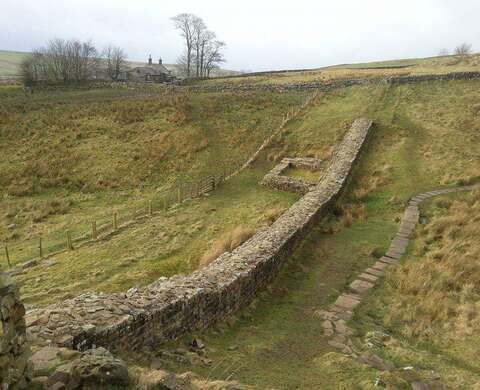
2. The Antonine Wall, Central Scotland
Historic Environment ScotlandAlmost 2,000 years ago, the Roman Empire established its north-western frontier across what is now Scotland’s central belt.
Construction began around AD 142, during the reign of Emperor Antoninus Pius.
Stretching for 37 miles between the Firth of Forth and the River Clyde, the Antonine Wall incorporated a turf rampart, a substantial ditch and a network of forts.
Its construction represented an ambitious attempt to consolidate Roman control over territory north of Hadrian’s Wall.
The frontier was relatively short-lived. The Romans abandoned the Antonine Wall around 20 years after it was built, withdrawing south to Hadrian’s Wall.
Much of its route has since been absorbed into the modern landscape, passing through or near towns including Falkirk, Kirkintilloch and Bearsden.
The surviving sections offer a reminder of a time when central Scotland occupied the very edge of one of history’s most powerful empires.
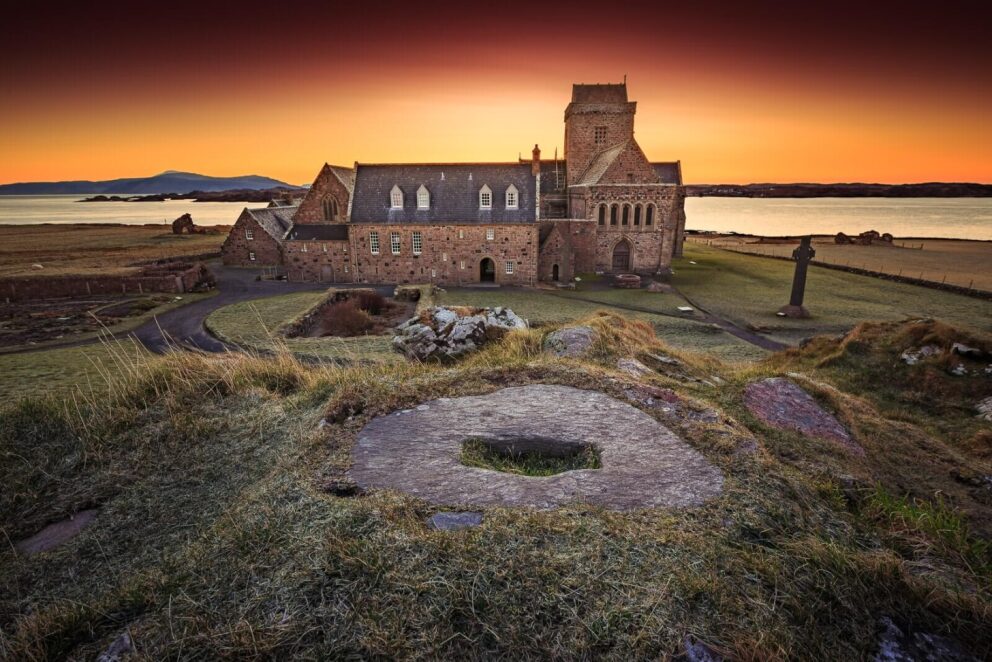
3. Iona Abbey, Argyll
Visit Mull and IonaFew islands of comparable size have exerted such a significant influence on the religious and cultural history of Europe.
In AD 563, the Irish monk Columba arrived on Iona with 12 companions and established a monastery.
The island became a centre of religious scholarship, producing generations of missionaries and maintaining connections with Christian communities elsewhere.
Iona is also associated with the creation of the Book of Kells, one of the most celebrated illuminated manuscripts of the medieval world.
The island endured Viking raids and centuries of political and religious change.
Its burial grounds became associated with early Scottish kings, while the abbey developed into a place of pilgrimage.
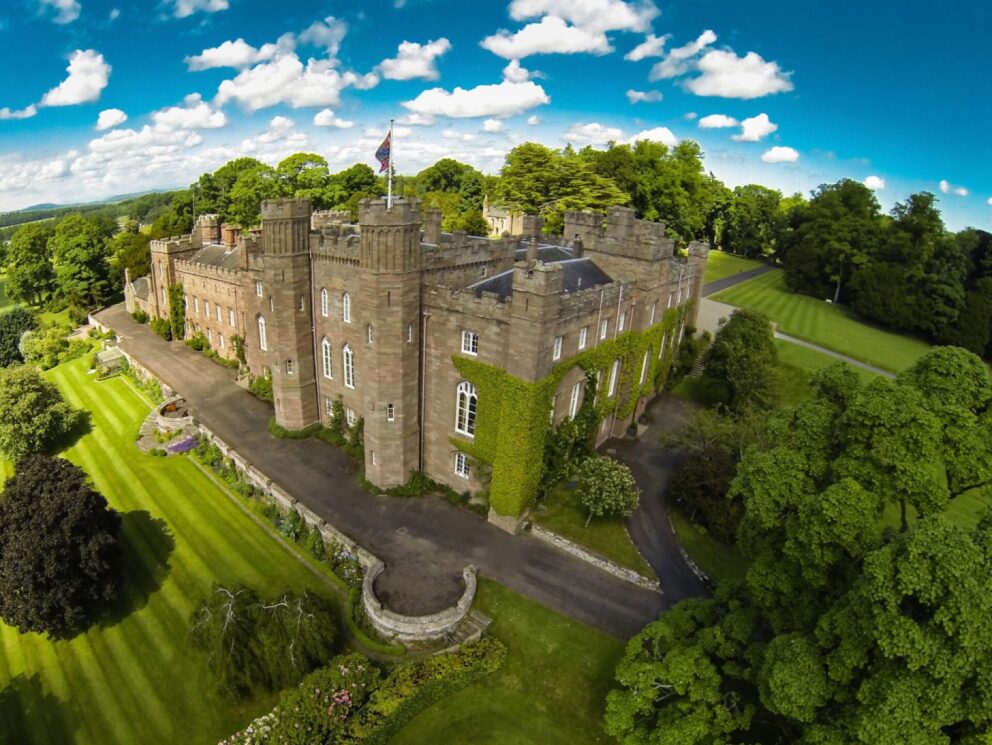
4. Scone Palace, Perthshire
Scone PalaceThe grounds of Scone Palace contain one of the most important ceremonial sites in the history of Scotland.
Moot Hill was the traditional place of inauguration of Scottish monarchs, bringing together the political and religious leaders of the kingdom.
At the centre of these ceremonies was the Stone of Destiny.
In 1296, Edward I of England removed the stone from Scone and took it to Westminster. It subsequently became part of the coronation chair used by English and later British monarchs.
Robert the Bruce was crowned at Scone in 1306, beginning his struggle to establish control over Scotland and secure its independence.
In 1651, Charles II was crowned there in what would prove to be the final Scottish coronation.
The original Stone of Destiny was returned to Scotland in 1996 and became the centrepiece of Perth Museum when it opened in 2024.
At Scone itself, Moot Hill remains a tangible connection with Scotland’s earliest institutions.
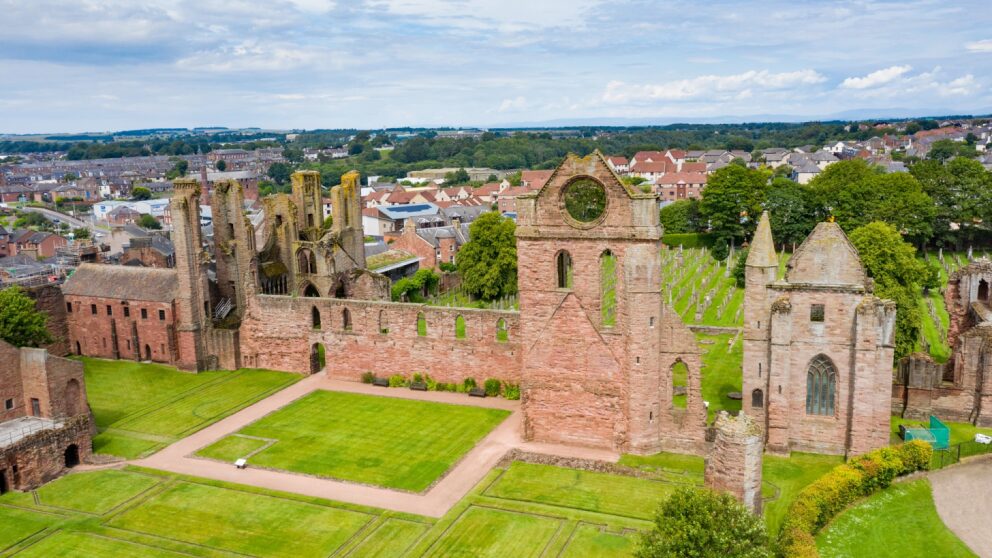
5. Arbroath Abbey, Angus
Historic Environment ScotlandEstablished by King William the Lion in 1178, Arbroath Abbey became one of medieval Scotland’s most powerful religious institutions.
Its place in the country’s national consciousness, however, derives principally from events in April 1320.
A letter sent from the abbey to Pope John XXII appealed for recognition of Scotland’s independence and Robert the Bruce’s position as king.
Known as the Declaration of Arbroath, the document was probably drafted by Bernard, Abbot of Arbroath and chancellor to the king.
Its language has resonated throughout the centuries, particularly its declaration that the struggle was being pursued not for honour or riches, but for freedom.
The letter formed part of a diplomatic campaign that eventually saw England recognise Scottish independence in 1328.
The surviving red sandstone ruins of Arbroath Abbey are closely associated with that defining moment in Scotland’s history.
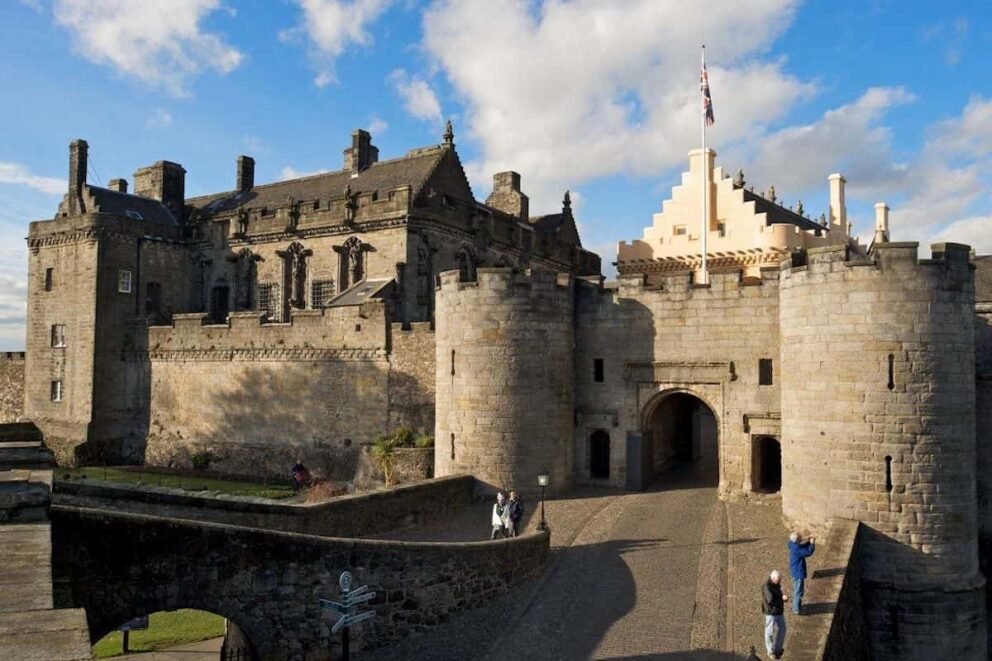
6. Stirling Castle, Stirling
StirlingFrom its position high above the River Forth, Stirling Castle commanded routes between the Highlands and Lowlands and occupied a strategically important position in medieval Scotland.
Two of the country’s most celebrated military encounters took place nearby.
In 1297, William Wallace and Andrew Moray defeated an English army at the Battle of Stirling Bridge.
In 1314, Robert the Bruce secured his victory at Bannockburn.
The castle subsequently developed into a principal residence of the Stewart dynasty, with successive monarchs transforming its buildings into an elaborate royal complex.
Mary, Queen of Scots was crowned there in 1543 and spent part of her childhood within its walls.
Stirling Castle, visitors can explore restored 16th-century Renaissance royal apartments, Scotland's largest medieval banqueting hall, interactive family vaults, a regimental museum, and battlements with panoramic views.
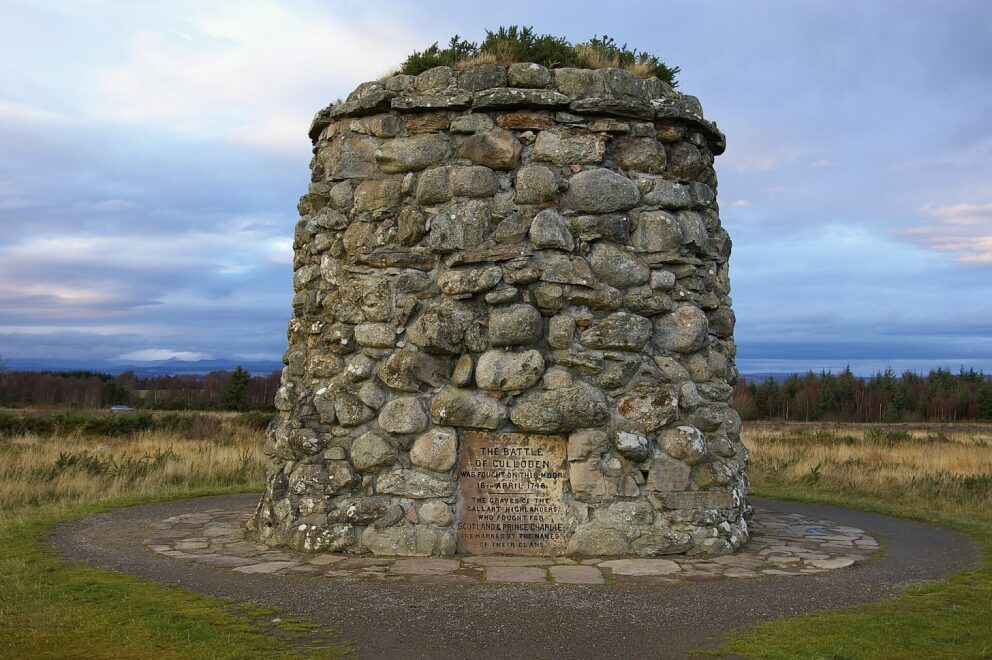
7. Culloden Battlefield, near Inverness
Stablenode / Wikimedia CommonsOn 16 April 1746, an army led by Charles Edward Stuart faced government forces commanded by the Duke of Cumberland on Culloden Moor.
The battle brought an end to the final Jacobite rising, which had sought to restore the Stuart dynasty to the throne.
The fighting lasted less than an hour. Around 1,600 men are estimated to have been killed, the overwhelming majority of them Jacobites.
Scots fought on both sides and the Jacobite cause attracted support from elsewhere in Europe.
The defeat was followed by brutal reprisals and measures intended to dismantle aspects of the traditional Highland clan system, a shock to the social structures of the country.
Today, the windswept battlefield and its memorials preserve the memory of those who fought and died there. It's a place for reflection on a tumultuous shift in the story of Scotland.
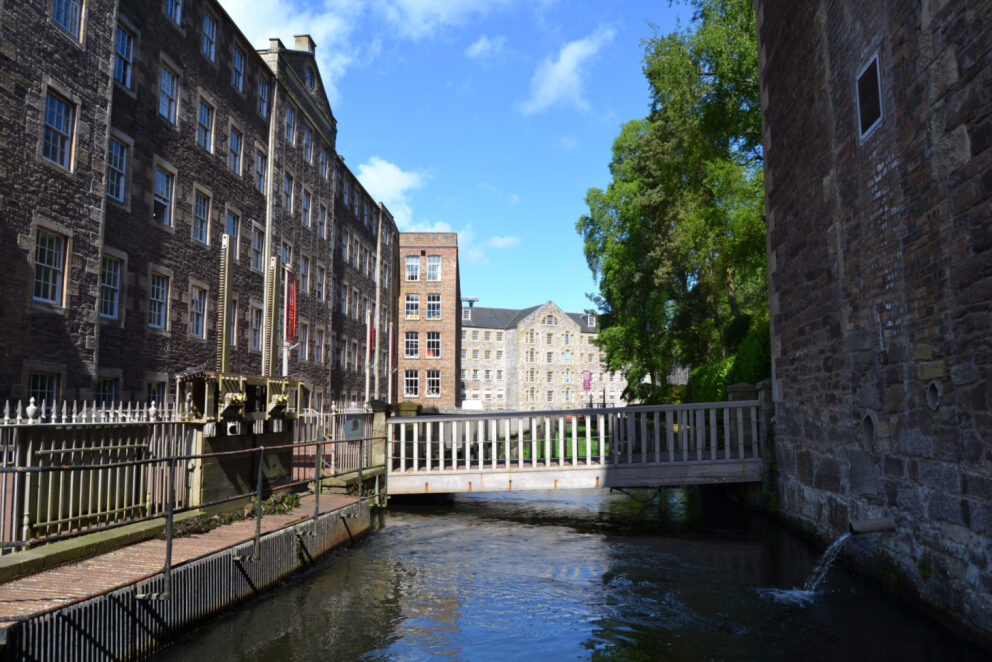
8. New Lanark, South Lanarkshire
New LanarkThe industrial village of New Lanark, established in 1785 beside the River Clyde, became internationally renowned for its experiments in factory production and social reform.
The cotton mills were founded by Scottish entrepreneur David Dale, who harnessed the power of the river to drive machinery.
His son-in-law, the Welsh social reformer Robert Owen, then introduced improvements to housing, education and working conditions.
Owen's ideas influenced debates about education, workers’ rights, social reform and the development of cooperative movements around the world.
The restored mills, workers’ housing and school buildings offer an opportunity to examine the social history of the Industrial Revolution.
New Lanark was recognised as a UNESCO World Heritage Site in 2001.