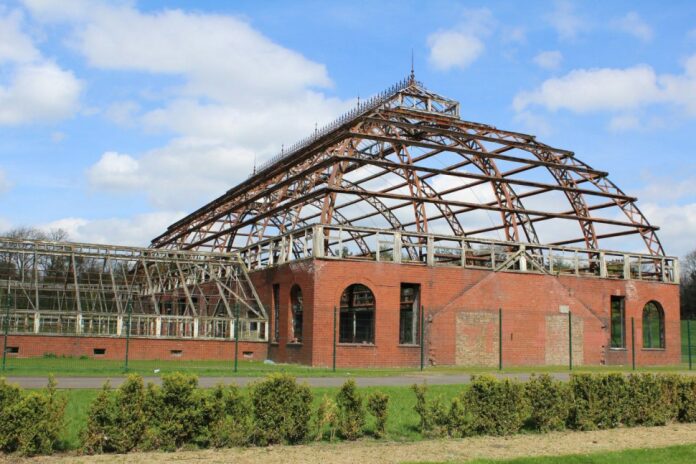
A derelict Glasgow landmark is set to be brought back into public use after a 13-year campaign to save it from further decay.
Plans to begin restoring the Category A-listed Springburn Winter Gardens have been approved by Glasgow City Council, clearing an important hurdle for the community-led project.
The Victorian glasshouse in Springburn Park has lain derelict for more than four decades, with its glass long gone and its surviving iron and steel structure exposed to the elements.
The latest approval allows essential structural and conservation work to go ahead as the first stage of a longer-term ambition to give the building a new life.
Construction is expected to begin early next year, while the Springburn Winter Gardens Trust is finalising a 25-year lease for the site with Glasgow City Council.
The initial project will create what has been described as a “living ruin”, stabilising the historic structure while allowing it to be used again by the community.
Plans include public access through the building, architectural lighting, space for cultural events and heritage activities and an “urban croft” with community growing areas.
More than £1.1 million has already been secured through the Scottish Government’s Regeneration Capital Grant Fund for the current phase of work.
Council papers confirmed an award of £1,129,059 towards structural repairs and conservation.
The work will also involve careful repairs to the fabric of the building and the dismantling and storage of a collapsed timber outhouse.
Paul Sweeney MSP, chair of the Springburn Winter Gardens Trust, described receiving planning and listed building consent as a “fantastic milestone for Glasgow’s built heritage”.
He said the approval was the result of a community campaign stretching back 13 years and represented a “crucial first step” towards returning the landmark to public use.
The campaign to save the structure gathered momentum in 2013, following the loss of the nearby Springburn Public Halls.
Since then volunteers have worked to secure the building, attract funding and develop proposals capable of preventing one of north Glasgow’s most important surviving historic structures from being lost altogether.
The Winter Gardens date from 1899–1900 and were constructed by hothouse builders Simpson and Farmer, with ironwork associated with William Baird of Temple Ironworks.
Historic Environment Scotland describes the building as a substantial glasshouse around 180ft long, supported by seven arch-framed lattice girders. It was given Category A-listed status in March 1985.
At its height, the Winter Gardens were one of Springburn’s best-known public attractions, hosting exotic plants as well as concerts and exhibitions. The building fell out of use after suffering serious storm damage in 1983.
Plans to demolish it were later halted when it received listed status, but despite several attempts to secure its future it remained a roofless ruin.
Its history is closely linked to Springburn’s industrial past.
The area in North Glasgow was once one of the world’s great centres of locomotive manufacturing, and the Winter Gardens were created during an era when wealthy local industrialists helped fund major public buildings and amenities.
Previous proposals have envisaged a much larger restoration of the entire structure as an events and performance venue.
An £8.1 million vision unveiled in 2020 included capacity for up to 1,800 people, a café and bar and a heritage exhibition celebrating Springburn’s industrial history.
The current funded programme is more modest, but is designed to stop further deterioration and put the building back into active use while creating a platform for further restoration.
The trust is now tendering for a contractor ahead of work beginning in 2027.