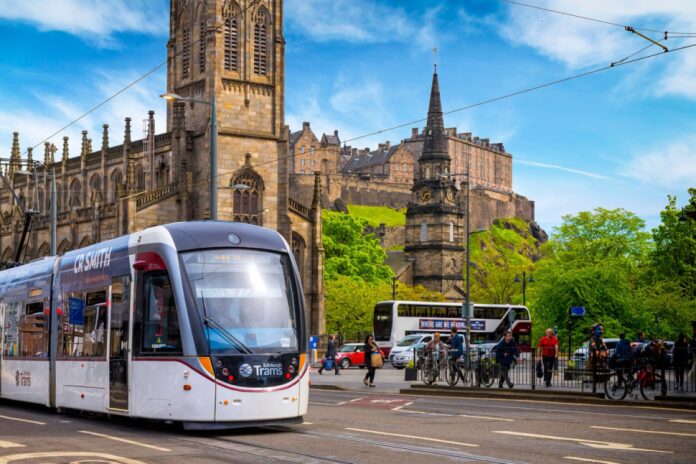
Money raised from Edinburgh’s new tourist tax is set to be spent on improvements to Princes Street and the restoration of historic landmarks across the capital.
Seven additional projects have been approved for support from the city’s Visitor Levy, including work around Princes Street and George Street and the restoration of the historic Tron Kirk.
Plans also include investment in Leith Customs House, the reconstruction of the historic Portobello Kiln and the creation of a new public square.
Edinburgh’s Visitor Levy will see a 5% charge applied to overnight accommodation including hotels, B&Bs, hostels and short-term lets, with the charge capped at the first five consecutive nights of a stay.
The levy comes into force in July 2026, with the council expecting it to generate tens of millions of pounds which can be invested in services and infrastructure used by visitors and residents.
The latest projects were approved by City of Edinburgh Council as part of its plans for spending the money.
Potential public realm improvements are being considered for Princes Street and George Street, two of the city’s most important shopping and visitor destinations.
More detailed proposals will return to the council’s Transport and Environment Committee before work progresses.
Visitor Levy money is also set to support the restoration of the 17th-century Tron Kirk and improvements around neighbouring Hunter Square.
The landmark former church stands at the junction of the Royal Mile and South Bridge and has been on Scotland’s Buildings at Risk Register since 2023.
The project is intended to secure the future of the building while helping to improve the surrounding public space.
Leith Customs House, another prominent historic building, is also among the seven projects selected for investment.
The building on Commercial Street dates from the early 19th century and was constructed when Leith was one of Scotland’s busiest trading ports.
Another project will see the reconstruction of the historic Portobello Kiln.
The surviving structure dates from 1906 and is one of the last remaining reminders of Portobello’s once-important pottery industry.
Elsewhere, West Cross Causeway is proposed for transformation into a new public square.
Visitor Levy investment will also support new and improved nature paths and transport connections to attractions including Lost Shore Surf Resort and Edinburgh International Climbing Arena at Ratho.
The seven projects join a growing list of schemes earmarked to benefit from the new levy.
More than £90 million of Visitor Levy investment is planned across Edinburgh over the first three years.
Previously approved projects include £5 million for Leith Theatre, £3 million for the former Royal High School on Calton Hill and £2.75 million towards a new arts hub on Market Street.
Another £3 million has been allocated for new and improved public toilets.
The levy is expected to provide Edinburgh with a new long-term source of funding as the city attempts to manage the impact of millions of visitors while continuing to invest in its cultural attractions, streets and public spaces.
Edinburgh is the first Scottish council to introduce a Visitor Levy following new legislation giving local authorities the power to charge people for overnight stays.
Other parts of Scotland are developing their own proposals, including the Highlands, where a draft scheme has proposed charges of £5 per room per night for hotels, guest houses, B&Bs and short-term lets during nine months of the year.