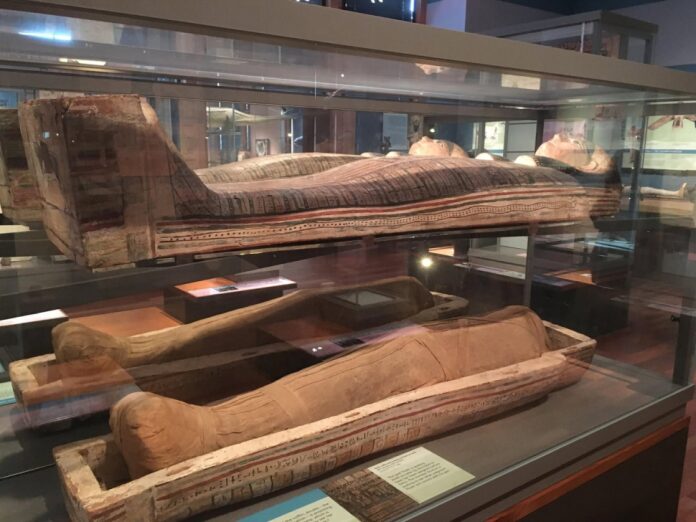
The mummified remains of an ancient Egyptian priest removed from display at Kelvingrove Art Gallery and Museum could now be returned to Egypt after a repatriation request was made to Glasgow.
Glasgow Life has confirmed it received an approach in recent days seeking the return of the remains of Nekht, which had been displayed inside a painted coffin in the museum’s Egyptian collection.
The organisation, which operates Glasgow’s museums on behalf of Glasgow City Council, has not confirmed who submitted the request.
A Glasgow Life spokesperson said: “We have received a request in the last few days to repatriate the Nekht remains to Egypt.
“Glasgow has a well-established process for repatriation requests. We will follow this process to guide our next steps.”
The development comes after ScottishNews.com reported that Nekht and other ancient Egyptian human remains had been removed from public display at Kelvingrove.
Glasgow Life said at the time that displaying the remains without documented and informed consent from the deceased or, where appropriate, their descendants was no longer considered respectful.
The decision meant human remains were removed from Kelvingrove’s Egyptian gallery, including a mummified male head, right foot and right hand recovered from the Valley of the Kings in Luxor.
Nekht is believed to have lived between around 1985 and 1797BC. His remains were excavated at Beni Hasan in Middle Egypt during archaeological work in the early 20th century before being donated to Glasgow in 1923.
The repatriation request will now have to go through Glasgow’s formal process.
Glasgow Life Museums’ current collections policy states that decisions on returning human remains or objects to their country or people of origin are considered on a case-by-case basis, taking account of the legal position, ethical issues and relevant guidance.
Cases are referred to Glasgow City Council’s Working Group for Repatriation, Restitution and Spoliation before being escalated to the City Administration Committee, or another appropriate council committee, for a final decision.
Glasgow City Council owns the museum collections, with Glasgow Life responsible for managing and administering them.
The removal of Nekht from display followed changes in museum practice surrounding human remains.
The International Council of Museums revised its Code of Ethics earlier this year, stating that museums should uphold the inherent dignity of human remains and respect their significance.
Glasgow Life has also drawn attention to its draft human remains policy, which proposes that remains should only be publicly displayed where there is documented and informed consent from the deceased or, in appropriate circumstances, their descendants.
The organisation said: “In the absence of such consent, we believe removing ancient Egyptian human remains from display is more respectful to the deceased individuals.”
Other archaeological human remains are also being removed from displays elsewhere in Kelvingrove, while Glasgow Life has said a coffin and mummified remains at St Mungo Museum of Religious Life and Art will subsequently be taken off public display.
The remains removed from exhibition are due to be housed in restricted-access storage at Glasgow Museums Resource Centre unless a repatriation request is considered.