Ancient Egyptian mummies are no longer being exhibited at Kelvingrove Art Gallery & Museum due to a lack of “informed consent” from the dead artefacts.
The display which included a painted coffin containing the remains of the priest Nekht, a mummified right hand recovered from the Valley of the Kings in Luxor, Egypt and mummified male head and right foot has been removed from the popular Glasgow visitor attraction.
The move came to light when museum visitor Jonny McFarlane posted on social media that he brought his daughter to Kelvingrove Museum to see the mummy because she had a “book on the ancient Egyptians and has been quite animated by it”, but was surprised to find it no longer there.
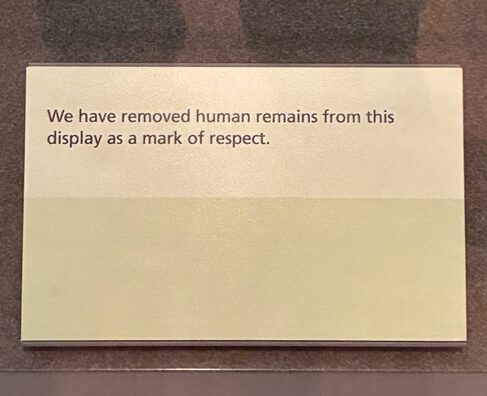
“All ‘human remains’ gone with the following sign up in place of exhibits that have been there for years,” he wrote.
A sign now sits in its place, reading: “We have removed human remains from this display as a mark of respect”.
Tory MSP Murdo Fraser said: “People visit museums to learn about ancient civilisations, not to see history hidden away because it fails to meet today’s ideological standards. Glasgow’s museums should be showcasing our history, not quietly removing it to appease the latest trend in political correctness.”
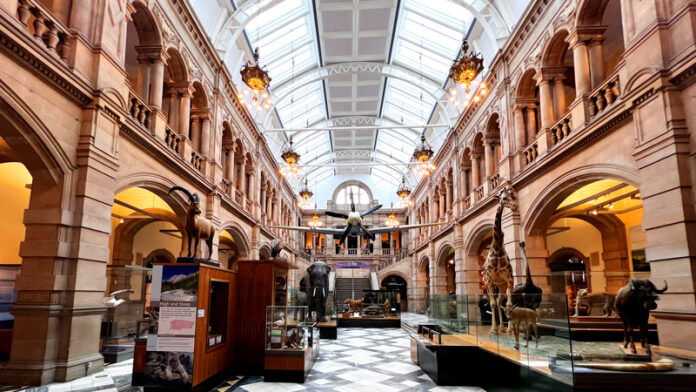
Mummies have been exhibited at Kelvingrove since it opened in 1901. The remains are thought to be between 2,000 and 5,000 years old.
Glasgow Life, who run the city museum, said that the decision “reflects contemporary museum practice”, adding that it was “working to remove more human remains” from the History Discovery Centre and the Scotland’s Early People gallery at Kelvingrove.
There are further plans to remove a coffin and mummified human remains from the St Mungo Museum, near to Glasgow Cathedral.
A Glasgow Life spokesman said: “The removal of human remains from display at Glasgow Life museums reflects contemporary museum practice.
“The International Council of Museums’ revised Code of Ethics, published in June 2026, states that museums ‘should uphold the inherent dignity of human remains and promote respect for their significance’.
“The All-Party Parliamentary Group on Afrikan Reparations 2025 report, ‘Laying Ancestors to Rest’, also raises ethical concerns about the display of ancient Egyptian human remains due to the consistent disregard of the potential wishes of the ancestors and the intention of the communities that originally laid them to rest.
“Glasgow Life Museums’ draft Human Remains Policy proposes that human remains should only be displayed where there is documented and informed consent from the deceased individual or, in appropriate circumstances, their descendants.
“In the absence of such consent, we believe removing ancient Egyptian human remains from display is more respectful to the deceased individuals.”
Ancient Egyptian mummification was a sacred 70-day ritual designed to preserve the physical body so the soul could recognise and return in the afterlife.
The body was cleansed with water from the Nile and palm wine. Embalmers removed the lungs, stomach, liver and intestines, placing them into dedicated canopic jars. The heart was left inside because it was believed to be the centre of thought and emotion.
The body was then covered in natron - a natural salt - for roughly 40 to 70 days to dry out all moisture. Embalmers treated the skin with fragrant oils, resins and spices, then wrapped the corpse in hundreds of yards of linen bandages embedded with protective amulets.
The quality of the process depended heavily on wealth. Pharaohs and elites received full evisceration, fine linen and gilded masks, while poorer families used simpler methods or natural sand burial.
Notable royal mummies - including Tutankhamun, Ramses the Great and Hatshepsut have provided modern science with deep insights into ancient health, genetics and royal lineage.