In a modern world ruled by social media and instant selfies, a vintage photo booth from Berlin is trending in Glasgow.
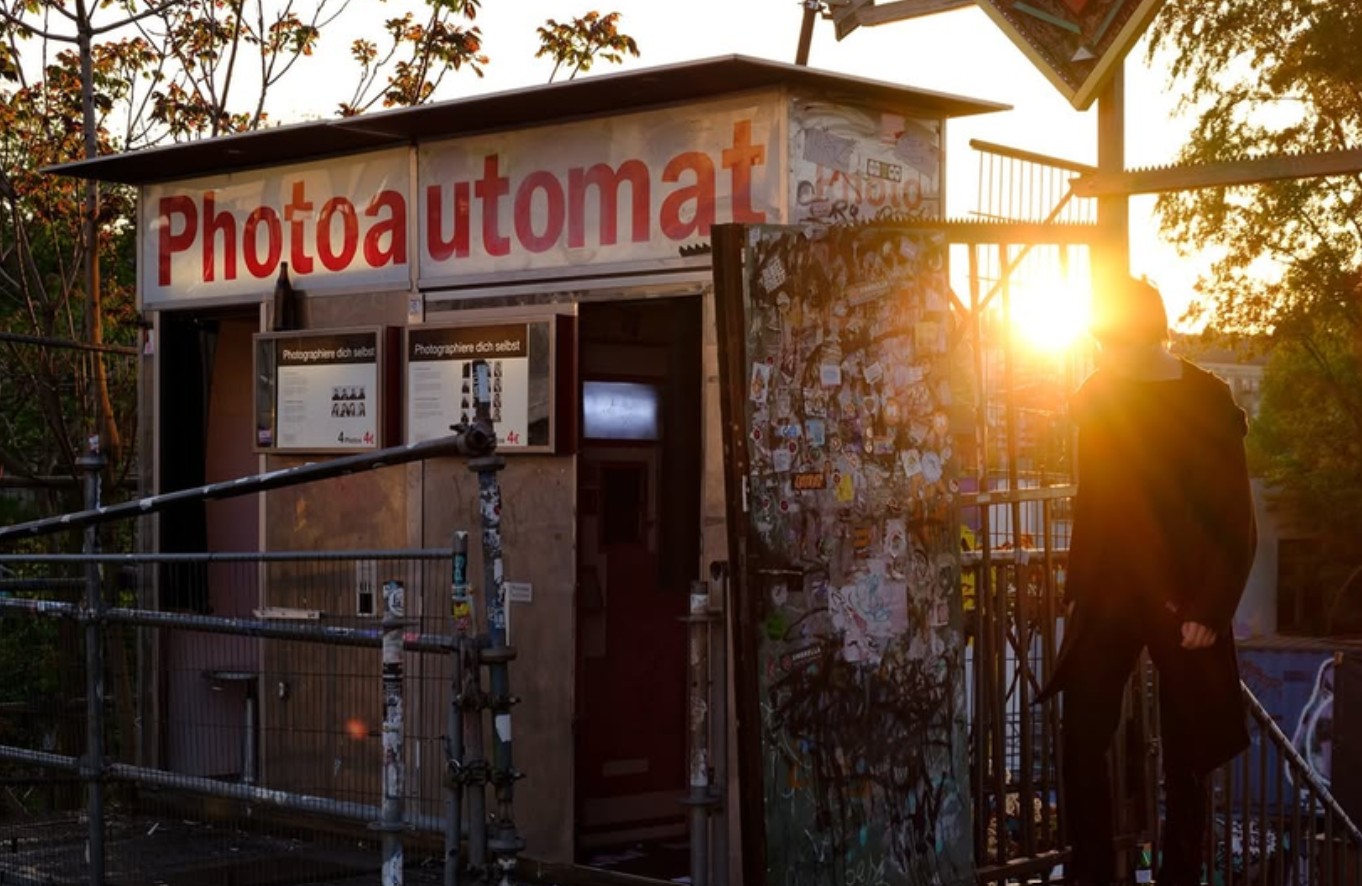
Since June, a German Photoautomat has taken pride of place in city arts hub Trongate 103 - and it continues to be a pit stop for both young and old eager to capture a lasting retro memento.
Photographer and college lecturer Simon Murphy is the creative behind the project. Specialising in portraiture for 25 years, Govanhill-born Simon is best known for his striking Govanhill Street Level Photoworks project - a collection of portraits of people and community photographed with a raw reality.
Now he is connecting Glasgow with one of his favourite cities to photograph, by bringing a piece of Berlin nostalgia to the city and connecting people across borders.
“In 2023 I had just finished a major exhibition about Govanhill, so, all of a sudden I needed new projects”, Simon told us. ”Instead of doing one project like Govanhill which took seven years to do, I decided to do three projects, all of them about two years each and I wanted to do things differently.
“So instead of portraiture I wanted to photograph landscapes just to test myself and I remembered that in Berlin there were these Photoautomat machines out in the streets and I was always drawn to them when I was there. It was the old school chemical process, and I just thought they were a great representation of the power of photography.
“You know there’s these giant cameras but through photography you can cross borders, personal borders but literal borders too, so I just started photographing these booths. I didn’t want to make portraits but I would meet people at the booths and they look cool and I couldn’t help myself. I’m a portrait photographer so I started making portraits, and then I just thought how does this project connect with Glasgow, how can I make a link?
“I thought it’d be amazing to build a bridge between Glasgow and Berlin through these booths. Almost like the booth is a portal, so you step into the booth and you appear in Berlin, that’s the idea.”
Simon pitched the idea to the owners of the booths who got behind the project and they set about the logistics of transporting the machine to Scotland.
“I met the guys who run the booths - they’ve got about 34 in the streets and I pitched the idea and they were optimistic about it”, he said. ”I think they realised they hadn’t a clue about the logistics because initially I thought about just bringing one over for an exhibition and then sending it back, but they’re heavy and then you’ve got customs so there was a lot involved in bringing it over.
“But it’s here now in Glasgow and people are loving it. There’s something about it that’s special. I think the photographs themselves are beautiful, black and white, really high quality and they’re archival - they’ll last 100 years - but I think it’s the experience as well.
“People are squeezing in, you don’t do that in a digital modern booth, you’re there for a passport photograph that has to be very serious. You can’t wear glasses but people are making it an occasion; dressing up to come in and bring in family, we’ve had people getting engaged in the booth, we’ve had people marking big events. We see pictures of brides and grooms, we’ve had dogs, cats, there’s even been a tortoise - so it’s like Noah’s Ark.
“For me there’s not a standout moment but I think the collection of images together and how diverse the type of people that are using it are, that’s really exciting. Artists are using it for their own projects, so it’s got different lives. And my life just now with the booth is just maintenance, I just try and keep it working.”
Currently there are no plans to send the booth back to Berlin with Simon revealing it “feels right” to share it with the people of Glasgow for a while longer due to the welcome it has received. And with a new chapter being born, with new photographs being produced, an archive exhibition featuring musicians, DJs, artists and people from all walks of life could, he revealed, be in its future.
The book Photoautomat on the Berlin booths is set to be released in December and is expected to be on sale in Street Level Photoworks, Glasgow.
Simon has been documenting people in his locality for years giving an insight into one of Scotland’s most diverse areas, Govanhill.
A point of arrival for many it is a place where immigrants arrive in Glasgow with an estimated 88 languages spoken in only 0.33 square miles. Simon’s street portraiture project consisted of individuals who live and pass through the area.
“I’ve got a strong connection with Govanhill”, he added. “I lived there from my early 20s into my mid-30’s and also had strong family connections in Govanhill when I was growing up. I was there a lot, so when I was at college often I would make photographs on the streets.
“Then I had a career that took me around the world. But when Covid hit nobody could travel anywhere and I was hungry to do a project. I realised that actually I didn’t really need to travel to do that project, the world or everything I loved about travel was actually there on my doorstep in Govanhill, so I started this project photographing a portrait of the place.
It’s a hugely diverse multicultural area and that’s what I loved about photography - meeting people and hearing their stories from different backgrounds. So to make a project in Govanhill really made sense. And it’s just been voted the fifth coolest neighbourhood in the world.
“Govanhill is cool. When I lived there the first time around it certainly wasn’t trendy like it is now, but as a photographer change is great because there’s always something else to photograph, so I love the fact that Govanhill is constantly changing, it’s always been like that. Govanhill’s always been a place for people to arrive when they come to Scotland, it’s maybe a place to start out before they spread out. For me Govanhill has always been exciting.”
Always with multiple projects on the go, Simon has set his sights firmly on the Barrowlands for his next venture.
“I’ve got hunger to be creative and when I’m not doing something I feel a gap so there’s no shortage of projects”, continued Simon.
“Every project I do has a connection with myself but sometimes it’s the subconscious or something that happened years ago. In the 90s, I used to sneak into the Barrowlands and go to all these gigs. I’m very much for limitations, I think limitations make you creative. It’s the small things that then connect with people and it becomes a bigger thing.
“Lots of people make photographs at the Barrowlands of bands performing live so I wanted to do something different. I‘m trying to photograph the place, areas that people don’t usually get to see, but also photograph the artists. But, in the quiet moments. So I’ve got pictures of Johnny Marr on the stairwell and Nile Rodgers with all the posters - places that people don’t see. Lots of artists - Fatboy Slim ironing his trousers before he goes on the stage. It’s just little moments so I’m building that up and then eventually that will be another book and an exhibition but I reckon I’ll give it four or five years.”