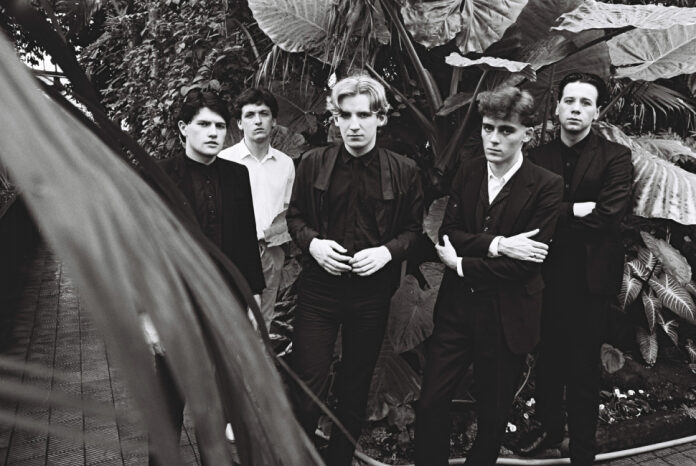
In Pictures: The early days of Simple Minds in Scotland before global fame.
Before the stadium concerts and international hits, Simple Minds were a group of Glasgow teenagers absorbing punk, electronic music and new sounds from Europe. Their journey from small city venues to the forefront of music in the UK, then global fame, became one of Scotland’s great cultural success stories.
Simple Minds would become one of the defining British bands of the 1980s, filling stadiums and producing songs that travelled around the world. Their story, however, began in the clubs, record shops and housing schemes of Glasgow.
Jim Kerr and Charlie Burchill had known each other since childhood. Growing up on the southside of the city, they shared an obsession with music and watched artists including David Bowie, Roxy Music and Lou Reed perform at the Glasgow Apollo.
Punk offered them a way to stop watching and start creating.
The roots of Simple Minds can be traced to Johnny and the Self-Abusers, a short-lived punk band formed on Glasgow’s southside in 1977. Kerr became its singer while Burchill played guitar alongside school friends Brian McGee and Tony Donald. The group released one single, Saints and Sinners, before breaking apart.
Kerr, Burchill, McGee and Donald continued working together. The punk attitude remained, but they were already looking beyond its limitations. They became Simple Minds and played their first concert at Satellite City in Glasgow on 17 January 1978. Kerr told me: “Back then, in Toryglen, you had more chance of being an astronaut than being top of the American charts. There wasn’t a college to show you how to write songs, and you couldn’t just go along the street to someone who’d already done it. It’s an amazing thing, the power of imagination.
“It all begins with belief. You have to believe things are possible, then it’s step by step.
“We could only do our own thing. It was all homemade, trying to chase down synthesisers and find an edge. You’d go into any Glasgow pub and there’d be a band playing cover versions, and they were great at it. We just knew we didn’t want to do that. We’d have to invent ourselves.”
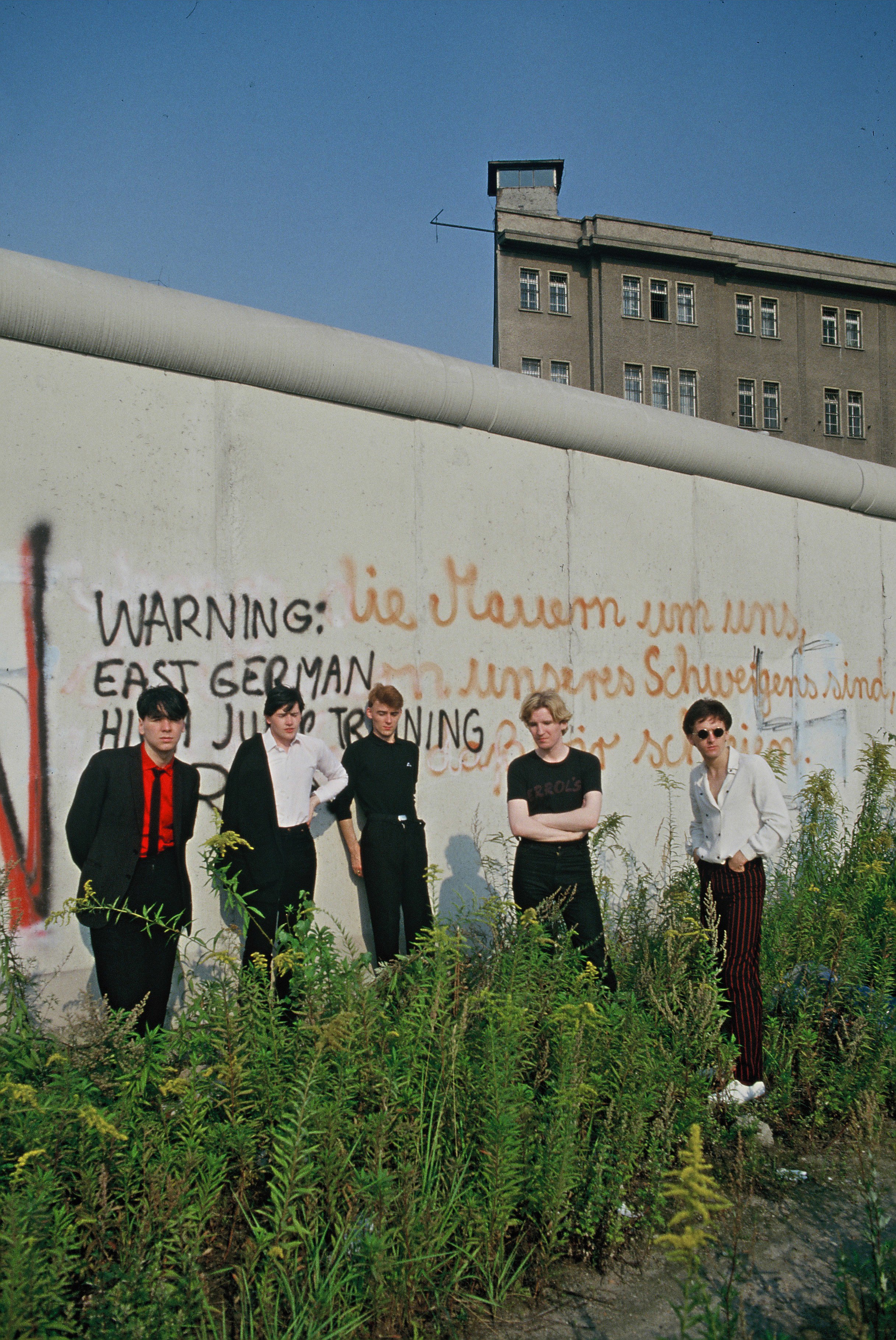
The Mars Bar on Howard Street became an important meeting place for Glasgow’s emerging music scene. Simple Minds developed their reputation through regular live performances around Scotland. The venues were small, the conditions could be basic and audiences expected bands to prove themselves quickly. That environment helped make Simple Minds into a formidable live band.
The group came under the guidance of Bruce Findlay, the record-store owner and music entrepreneur who became their manager. Findlay’s independent Zoom label gave the band its first recording opportunity.
By the time Simple Minds recorded their debut album, the line-up included bassist Derek Forbes and keyboard player Michael MacNeil alongside Kerr, Burchill and McGee.
Released in April 1979, Life in a Day was produced by John Leckie and reached number 30 on the UK albums chart. Its songs featured sharp guitars and dramatic presentation, particularly on the title track and Chelsea Girl. The band were not satisfied.
Their second album, Real to Real Cacophony, appeared later the same year and represented a decisive break from the debut. Simple Minds began experimenting with electronic textures and unconventional song structures.
The influence of German groups such as Kraftwerk and Neu! became increasingly important. Kerr and Burchill had travelled through Europe as teenagers, and the band’s growing touring schedule exposed them to music, architecture and political tensions far removed from Glasgow.
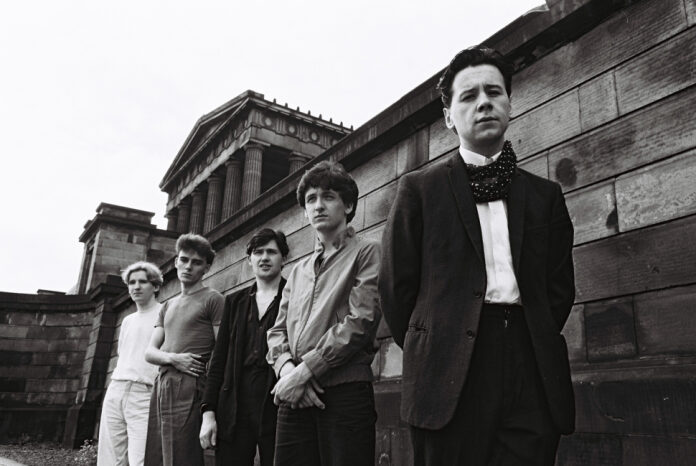
Those influences came together on Empires and Dance in 1980. Songs including I Travel, Celebrate and This Fear of Gods combined Derek Forbes’s melodic bass, Michael MacNeil’s keyboards and Burchill’s processed guitar with rhythms designed as much for a nightclub as a rock venue.
The records were critically admired, but major commercial success remained out of reach. The band’s progress was built through touring. They travelled repeatedly through the UK and Europe, finding enthusiastic audiences in countries including Germany, France and the Netherlands.
A move to Virgin Records gave them a stronger platform. The 1981 releases Sons and Fascination and Sister Feelings Call, produced by former Gong guitarist Steve Hillage, brought together the atmosphere of the earlier records with more direct melodies.
Tracks such as Love Song, The American and Theme for Great Cities showed that Simple Minds could retain their experimental identity while creating music with a broader appeal. Supporting Peter Gabriel also introduced them to larger audiences, while Love Song became an international success.
The decisive moment came with Promised You a Miracle.
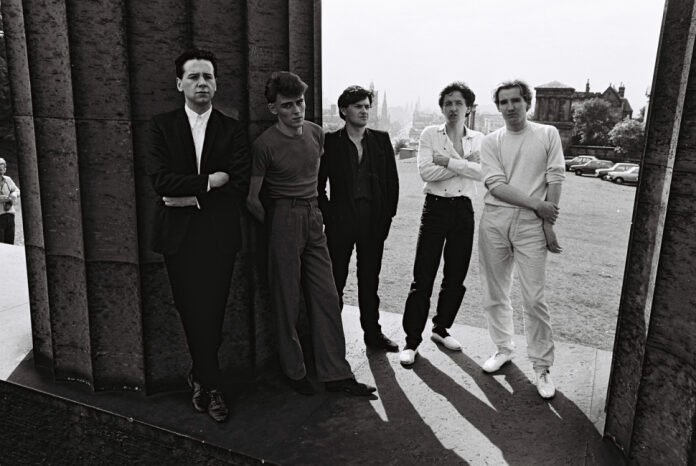
Released in April 1982, the single received the level of daytime radio play that had previously eluded the band. An appearance on Top of the Pops helped it reach number 13 in the UK chart, giving Simple Minds their first substantial British hit.
The song introduced the sound that would define the next stage of their career. The dark European atmosphere of the earlier albums remained, but it was now joined by bright keyboards, confident rhythms and an emotional sweep capable of reaching a mass audience.
That transformation was completed with New Gold Dream (81–82–83–84).
Released in September 1982, the album included Promised You a Miracle, Glittering Prize and Someone Somewhere in Summertime. It reached number three in the UK, remained on the chart for a year and changed Simple Minds from a respected cult band into a major international act.
There would be bigger records and larger stages. Sparkle in the Rain reached number one in Britain in 1984, with Waterfront giving the band an anthem that carried the scale and industrial character of Glasgow within it. Global recognition followed with Don’t You (Forget About Me) and Alive and Kicking.
Simple Minds emerged because they refused to remain fixed in the sound that first inspired them. Glasgow gave their initial audience and their determination to perform. Europe expanded their imagination. Punk gave them permission to begin.
Within five years of their first Glasgow gig, they had created New Gold Dream and found a sound entirely their own. It was the point when a group formed in the city’s small clubs began to look and sound capable of conquering the world.
Before the stadium concerts and international hits, Simple Minds were a group of Glasgow teenagers absorbing punk, electronic music and new sounds from Europe. Their journey from small city venues to the forefront of music in the UK, then global fame, became one of Scotland’s great cultural success stories.
Simple Minds would become one of the defining British bands of the 1980s, filling stadiums and producing songs that travelled around the world. Their story, however, began in the clubs, record shops and housing schemes of Glasgow.
Jim Kerr and Charlie Burchill had known each other since childhood. Growing up on the southside of the city, they shared an obsession with music and watched artists including David Bowie, Roxy Music and Lou Reed perform at the Glasgow Apollo.
Punk offered them a way to stop watching and start creating.
The roots of Simple Minds can be traced to Johnny and the Self-Abusers, a short-lived punk band formed on Glasgow’s southside in 1977. Kerr became its singer while Burchill played guitar alongside school friends Brian McGee and Tony Donald. The group released one single, Saints and Sinners, before breaking apart.
Kerr, Burchill, McGee and Donald continued working together. The punk attitude remained, but they were already looking beyond its limitations. They became Simple Minds and played their first concert at Satellite City in Glasgow on 17 January 1978. Kerr told me: “Back then, in Toryglen, you had more chance of being an astronaut than being top of the American charts. There wasn’t a college to show you how to write songs, and you couldn’t just go along the street to someone who’d already done it. It’s an amazing thing, the power of imagination.
“It all begins with belief. You have to believe things are possible, then it’s step by step.
“We could only do our own thing. It was all homemade, trying to chase down synthesisers and find an edge. You’d go into any Glasgow pub and there’d be a band playing cover versions, and they were great at it. We just knew we didn’t want to do that. We’d have to invent ourselves.”
The Mars Bar on Howard Street became an important meeting place for Glasgow’s emerging music scene. Simple Minds developed their reputation through regular live performances around Scotland. The venues were small, the conditions could be basic and audiences expected bands to prove themselves quickly. That environment helped make Simple Minds into a formidable live band.
The group came under the guidance of Bruce Findlay, the record-store owner and music entrepreneur who became their manager. Findlay’s independent Zoom label gave the band its first recording opportunity.
By the time Simple Minds recorded their debut album, the line-up included bassist Derek Forbes and keyboard player Michael MacNeil alongside Kerr, Burchill and McGee.
Released in April 1979, Life in a Day was produced by John Leckie and reached number 30 on the UK albums chart. Its songs featured sharp guitars and dramatic presentation, particularly on the title track and Chelsea Girl. The band were not satisfied.
Their second album, Real to Real Cacophony, appeared later the same year and represented a decisive break from the debut. Simple Minds began experimenting with electronic textures and unconventional song structures.
The influence of German groups such as Kraftwerk and Neu! became increasingly important. Kerr and Burchill had travelled through Europe as teenagers, and the band’s growing touring schedule exposed them to music, architecture and political tensions far removed from Glasgow.
Those influences came together on Empires and Dance in 1980. Songs including I Travel, Celebrate and This Fear of Gods combined Derek Forbes’s melodic bass, Michael MacNeil’s keyboards and Burchill’s processed guitar with rhythms designed as much for a nightclub as a rock venue.
The records were critically admired, but major commercial success remained out of reach. The band’s progress was built through touring. They travelled repeatedly through the UK and Europe, finding enthusiastic audiences in countries including Germany, France and the Netherlands.
A move to Virgin Records gave them a stronger platform. The 1981 releases Sons and Fascination and Sister Feelings Call, produced by former Gong guitarist Steve Hillage, brought together the atmosphere of the earlier records with more direct melodies.
Tracks such as Love Song, The American and Theme for Great Cities showed that Simple Minds could retain their experimental identity while creating music with a broader appeal. Supporting Peter Gabriel also introduced them to larger audiences, while Love Song became an international success.
The decisive moment came with Promised You a Miracle.
Released in April 1982, the single received the level of daytime radio play that had previously eluded the band. An appearance on Top of the Pops helped it reach number 13 in the UK chart, giving Simple Minds their first substantial British hit.
The song introduced the sound that would define the next stage of their career. The dark European atmosphere of the earlier albums remained, but it was now joined by bright keyboards, confident rhythms and an emotional sweep capable of reaching a mass audience.
That transformation was completed with New Gold Dream (81–82–83–84).
Released in September 1982, the album included Promised You a Miracle, Glittering Prize and Someone Somewhere in Summertime. It reached number three in the UK, remained on the chart for a year and changed Simple Minds from a respected cult band into a major international act.
There would be bigger records and larger stages. Sparkle in the Rain reached number one in Britain in 1984, with Waterfront giving the band an anthem that carried the scale and industrial character of Glasgow within it. Global recognition followed with Don’t You (Forget About Me) and Alive and Kicking.
Simple Minds emerged because they refused to remain fixed in the sound that first inspired them. Glasgow gave their initial audience and their determination to perform. Europe expanded their imagination. Punk gave them permission to begin.
Within five years of their first Glasgow gig, they had created New Gold Dream and found a sound entirely their own. It was the point when a group formed in the city’s small clubs began to look and sound capable of conquering the world.