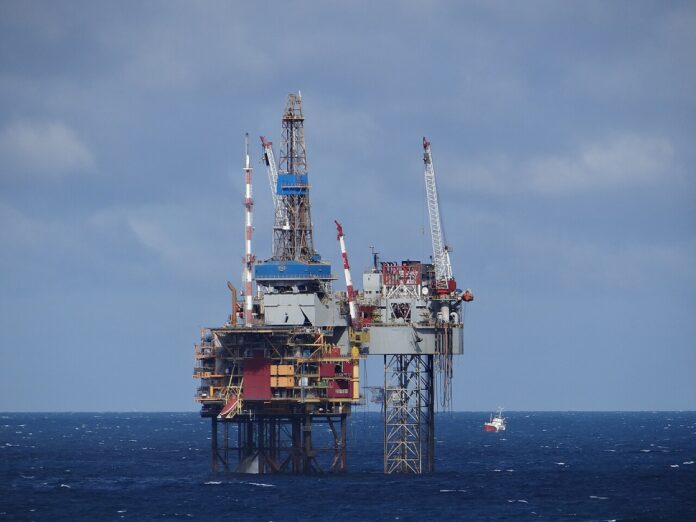
A ‘major industrial opportunity’ touted by the offshore industry could be missed if regulations on oil and gas companies are not tightened, with the taxpayer potentially left to foot the bill, a research organisation has warned.
Thousands of North Sea rigs, wells, pipes and more are due to be decommissioned in the coming years, with spending due to reach almost £25bn over the next decade.
However, industry experts have warned companies are kicking the can down the road on the process as they look to protect their balance sheets and the regulator, the North Sea Transition Authority, does not have the powers to enforce deadlines.
That could lead to the loss of thousands of jobs, as well as leaving the taxpayer on the hook for costs which should be being borne by the industry.
A report from Offshore Energies UK (OEUK) released on Tuesday predicted that spending on decommissioning in the North Sea could total £24.7billion, in what it described as a “major industrial opportunity”.
There are 135 topsides - the structures visible above the water - to be removed in that period as well as 126 underwater structures, thousands of miles of pipes and 1,834 wells.
The process will require specialist people, vessels, equipment and facilities and expenditure is predicted to peak at £3bn in 2027 before remaining above £2.7bn through 2031.
The report describes this as “a sustained six-year period of elevated expenditure”, but OEUK energy operations director Mark Wilson said it would “not happen by accident” and called for co-ordinated planning between decommissioning and offshore wind, with the two using much of the same infrastructure and expertise.

Earlier this year a similar report was produced by Redwater Insights, a nonprofit research and analysis group which came to similar figures on investment, putting it at £25.6bn with around £6.8bn in direct economic benefit to the UK, with a further £9 billion in indirect and induced gross value added.
However, the firm has warned lax regulation and uncertainty in the industry mean time is running out to take advantage.
Some of the “suspended wells” date back to the late 1960s, with two wells owned by Perenco and Chrysaor sitting idle for more than half a century as of 2020.
The latter now operates as part of Harbour Energy after merging with Premier Oil, a familiar pattern in the North Sea as companies with large stocks of historical tax losses combine with profitable ones, allowing greater use of losses against taxable profits. The Office for Budget Responsibility estimates North Sea mergers will reduce the Treasury’s tax take by £2.1 billion over the next few years.
Redwater Insights director of legal Sophie Marjanac told Scottish News: “This OEUK report does at least recognise the scale of decommissioning and the impact it will have on the North Sea in the coming years, it makes the point the decommissioning has moved from some kind of future problem to a major economic driver and we completely agree.
“There are significant opportunities, we also kind of agree with that, but the report could better recognise some of the significant challenges.
“There are still more than 500 wells which are overdue for decommissioning and that number is not decreasing, there are forecast to be 1100 more over the next few years.
“The regulator has been letting the companies kick the can down the road on this for years, so there’s this huge task ahead of the industry.
“The report emphasises that only 45% of suppliers are confident about the next 12 months and in the decommissioning space that should not be the case, the supply chains should know that it’s happening and that shows the regulators haven’t really been doing their job.
“What we’ve seen in the industry over the past few years is an awful lot of mergers for the purpose of tax consolidation and tax saving, there hasn’t been much focus on actually doing decommissioning or the prep work.
“The Energy Independence Bill has been laid before parliament, and that has some steps in the right direction including increased penalties and giving the NSTA the power to take at least some of the decommissioning cost up front.
“But really these moves are too little too late and they really need to be strengthened and used consistently to make sure that decommissioning risk isn’t just concentrated in a handful of companies.
“As it is at the moment there are about 10 companies and they need to spend about £45bn.
“If things go belly up and there are defaults or other issues the decommissioner of last resort is the UK Government, so there’s a massive risk to the taxpayer.”
One key aspect of the ‘just transition’ is avoiding a potential cliff edge where workers in the North Sea are left unemployed or leave the industry as supplies run out.
Parallels have been drawn to the decline of mining and manufacturing in areas like Ayrshire, Lanarkshire and West Dunbartonshire in the 1980s.
A report released in December last year found former mining communities “continue to experience significant disadvantage”, and a 2020 report by the Coalfields Regeneration Trust found many former mining communities had lower life expectancies than the national average, with fewer educational opportunities and “significant and concentrated deprivation”.
Marjanac says: “That’s the worst case scenario for everyone, because those people who leave or retire are the people with the knowledge about the assets, so if you lose them you could be in the ridiculous position of having to import that knowledge, which would just be mad.
“Decommissioning and doing it properly could support 15,000 jobs where people can remain employed in oil and gas until they retire.
“It’s not the entire solution, but it certainly makes a difference for those 15,000 workers.”
In addition to the economic dangers of delaying decommission, there are also environmental ones as infrastructure ages.
The Indefatigable Field, which first produced gas in 1971, was due to be decommissioned by 2009 and is now slated for 2027–2028.
Marjanac says: “Degradation is a major factor in pushing up cost, because if you leave the well unplugged for too long it corrodes the whole time and that pushes the cost up and means there’s a greater chance of leaks of things like methane and hydrocarbons and it also means it’s high risk for workers.
“Delaying might look good on a quarterly balance sheet but at the end of the day you’re just pushing the problems into the future.”
The NSTA said it had fined Enquest £16.5m earlier this year for failing to decommission 33 wells, and that £2.6bn had been spent on decommissioning in 2025, up from more than £1bn the year before.
It has led on a charter to bring operators together, and launched a tool called TWIST to support campaigns.
Operators undertook decommissioning work on 257 wells in 2025, progressing 114 of those to final abandonment status. In 2024, operators worked on 238 wells and fully abandoned 103.