Ambitious plans to expand Glasgow’s Scottish Event Campus could eventually help the venue generate around £1 billion a year for the economy as bosses consider the biggest transformation of the site since the OVO Hydro opened.
The campus, which includes the Hydro, SEC Armadillo and SEC Centre, is already one of Glasgow’s most important economic assets.
It generated an estimated £557 million in economic value for Glasgow during 2024/25 after welcoming more than two million visitors, while turnover increased by 30 per cent to £54.4 million.
The Herald reports that the SEC is looking at an expansion capable of taking that economic contribution towards £1 billion a year as part of a long-term plan for the riverside campus.
The project is still at an early stage, with the final scale, design, cost and funding model yet to be determined.
SEC chief executive Dominic McKay has made clear that expansion is increasingly necessary as the existing venues operate closer to their limits.
Speaking to The Herald’s Brian Ferguson, he said: “Glasgow was ahead of the curve when the SEC was built 40 years ago. We want to make sure we remain really competitive in the global market we operate in.
“While we are based in Glasgow and are very proud to be Glaswegian and Scottish, our days are spent thinking about other countries around the world. Our competition is Melbourne, Paris, London, New York, Lisbon and Bilbao.
“We think of ourselves, and we act, on the international stage. We have got to keep investing to make sure we remain competitive.”
The Hydro was originally expected to stage around 80 events a year but has grown to close to 150, with the arena approaching its practical annual capacity. The wider campus is also attracting increasing numbers of conferences, exhibitions and major international events.
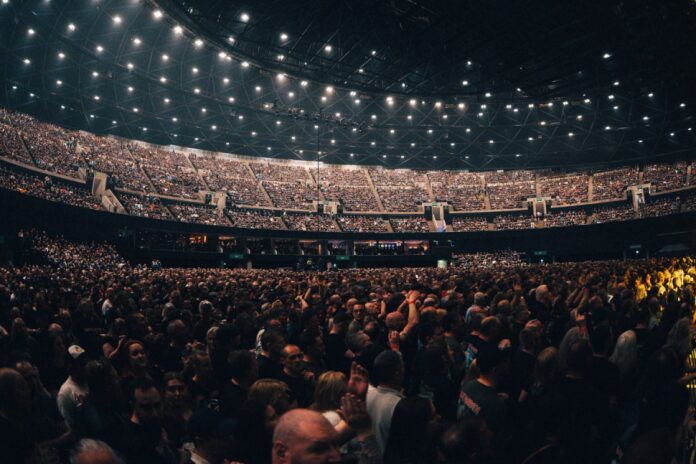
The SEC delivered 300 events during 2025/26 – including 196 live entertainment events, 53 conferences and 51 exhibitions – and attracted more than 2.3 million visitors.
Peter Haggarty, formerly executive director of estates at the University of Glasgow, was appointed Director of Development and Infrastructure this summer. He has been tasked with overseeing infrastructure and development as well as playing a central role in the campus’s future growth plans.
Civil engineer Ruth Bailey has also joined the SEC board as an independent non-executive director.
The SEC currently comprises five interconnected exhibition halls offering more than 22,000 square metres of space, alongside the 3,000-seat Armadillo and OVO Hydro with capacity of 14,500.
The Destination SEC vision would significantly expand the campus, with proposals for a 10,000-capacity outdoor venue, a new 5,000-capacity indoor events space and an increase of more than a third in conference and exhibition capacity. McKay states that 60% of the space within the confines of the Scottish Exhibition Campus remains undeveloped.
The plans also envisage new residential accommodation, a high-quality hotel and offices on the western side of the site, alongside more major sporting events and a replacement for the ageing pedestrian bridge over the Clydeside Expressway.
An earlier £150 million to £200 million masterplan proposed around 5,000 square metres of additional exhibition space together with a major new conference centre connected to the existing SEC.
Outline planning permission has already been secured for expansion, while Glasgow’s Greenprint for Investment identifies the SEC as a major infrastructure investment opportunity.
The SEC has been reassessing the future of its 64-acre campus under McKay, who took over as chief executive in 2025 with a specific brief to develop a new strategy for its venues and consider sustainable expansion.
Expansion would be designed to bring more conferences, exhibitions and major international events to Glasgow, generating spending in hotels, restaurants, bars, shops and transport across the city.