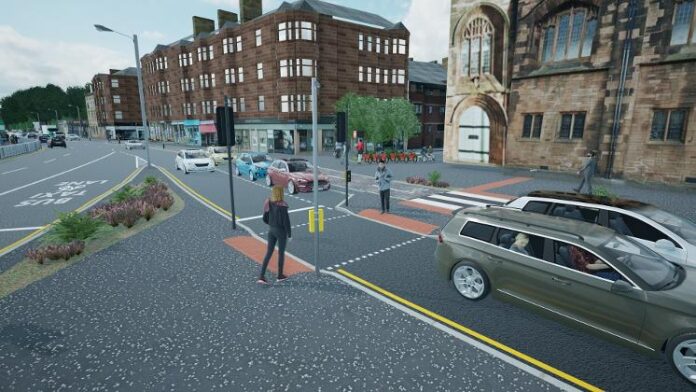
Communities across north and south Glasgow are being asked to help shape plans to close key gaps in the city’s active travel network, as consultations open on proposals to make local journeys safer, easier and more accessible.
The consultations cover five routes - Shields Road and Maxwell Road in the south, and Maryhill Road, Bilsland Drive and North Canal Bank Street in the north. Together, they would help join up existing and planned walking, wheeling and cycling links, creating a more connected network across the city.
As well as new and upgraded active travel routes, the proposals include improved pedestrian crossings, more accessible footways, enhanced public spaces, new planting, sustainable drainage, seating and other measures to create safer and more attractive streets.
The five routes form part of Connecting Glasgow, the council’s new, streamlined active travel delivery programme, intended to speed up implementation, close gaps in the network and make the best use of external funding opportunities as they arise.
Feedback gathered through the north and south consultations will help refine the designs, so the projects are better placed to secure future construction funding.
In the north, the proposed route on Maryhill Road would link Connecting Woodside’s Garscube Road with Bilsland Drive, where existing cycle lanes would be upgraded to fully protected segregation. The enhanced route would then continue east towards Balmore Road and future connections on Hawthorn Street - while proposals for North Canal Bank Street would bridge the gap between Borron Street and Pinkston Road, strengthening connections to the canal and Sighthill.
In the south, new infrastructure on Maxwell Road would link the South City Way at Pollokshaws Road with a new route on Shields Road, which would then connect to the South West City Way. Onward links would be supported by the soon-to-be-completed Dumbreck Road active travel route, with future plans to extend connections north from Pollok Country Park.
Cllr Angus Millar, City Convener for Transport and Climate, said: “These proposals are about filling in the key gaps of Glasgow’s active travel network so that more people can make everyday journeys safely and confidently by walking, wheeling and cycling.
“The routes in the north and south have real potential to join up communities with schools, local centres, public transport and existing active travel routes, while also creating better streets and public spaces along the way.
“We now want people who live, work, travel through or visit these areas to look at the plans and tell us what they think. Local feedback will be crucial in shaping designs that work for communities and help us move these projects closer to delivery.”