Police officers will join firefighters on emergency callouts across Glasgow as Scotland prepares for one of its biggest Bonfire Night security operations in years.
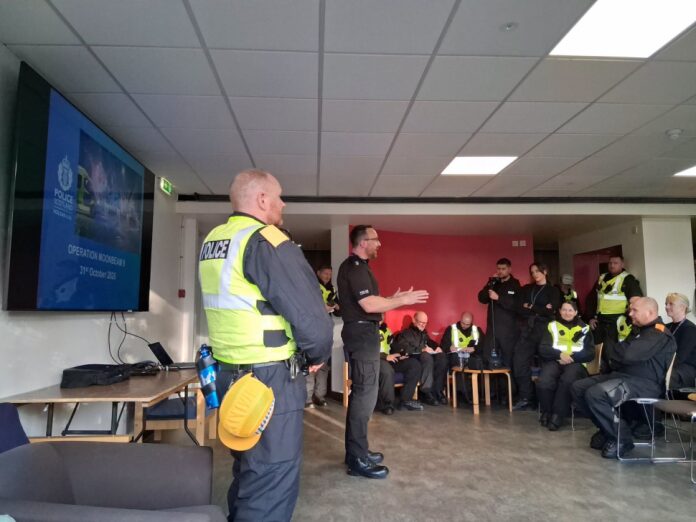
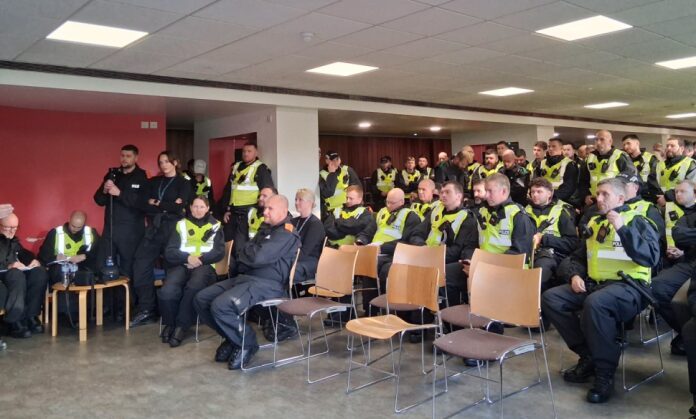
Police Scotland is mounting its largest coordinated deployment since Donald Trump’s visit to Scotland in 2025, with reinforcements drafted in from 18 forces in England and Wales.
The national operation comes amid concerns about fireworks-related violence, a Europa League football match at Celtic Park and potential protest activity in Glasgow tonight (Thursday 5 November).
Under a separate initiative called Operation Academia, 20 police officers will be stationed at ten fire stations across Glasgow, East Dunbartonshire and East Renfrewshire.
Officers will be available to travel alongside firefighters in emergency vehicles where police support is required, helping crews respond safely to incidents involving antisocial behaviour or violence.
The arrangement follows previous Bonfire Night attacks on emergency workers, including incidents in which fireworks, bricks and other projectiles were thrown at police and firefighters.
Operations Superintendent Ross Aitken said: “Having our officers on scene alongside firefighting colleagues lets us work collaboratively to secure the scene and ensure it is safe.”
The increased security measures follow a significant seizure of fireworks in Glasgow.
Police recovered 350kg of fireworks worth an estimated £12,000 during a raid on a property in Penilee on Tuesday.
Some of the devices had the capacity to fire 600 individual rockets. Officers believe the fireworks were intended for sale online ahead of Bonfire Night.
Chief Inspector William Campbell said the seizure had potentially prevented fireworks being used against the public and emergency workers.
The wider national response is being coordinated through Operation Moonbeam, Police Scotland’s annual campaign to prevent fireworks-related crime and disorder.
This year’s arrangements have been expanded under Operation Amberlight to deal with the additional demands facing officers on 5 November.
Police are preparing for Celtic’s Europa League meeting with Turkish side Beşiktaş at Celtic Park, alongside possible protest activity elsewhere in Glasgow.
Chief Superintendent David Robertson, who is leading the operation, said: “Bonfire Night remains one of the busiest nights on the calendar for Police Scotland.”
Firework Control Zones are also operating in parts of Glasgow and Edinburgh, where setting off fireworks in designated areas is prohibited, including on private property.
In Edinburgh, 14 zones are in force between 30 October and 8 November. Glasgow’s restrictions remain in place until 9 November.
Police also have additional powers to disperse groups involved in antisocial behaviour in designated areas.
The measures follow another series of incidents over Halloween, when Police Scotland received 144 calls relating to fireworks.
Officers investigated reports of fireworks being thrown towards members of the public in Glasgow, Tranent and Bonnyrigg. Despite the incidents, police reported no serious widespread disorder.
The number of calls was lower than the 160 recorded during Halloween last year.
Police Scotland says its approach has helped reduce serious disorder in recent years.
In 2023, 62 officers were injured during violence around Bonfire Night. The number fell to one in 2024, while no officer injuries were initially reported during the 2025 operation.
Calls relating to fireworks offences also fell by almost 37 per cent last year.
Scottish Fire and Rescue Service area commander Mark Cleland said: “Bonfire Night can be an enjoyable occasion for communities across Scotland, but it is also one of the busiest periods of the year for emergency services.
“Operation Academia reflects the strong partnership between Scottish Fire and Rescue Service and Police Scotland, with extensive planning and coordination taking place ahead of the Bonfire Night period.
“By working together, we can better anticipate and respond to risks, support the safety of firefighters and help ensure our communities receive an effective emergency response when they need us most.
“We would encourage everyone to celebrate responsibly, attend organised events where possible and follow safety advice to help keep themselves, their families and their communities safe.”