Shed Seven frontman Rick Witter talks to ScottishNews.com about the band’s extraordinary second act, their new album and more than 30 years of Scottish gigs.
There has always been something about Shed Seven and Scotland. The band have played the Barrowland Ballroom in Glasgow 11 times since first walking onto its stage in 1996, and will return for a twelfth time later this month.
Over more than three decades, the York band have built the kind of relationship with Scottish audiences that can only really be forged through years of touring: from small venues to packed rooms and major shows, with generations of fans singing back songs including Chasing Rainbows, Going for Gold, Disco Down and Speakeasy.
When Shed Seven first crossed the border in early 1994, supporting Compulsion at King Tut’s Wah Wah Hut in Glasgow, there were only around 15 or 20 people standing in front of the stage. The response to their opening song was memorable for all the wrong reasons. Things have changed considerably since then.
Shed Seven are currently enjoying the most remarkable period of their career. Recent years have brought two UK No.1 albums, some of their biggest ever live shows and the Best Live Act prize at the AIM Independent Music Awards.
On 29 May 2027, Shed Seven will play the biggest headline show of their career at York’s LNER Community Stadium, just a short distance from Huntington, where Witter and his bandmates went to school and where the band’s story began.
The Ks, Reverend and the Makers and The Mersey Beatles will join them for a hometown show which Witter has described as a “proper full-circle moment”.
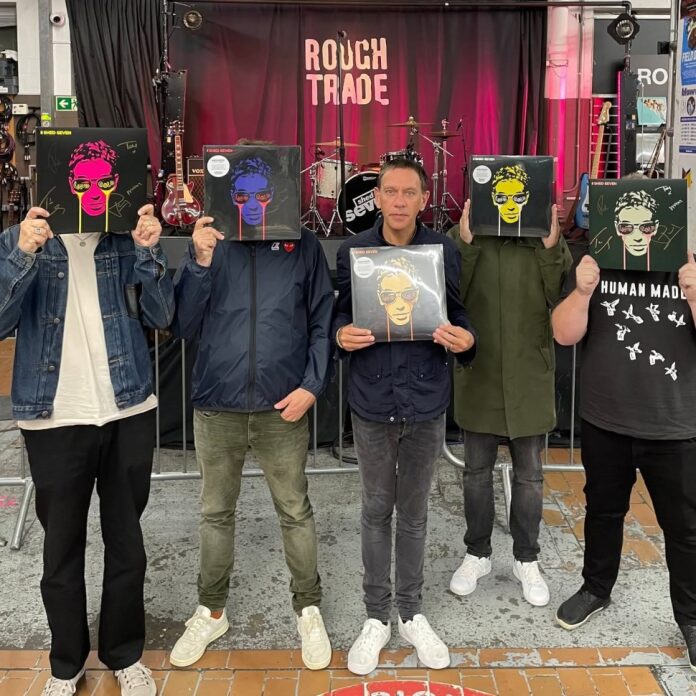
Before that comes Shedcember X, the band’s biggest UK winter tour to date, and a new self-titled album, Shed Seven, due for release on 8 January.
We called Rick Witter for a chat about the band and its relationship with Scotland.
When the chart success came around again, did it feel as exciting as it did the first time?
I think it’s probably sweeter, to be honest, because I think in the ’90s it was so full-on. There was just this amazing surge of guitar music and Britpop and it was all massively kicking off. My memories of it are that it was so full-on, there was no time to really stop and think about what was happening.
You’d write an album, you’d record it, you’d release it, then you’re told you’ve got to go to this country and do that.
I remember if you released a single back then, you’d have to release it over two formats, which would mean you’d need four B-sides, which is just incredible really when you think about it.
It was so full-on and you were always so busy doing things, and then you always had that fear that the next thing might not connect and then you’d be dropped.
It was just a bit of a mad time back then, whereas these days we’re totally in control of what we’re doing. We’re self-managed. We decide on what we want to do, when we want to do it, what the artwork’s going to be like. Everything’s just in-house.
It’s become more of an enjoyable aspect of your job. It’s all in our own laps. We decide.
I think that if you listen to the last few albums we’ve released, you can almost hear the joy coming out the speakers because we’re just really loving what we’re doing.
When you and Paul Banks start writing, do you have to consciously think about making something sound like Shed Seven?
I think because it’s me and Paul the majority of the time, it is just Shed Seven without any kind of trying. Paul will send me a guitar hook or some chords and I’ll put a melody on it, and it instantly is Shed Seven.
We don’t reinvent the wheel, but we try and keep relevant and up to date sound-wise.
I think we’re enjoying it more in the studio these days than we ever have. Again, that’s why you can kind of almost hear it coming out in the studio.
We don’t overthink things. We never sit down before writing anything and discuss how we might do it. It’s just a very natural process, but it’s worked over so many years and people still seem to be really loving what we’re doing, so why change that?
With the greatest of respect, Radiohead, I love them, but we couldn’t do a Radiohead. I think we’d be shot down in a blaze of glory if we went that far.
We’ve released two new songs off this new album and they’re both going down really well online. Everyone seems to be loving them, and we can’t wait to get out and actually perform these things live.
There are fans at the shows who have been there for the whole journey, but also people discovering Shed Seven through the newer records. Does that make it more exciting to still be a working band with new things to say?
It’s absolutely amazing. I love the fact that we have become relevant again, and the only reason that’s happened is because we have started writing new stuff.
The first comeback album was 2017, so that’s nine years ago, which is incredible really. I don’t know where that time’s gone.
Since then we’ve released another studio album, a posh greatest hits, Liquid Gold, and here we are again with another studio album.
Clearly there’s some type of need for us to be artistic, but amazing how people are jumping onto that.
We’re noticing the last album, A Matter of Time, we’ve got songs on there called Talk of the Town and Let’s Go Dancing that have become staples in our live set.
It’s not like they’re new songs and they stick out like a sore thumb with our ’90s material. They slot in really nicely, which goes back to being Shed Seven.
We’re just good at writing catchy indie pop-rock songs. Long may that continue.

We are now as far away from the ’90s as the ’90s were from the ’60s. Does it feel strange looking back at that period?
It’s difficult because a lot of the ’90s were so full-on, as I say, and it’s difficult to kind of pinpoint even certain things.
I just remember it being a really positive time. But things progress and things move on, like everything in life, and this to me feels like it’s the ’90s for us still.
We weren’t really the most credible band in the ’90s. We didn’t really have the coolest haircuts, we didn’t wear the coolest jeans.
But we feel now that we’re kind of all right. We’re looked upon as quite a credible band these days, which is just amazing because if we were told that in 1997, we would have been laughing.
What is the new Shed Seven album all about?
It just ticks every box. If you’re a Shed Seven fan, you’re going to absolutely love it.
We’re hopeful that people who perhaps, A, have never heard of us, or B, have never really got us, might listen to it and start to understand what we are.
I think this is another reason why we’ve called it Shed Seven. Apart from the fact that it’s our seventh studio album, so it kind of takes the pressure off having to think of a title, because that’s always a very difficult part of the album process.
But I think that this album, regardless of it being our seventh studio album, feels to us like it is the archetypal Shed Seven sound and what we are all about.
It’s not reinventing the wheel, but there’s something for a lot of different people on there.
If you go back over our previous albums, it’s like we’re building up to this. It’s difficult to really explain. If you listen to it, you’ll kind of understand what I’m saying.
We’re very excited and can’t wait to get out and play it.
It’s your seventh album and the band is called Shed Seven. Is this like Quentin Tarantino setting out to make a certain amount of films, were you secretly always planning to make seven albums?
Oh no, because we’re not stopping here. We’ve actually started writing for the next album.
We’ve got a little bit of downtime before we go on tour and the album comes out, so because we’re on a run, we don’t want that to stop, because songwriting can be really temperamental.
We’ve started writing for the next album, and then we’ve got other plans for the next few years.
Listen, if you don’t like Shed Seven, go and hide behind a big rock, and if you do like Shed Seven, strap in, because we’re going on a big ride.
You’ve been a very frequent visitor to Scotland. If you were mapping out some of your favourite Scottish places you’ve played, or moments that have been part of the journey, what do you remember about Scotland?
Coming up to Scotland is absolutely incredible. There’s something about Scotland and Shed Seven that seems to connect, and we’re always so well looked after.
The crowds are always so monumentally positive and people look like they’re just having the best time.
We feel very lucky about that.
There was only once that was a bit weird, and that was the very first time we played in Scotland.
We supported a band called Compulsion in about early ’94. I think Dolphin had just come out as our second single. We played at King Tut’s Wah Wah Hut in Glasgow.
We were the support band, so clearly most of the people in the room were waiting to watch the main band.
The bar’s around the corner from where the stage is at King Tut’s, so there were probably quite a lot of people around the corner not listening, drinking, and then there were probably about 15 or 20 people in the room watching us.
We came out, and the very first song we played on Scottish soil was Dolphin. It had just come out as a single.
We finished that song, and then there was a real smattering of applause, and then I just heard someone go: “F*** me, I wish I had a gun.”
And I’m thinking: “Oh dear, we’re not going to go down very well in Scotland, are we?”
That was the only negative ever over 32-odd years of coming to Scotland, and that was the very first gig, so it’s only gone up and up and up.
One of the tracks we danced to at my wedding was Disco Down. Are you still a good dancer?
I’m not sure if it’s called good dancing or dad dancing.
I’m just quite good at swinging my hips, and long may that continue.
The band’s new album Shed Seven is arriving 8th January 2027
Everything you need to know about Scotland in a free morning email: Subscribe to Scottish News Daily here.
For new stories and video from across the country, follow our YouTube channel and join us on Facebook.