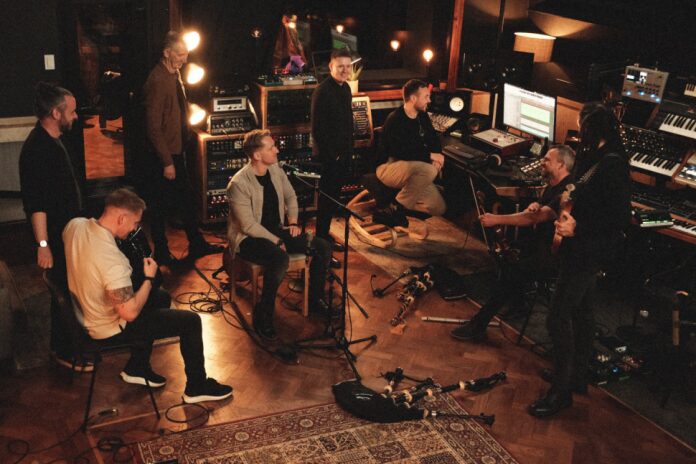
Skerryvore have taken their new album Beautiful Mistakes to the top of the Scottish charts, continuing a remarkable journey for a band that started out playing ceilidhs.
Released on 6 November, the album entered the Official Scottish Albums Chart at No. 1, following the success of 2023’s Tempus, which also topped the Scottish chart and gave the band their first UK Top 40 album.
More than 20 years after they first came together, Skerryvore have built an international following with their blend of traditional Scottish music, rock and pop. Their latest record, recorded at Assumption Studios in Glasgow with producer Jamie Squire, sees them return to a more intimate approach, with the musicians playing together in the same room.
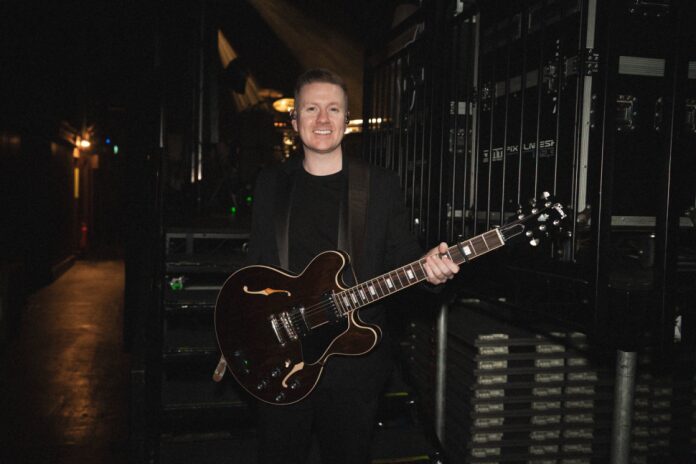
Before the album’s release, Scottish News caught up with singer, guitarist and songwriter Alec Dalglish to discuss the band’s steady assent, joining Glasgow’s traditional music scene, the friendships they have made along the way and why the music we discover as children never really leaves us.
Where does Skerryvore’s sound come from?
I think the roots of the music began on the west coast of Scotland, so it’s got that traditional element. When we started years ago as a ceilidh band, that’s what we started as, with no real aspirations to be anything else really.
We weren’t setting out to do a thing. We just got together for a bit of craic. So that’s the roots of it.
And then some of us have other musical backgrounds where we’re from a more rock, pop-orientated world, and we started to mix those things together.
It’s hard to describe. People say, “What kind of band are you?” I guess we’re like a rock band with traditional Scottish roots. A folk-rock band. It’s hard to say, but we always try to keep that traditional element at the heart of it because that’s where we started.
There’s a real movement around traditional music at the moment, with younger bands in Scotland and Ireland finding their own way of interpreting it. Is that exciting to see?
Yeah, I think it’s incredible. It’s almost like it can be quite cool to be celebrating your own culture and your own music, and mixing it with other more modern styles of music and making it something that’s really appealing to younger people.
Apart from the fact that it’s more difficult to sell gigs because they’re all trying to sell gigs [laughs]
But culturally it’s much better for the whole scene, yes.
You’ve gone from playing ceilidhs to major concerts, Celtic Connections and festivals around the world. Given that you didn’t necessarily set out with those ambitions, has it all been a happy accident?
To some degree it has been a happy accident, and it’s been a sort of slow burn for us as a band.
We have tried to progress, but because we didn’t have this really clear idea of “we’re going to be the next such and such, and that means we need to get this, we need to get that”, we’ve just tried to work really hard, do a lot of gigs, make the best music that we could, and things have just sort of gone our way.
But it’s been a slower burn and sort of difficult for us to take because we’re not the kind of people who were dying to be the frontmen of a rock band.
We had uncomfortable situations where we had to get used to doing bigger gigs, and gigs that weren’t just for a ceilidh, and actually fronting our own music and telling people about it and being the frontmen of a band.
So it was a slower burn rather than a blast right into “we know exactly what we’re doing here because we want to be X”.
Do you feel that a lot of your audience has grown with the band over the years?
Yeah. There’s a huge part of that with us. We’ve always sort of known who a lot of our fans are, which sounds like, “Well, that means you mustn’t have that many.”
But from the beginning we’ve always made a point that we’ve treated the gig like a big party that we’re all at, and we’ve always gone out and spoken to people after, and we still try and do that now as much as we can.
And we have had a lot of people who’ve become friends over the years who were people who just came to see the gig.
I think that’s great. If we put on a big gig in Glasgow or Edinburgh, we get people who come from all these smaller places that we can’t get to, that we used to go to years ago, that have kept up following us, which I think is a really nice thing.
Glasgow recently hosted the Royal National Mòd. Do you think the city has a particularly strong connection with Gaelic culture?
Well, I live in Glasgow and obviously through being in the band I’ve been connected to that world quite deeply.
Glasgow itself does have a really strong connection with the Gaels. I live in the east end of Glasgow, but probably my local bar is the Park Bar, which is known as Glasgow’s hub of the Gaels.
There’s a really strong connection to that and I think the Mòd’s been here a load of times and it’s been brilliant for it.
More so than Edinburgh, Glasgow and the Central Belt is the place where the Gaels come to, and you’ll find a lot of them living and working here.
Beyond the traditional music you grew up with, did Glasgow’s wider music scene influence the band?
Yeah, I think so, because especially for a few of us when we were at university, we’d be more of a part of the Glasgow pub session scene, where you just turned up and played in jam sessions with all the other musicians.
There’d be a lot of people in there that we’d look up to as musicians, and we were influenced by that as well, striving to be as good as some of these guys.
That’s still a really strong scene as well, the Glasgow trad session scene, which I think a lot of young people go to and probably have the same experience as us.
They get to play along with people who are already up there, and that was an influence on us too.
How did you approach recording Beautiful Mistakes? Did you get away somewhere to work on it or did the songs develop more naturally?
It’s changed over the years. It’s all been kind of different on each album. But this one is different again in that we haven’t for a good while recorded all the music together as one.
That was part of what made this album feel so intimate, a bit more rootsy. We were all in the one room almost all the time doing this album, rather than starting off with a few of you and then somebody coming in later and overdubbing lots of stuff.
We were all in one studio, which belongs to our piper, Scott.
He has a studio in Glasgow which is probably, not to blow his trumpet, one of Scotland’s best studios. It’s an incredible space called Assumption.
And because he runs it, we could just be in there the whole day and really take our time and all be in the one room together.
I think that’s really helped with this one, doing it that way.
You’ve got such a broad range of traditional instruments in the band. Does that give you a lot of freedom to explore different sounds and styles?
Yeah, we’ve got a lot of options with the amount of instruments that we have in the band.
And there are all these different variations of the traditional music on that instrument as well.
People stylistically play, even though it might not sound like it to everyone’s ears, people do play the pipes differently from another person.
They do have an actual different style. Even more so perhaps with fiddle music and all the different areas of Scotland you might come from.
So there’s that mix into the whole thing as well, as well as you writing your own music and bringing all those traditional tunes that you have at the back of your head at the same time.
There’s so much.
When you’re writing music now, do you still hear echoes of the things you listened to as you grew up? Does that music stay with you?
I don’t think it ever goes away because there’ll always be something on an album that, if you stop, something catches you for a minute and you weren’t fully paying attention and you go, “That’s like that thing I used to play when I was 14.”
It’s not it, but it’s like you’ve obviously had elements of it.
It’s like a Rolodex in the back of your head. You just always have it there.
I think that’s why it’s important when you start young to get a really good taste in music because you will be using it for the rest of your life.
So get that in there early.
Skerryvore continue their Beautiful Mistakes tour with Scottish dates in Inverness (4 December), Dundee (5 December), Dunoon (17 December), Stirling (18 December) and Aberdeen (19 December).
Tickets and further information are available at skerryvore.com/tour.