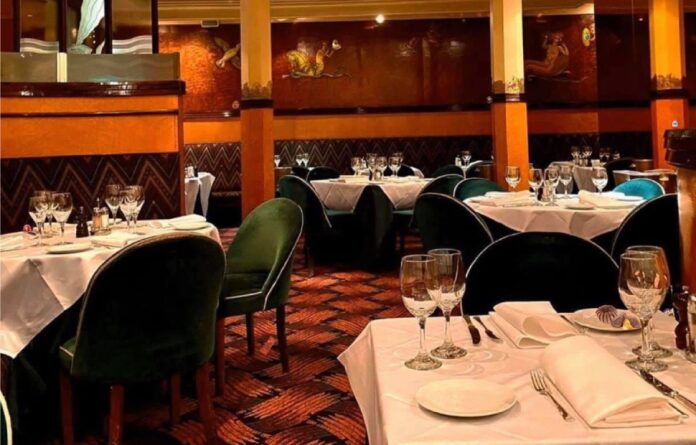
The company behind Glasgow’s famous Rogano restaurant has lost a Supreme Court appeal arising from the long-running legal battle over the closure of the historic city centre venue.
The UK’s highest court today (Thursday 17 September) dismissed an appeal by Forthwell Limited, the tenant of the Rogano premises in Exchange Place, in a significant ruling on whether a company can claim compensation for losses suffered by a separate subsidiary.
The judgment comes almost four months after the wider dispute between Forthwell and landlord Pontegadea UK Limited was settled privately on the eve of a Supreme Court hearing in Glasgow.
Despite that agreement, five Supreme Court justices decided to continue hearing the appeal because it raised an important point of Scots contract law and another commercial case was waiting for clarification on the same issue.
Lord Doherty, giving the judgment with Lord Reed, Lord Stephens, Lady Simler and Lord Hodge in agreement, ruled that Forthwell could not recover trading losses suffered by Lynnet Leisure (Rogano) Limited, the separate subsidiary which actually operated the restaurant.
The court said the proposed extension of the law on so-called “transferred loss” would be “too wide and too indefinite”.
It added that the outcome “does not seem unjust”, noting that Forthwell and Lynnet had chosen to organise the restaurant through two separate companies and should therefore ordinarily expect the legal consequences of separate corporate identities to apply.
The decision brings to an end a legal question which emerged from Rogano’s prolonged closure and eventually travelled from the Court of Session in Edinburgh to the Supreme Court.
Rogano closed when Covid restrictions were introduced in 2020. The premises were subsequently hit by flooding on 9 and 14 December 2020 and again on 10 January 2021.
An electrical fire following the first flood left electrical installations unsafe and the building without heating. Water ingress continued and the restaurant was unable to reopen.
Forthwell argued that its landlord, Pontegadea UK, was required under the lease to repair damage caused by an insured risk or meet the cost of the repairs.
A separate part of its claim sought compensation for profits lost by Lynnet Leisure during the years in which Rogano was unable to trade.
Pontegadea argued that Forthwell could not claim those lost profits because the losses belonged to Lynnet, which was not itself a party to the lease.
The issue first went before Lord Braid in the Outer House of the Court of Session, where Forthwell was allowed to pursue the claim.
That decision was challenged by Pontegadea and, in October 2024, a majority of judges in the Inner House ruled that Forthwell was not entitled to recover the subsidiary company’s losses. Lord Malcolm dissented.
Forthwell then took the issue to the Supreme Court.
The case took an unexpected turn when it reached Glasgow in May as the Supreme Court sat in the city for the first time.
Lawyers arrived at Glasgow City Chambers for the scheduled hearing on 20 May only to reveal that the two sides had reached a financial settlement late the previous evening.
No details of that agreement were made public.
Forthwell sought to withdraw its appeal, but the Supreme Court refused. The judges said the settlement did not depend on the appeal being withdrawn and the case raised a point of law of “general public importance” on which authoritative guidance was needed.
Today’s judgment therefore deals with that point of law rather than reversing the private settlement agreed between the two companies.
The ruling confirms the general principle that a party to a contract can normally recover only losses it has suffered itself.
The Supreme Court accepted that there are limited circumstances in which losses suffered by another party can be recovered, but found that Rogano’s circumstances did not fall within those established exceptions.
The judgment is the latest development in a saga which has kept one of Glasgow’s best-known restaurants closed for more than six years.
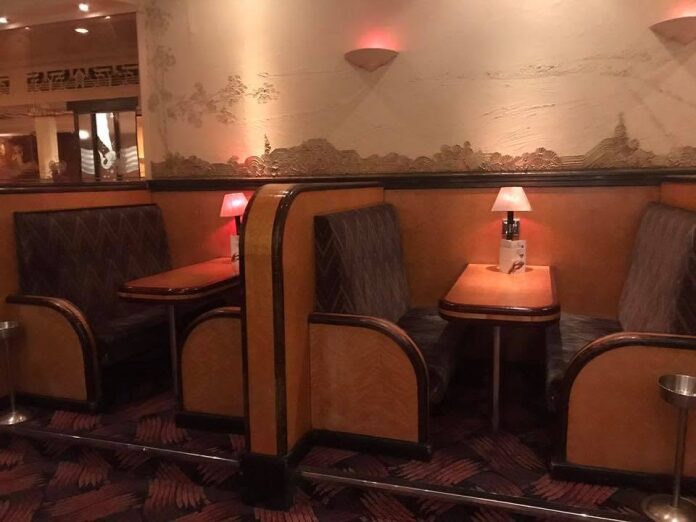
Rogano’s history stretches back to the 19th century, with the restaurant operating from 11 Exchange Place in its familiar form from 1935.
Its distinctive Art Deco interior was created at the time the Queen Mary was being built on the Clyde, with the ocean liner providing the inspiration for a dining room which became one of Glasgow’s most recognisable restaurant interiors.
Before its closure, Rogano occupied a distinctive place in Glasgow hospitality, attracting generations of diners as well as actors, musicians and sporting figures.
Anthony Bourdain visited for his CNN series Parts Unknown, sharing oysters and lobster thermidor with Glasgow comedian Janey Godley, while the restaurant also became known for its long list of celebrity customers.
The settlement reached in May raised hopes that the long-running legal dispute could finally clear a path towards Rogano returning but a route to reopening remains elusive.