Glasgow has welcomed some of the biggest names in music, with thousands of fans turning out to see their heroes perform. But one weekend in May 1977 stands out from the rest.
Over two days, four of the most influential bands to emerge from New York’s legendary CBGB scene took to the stage in the city: Talking Heads, The Ramones, Blondie and Television. It was a remarkable coming together of four acts that would go on to leave a lasting mark on music history.
CBGB was a legendary music club located in Manhattan’s East Village in New York City. Its name originally stood for Country, BlueGrass and Blues, reflecting the styles of music its founder, Hilly Kristal, initially intended to showcase. However, as the 1970s progressed, the venue developed a very different identity, becoming a vital meeting place for emerging musicians and a launchpad for some of the most influential acts of the punk and new wave movements.
With its unpolished interior, intimate atmosphere and stage for bands willing to challenge the musical conventions of the time, CBGB quickly established itself as the heart of New York’s underground music scene.
It provided an early platform for artists including the Ramones, Blondie, Talking Heads and Television, helping them build followings and develop the distinctive sounds that would go on to influence generations of musicians. By the mid-to-late 1970s, CBGB had become synonymous with the raw energy, rebellious spirit and creative experimentation of punk rock, earning its place as one of the most celebrated venues in music history.
Talking Heads were announced as the opening act for The Ramones on the Saturday night at Strathclyde University. The following night, the action moved to Glasgow’s Apollo, where Television would headline their first-ever UK appearance, with Blondie taking on the support slot. It was a remarkable two-night showcase of four bands emerging from New York’s vibrant CBGB scene, bringing the energy and excitement of the city’s underground music movement to Glasgow.
1977 was a pivotal year for all four bands. Talking Heads were preparing to release their debut album, Talking Heads: 77, which featured ‘Psycho Killer’, while The Ramones had released their second album, Rocket to Russia. Television had recently unveiled their influential debut, Marquee Moon, and Blondie were out on the road promoting their own self-titled debut album.
At Strathclyde University, the audience numbered around 100 as Talking Heads and The Ramones took to the stage on the Saturday night. Among those watching from the back of the hall was Blondie frontwoman Debbie Harry, witnessing two of New York’s most exciting emerging bands in action.
Talking Heads delivered a tightly structured, rhythm-driven performance, showcasing the distinctive sound that would soon bring them wider recognition. The Ramones, meanwhile, wasted little time, tearing through songs from their debut album in a blistering set that lasted around 30 minutes, capturing the speed, simplicity and raw energy that had become their trademark.
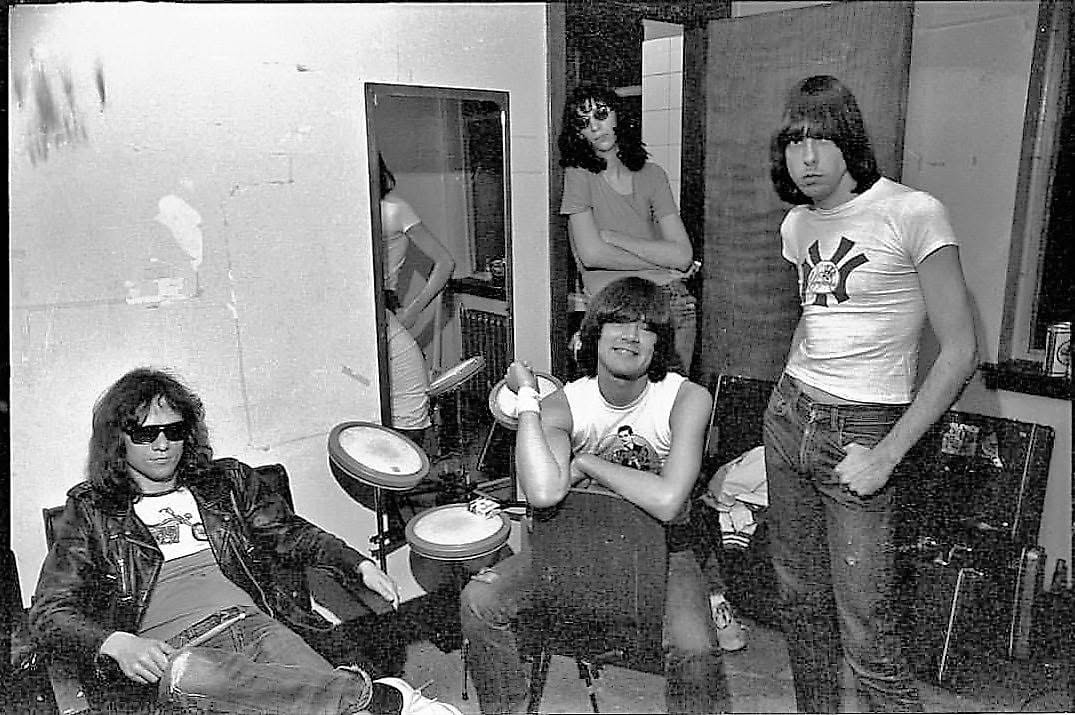
At the Glasgow’ Apollo, Blondie took to the stage as support for Television in front of a half-full venue. Debbie Harry appeared visibly angry about something that had taken place backstage, and the tension eventually spilled over onto the stage. At one point, she called a halt to the band’s performance, causing the set to unravel as the atmosphere deteriorated.
Rather than ending on a high, Blondie’s appearance petered out in an uncomfortable and chaotic fashion, with guitarist Chris Stein reportedly throwing his instrument towards drummer Clem Burke before storming off. It was a far from triumphant end to the band’s set, leaving the evening’s proceedings on a decidedly sour note ahead of Television’s headline performance.
Television eventually took to the stage at around 9.30pm and proceeded to captivate the Apollo audience for the next 75 minutes, delivering a performance that would become the defining moment of the weekend.
Drawing heavily on material from their recently released debut album, Marquee Moon, alongside songs that would feature on their subsequent work, the band showcased the intricate guitar interplay and adventurous sound.
The highlight of the evening was undoubtedly their performance of the epic title track, ‘Marquee Moon’, which was reportedly stretched out to around 20 minutes. A mesmerising display of musicianship and musical experimentation, it was a sensational rendition that left a lasting impression on those fortunate enough to be in attendance.
To round off the evening, Television also treated the crowd to covers of Bob Dylan’s ‘Knockin’ on Heaven’s Door’ and The Rolling Stones’ ‘(I Can’t Get No) Satisfaction’. It was a fitting conclusion to an extraordinary weekend that had brought four of New York’s most talked-about bands to Glasgow.