As Lionel Messi hangs up his international boots, we look at the extraordinary Scots who football to Argentina.
When Lionel Messi walks on to the pitch in Buenos Aires on Tuesday night to make his final appearance for Argentina, an entire nation will pay an emotional farewell to its greatest sporting hero.
The 39-year-old, who is retiring from international football, will don the number 10 jersey one last time, closing a 21-year international career that brought 125 goals and a World Cup title.
His final game for Argentina, a friendly against Benin, will see 85,000 fans pack River Plate’s Estadio Monumental here in Buenos Aires.
But as Argentina bids farewell to the man many regard as the greatest footballer who ever lived, there is an extraordinary Scottish footnote to the story.
Because without a schoolteacher from the Gorbals, there might never have been an Argentine football empire for Messi, Diego Maradona and generations of superstars to inherit.
Alexander Watson Hutton is still revered in Argentina as “the father of Argentine football”.
Born in Eglinton Street in Glasgow in 1853, just a couple of miles from where Hampden Park now stands, Watson Hutton was orphaned young, educated in Edinburgh and became a teacher.
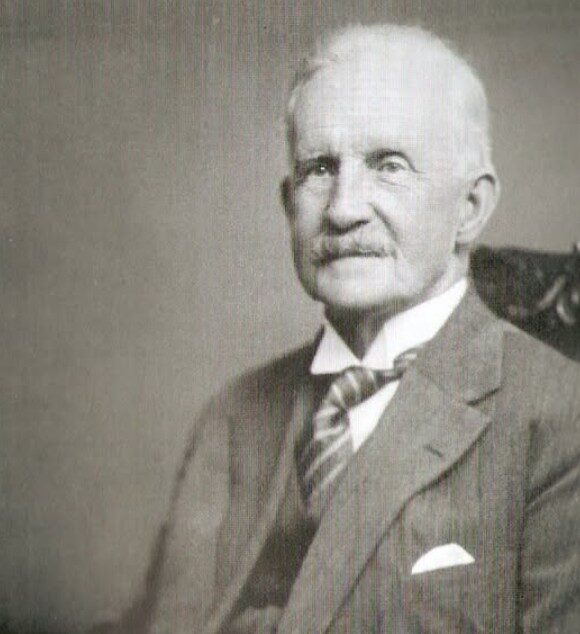
In 1882, he sailed for Buenos Aires to take charge of St Andrew’s Scots School.
His luggage, according to the Argentine FA’s own history, included footballs and pumps to inflate them.
Watson Hutton believed physical exercise should be central to education and encouraged pupils to play the unfamiliar game.
After leaving St Andrew’s he established the Buenos Aires English High School, complete with a football pitch.
Playing a key role in organising some of the first structured football matches in Argentina, early games held between schools and clubs helped establish the rules and popularity of the sport.
In 1893, Hutton brought clubs together to establish the Argentine Association Football League - the organisation that evolved into today’s Argentine Football Association.
He also founded the football club Alumni, which was the most successful Argentine team with 22 titles won until its dissolution in 1911.
The AFA officially recognises Watson Hutton as El Padre del Fútbol Argentino.
In 2023, AFA president Claudio Fabian Tapia paid tribute to the trailblazer – putting him on the same pedestal as legendary pair Diego Maradona and Messi.
He said: “In Argentina, today’s hero is Lionel Messi and previously it was Diego Maradona.
“But the real hero of Argentinean football is Alexander Watson Hutton.
“He is the Scotsman who founded football 130 years ago in this country.”
He added: “He would not have known it at the time, but the Scotsman helped discover the highest collective cultural expression as a country and by far the most popular pastime for the people here.
“His legacy is that we continue to improve and modernise football. We are going to do that with time, with great maturity and responsibility.
“We fulfilled a dream by winning the World Cup again, but we are going for more. “And it all started in 1893 in Buenos Aires.”
To mark the 130th anniversary of the foundation of the AFA, Adidas also produced an official AFA ball commemorating Hutton, incorporating a Saltire and images charting his journey from Scotland to South America.
But Hutton was not the only Scot to leave his mark.
In the city of Rosario, Dingwall-born Colin Bain Calder, who had moved to Argentina to work for the Central Argentine Railway, founded one of Argentina’s most famous clubs
On Christmas Eve 1889, railway workers gathered to create a sports club and elected Calder its first president.
One of the oldest Argentine and Latin American, Rosario Central remains one of Argentina’s great football teams, having won the Argentine Primera Division six times.
Rosario Central records that its first president was “the Scotsman Colin Bain Calder”, while back home in Dingwall his role is commemorated on the town’s heritage trail.
Argentina’s first recognised football championship was staged in 1891 and saw St Andrew’s tie with Old Caledonians – formed by Scottish workers involved in Buenos Aires drainage and waterworks. St Andrew’s won outright after a play-off for medals.
James Brown and his wife Mary Hope were Scots who arrived from Leith aboard the Symmetry in 1825. Seven of their grandsons became extraordinary figures in early Argentine football, playing for Alumni while five brothers and their cousin represented Argentina.
More than a century later, Argentina has won three World Cups, produced Maradona and Messi and turned football into something akin to a national religion.