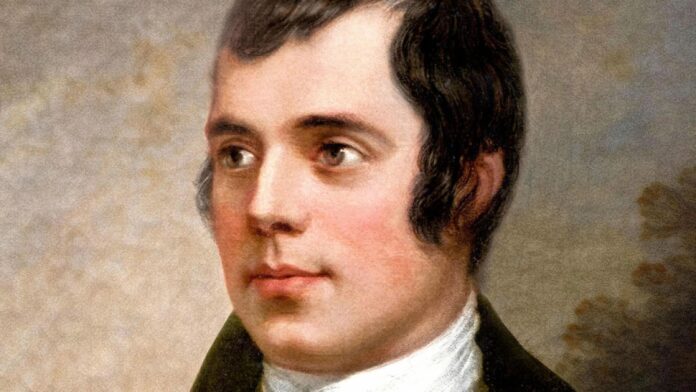
New research has confirmed that Robert Burns intended to make his ‘fortune’ on Jamaican plantations and was well aware of the slavery he would ‘oversee’.
The University of Glasgow study examines Robert Burns’s connections with Jamaica between 1786 and 1834, and his relationship to the Atlantic slavery system and finds that he changed his plan after his poems brought unexpected wealth.
Drawing on newly examined correspondence, shipping records and plantation documents, authors Dr Stephen Mullen and Dr Craig Lamont sought to clarify long-standing questions about Burns’s cancelled voyages to Jamaica.
Their findings have been published in the Burns Chronicle and coincide with both King Charles III and Prime Minister, Andy Burnham, seeking to address Britain’s role in the transatlantic slave trade.
1n 1786, Burns was a struggling tenant farmer with a collection of poetry published and he wrote several farewell poems in anticipation of his departure, including ‘On a Scotch Bard, Gone to the West Indies’.
Having got Jean Armour pregnant, he faced criticism from the church and was close to penury. His way out came through a friend, Dr Patrick Douglas, a plantation owner from Cumnock.
Douglas’s brother Charles owned sugar plantations in Portland, north-east Jamaica, including Springbank (576 acres), Finches (160 acres), Nightingale Grove (300 acres) and Ayr Mount, the largest estate located near Port Antonio on Jamaica’s north-east coast.
In each plantation, the family profited enormously from slavery and Burns had substantial agricultural experience that was transferable to Jamaica’s rural sugar estates.
Charles needed a bookkeeper, which in practice meant an assistant overseer, and Burns agreed to take the post at a Jamaican plantation.
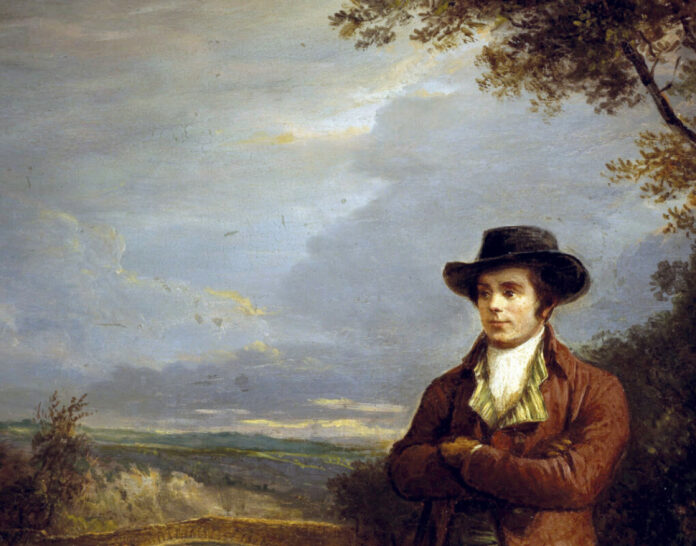
In 1786, a year before abolitionists in Britain began posing questions about the morality of the African slave trade and ultimately plantation slavery, Burns conveyed his first recorded intention with regards Jamaica.
He wrote: “Already the holy beagles, the houghmagandie (sexual intercourse) pack, begin to snuff the scent; & I expect every moment to see them cast off, & hear them after me in full cry: but as I am an old fox, I shall give them dodging & doubling for it; & by & bye, I intend to earth among the mountains of Jamaica.”
Rumours of his departure first spread in July of that year when Jean’s father apparently secured “a warrant to throw me in jail till I find security for an enormous sum”.
Intent on going abroad by July 22, Burns gave up his share of the Mossgiel farm to his brother Gilbert.
He reflected: “I gave up my part of the farm… in truth it was only nominally mine; and made what little preparation was in my power for Jamaica”.
Documents show he agreed to work for the planter Charles Douglas who he described as ‘Master’ – confirming a hierarchical relationship. The deal that would have seen him paid £30-a-year for three years plus food and lodging, but did not cover Atlantic passage.
Previous accounts have suggested Burns booked passage to Jamaica on three separate ships – the Nancy, Bell and Roselle.
The new research challenges that version of events. After examining Burns’s correspondence alongside newly discovered shipping advertisements, Dr Stephen Mullen and Dr Craig Lamont found evidence for only one confirmed booking.
That was aboard the Bell, which was scheduled to sail for Jamaica on 17 October 1786.
Burns had earlier written that he expected to travel on the Nancy, while later accounts have also associated him with the Roselle. But the researchers argue the surviving documentary evidence does not demonstrate that he actually booked passages on either ship.
Omitting the financial considerations at the time, Burns wrote: “I well expected to have been on my way over the Atlantic by this time. The Nancy, in which I was to have gone, did not give me warning enough.
“Two days’ notice was too little for me to wind up my affairs and go for Greenock. I now am to be a passenger aboard the Bell, Captn Cathca[rt,] who sails the end of this month.”
His answer came from his poems. Kilmarnock printer John Wilson ran off 612 copies of Poems, Chiefly in the Scottish Dialect. It went on sale on 31 July 1786, priced at three shillings.
By the time The Bell’s sailing had been delayed until October, due to bad weather, it had sold out.
The success of Poems, Chiefly in the Scottish Dialect, otherwise known as the Kilmarnock Edition (published 31 July 1786) and the first Edinburgh Edition (published 14 April 1787) provided him with an alternative.
Profits from publishing exceeded what he could have earned in Jamaica. The article notes: “The relative worth of these profits, if compared to average earnings in 2024, was £1.76m. Had he remained on a Scottish book-keeper’s starting salary of £30, it would have taken him almost twenty-nine years to earn this type of wealth.”
He wrote: “I had taken the last farewell of my few friends; my chest was on the road to Greenock; I had composed the last song I should ever measure in Caledonia - “The gloomy night is gathering fast,” [also known as Farewell to the Banks of Ayr] when a letter from Dr. Blacklock to a friend of mine overthrew all my schemes, by rousing my poetic ambition.”
In the end his success as a poet prevented the necessity of travelling to Jamaica.
A debate has long ensued about Burns’s awareness of the brutal realities of a slavery society.
Writing to Moore in August 1787, Burns revealed his understanding of the role and likely fate.
Managers in colonial Jamaica were known as overseers whilst those working in subordinate roles were known as bookkeepers.
His brother Gilbert also commented with hindsight what he knew about his brother’s role, as he was to be employed “as an assistant overseer, or as I believe it is called, a bookkeeper”.
The island’s bookkeepers attracted considerable debate as abolitionist debates developed after 1787.
Just two years after Burns was considering travel , the pro-slavery tome Remarks upon the Situation of Negroes in Jamaica (1788) noted: “Bookkeepers are in subordinate command to the Overseers, they attend the still-houses in crop and out of crop, the field. There are so many little deserving the name they bear, that so far from being able to calculate accounts they cannot many of them even read.”
Despite the obvious conclusion that financial circumstances rather than humanitarian concerns persuaded Burns to stay in Scotland, the Burns Chronicle points out that Burns did not profit from slavery.
The article notes how recent heritage and institutional narratives have sometimes exaggerated Burns’s connection to slavery, using him as a symbol for Scottish complicity, despite no evidence of direct involvement.
Dr Mullen and Dr Lamont say they hope their new research: “establishes a model with implications how Burns and Caribbean slavery is interpreted in civic Scotland.”
The authors argue: “The man [Robert Burns] who rejected a lucrative offer to go to Jamaica at a time of personal crisis and had no material connection to the African slave trade or chattel slavery, should no longer serve as the emblem for the Scots who did.”
The authors call for an evidence-based approach to interpreting Burns, arguing he should no longer be viewed as emblematic of Scottish complicity with chattel slavery.
Dr Mullen, Lecturer in History, School of Humanities | Sgoil nan Daonnachdan and Dr Craig Lamont, Lecturer in Scottish Studies, School of Critical Studies say about their article: “By distinguishing between Robert Burns’ symbolic associations with Jamaica in 1786 from material complicity with chattel slavery, these findings provide clarity in an ongoing debate. If Burns is cited in future as representative of Scotland’s connections with Caribbean slavery, this distinction should be explained.”
Historians estimate that up to 20,000 Scots migrated to the West Indies between 1750–1799.
The research is published in the Burns Chronicle by leading historian Dr Stephen Mullen and Scottish Literature expert Dr Craig Lamont is entitled “Historicising Robert Burns’s Jamaica, 1786-1834”.