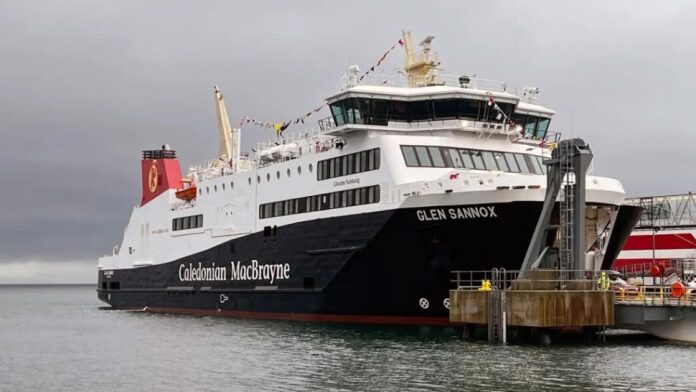
Scotland’s investment in dual-fuel ferries faces a fundamental question after the Glen Sannox gas leak: when will the technology deliver the benefits used to justify its expense and complexity?
The vessel’s main engines have been running on diesel since an incident in June 2025, leaving its liquefied natural gas system unused more than a year later.
CalMac says remedial work has been carried out and the ferry is safe to operate on LNG. It says the decision to use diesel was taken to speed its return to passenger service.
The incident became public last week following BBC freedom of information requests. Around 700kg of methane escaped over 12 minutes during a sailing from Brodick to Troon with 82 passengers aboard.
Transport Secretary Stephen Flynn told a Holyrood committee he had been unaware of the incident, raising questions about how information had passed between the operator and government.
For taxpayers, the issue is what the additional investment in LNG equipment is now achieving. The ability to switch fuels provides operational flexibility, but prolonged diesel-only operation makes it necessary to reassess the expected return from the gas system.
A meaningful assessment would need to set out the additional construction and maintenance costs, actual fuel consumption, time spent operating on each fuel and the cost of remedial work. Those figures would allow the public to judge the technology against its original promises.
The questions also extend to Glen Rosa, the sister vessel still being completed by Ferguson Marine.
In its July update, the Port Glasgow shipbuilder said Glen Rosa would undergo commissioning and quality assurance work to test its dual-fuel systems before sea trials. It put expected completion in the final quarter of 2026.
The commissioning process provides an opportunity to demonstrate how lessons from Glen Sannox have been incorporated into the second ship. Clear information about equipment changes, testing and arrangements for receiving manufacturers’ safety updates would help establish confidence before handover.
For island communities, the practical measure of this investment will be dependable sailings. CalMac’s published arrangements currently have Glen Sannox providing a Tarbert–Lochmaddy service until 27 September because of a technical problem with Loch Portain.
That deployment illustrates the value of having a vessel available to cover disruption elsewhere. It also sharpens the question facing those responsible for the programme: how will the money spent on these ships translate into a more reliable network, and when will their full capabilities be put to use?