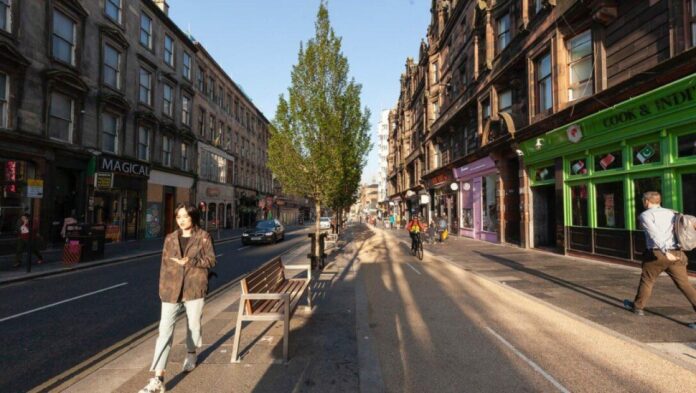
Plans to breathe new life into Sauchiehall Street are moving forward, with further investment in some of Glasgow’s best-known buildings and efforts to bring empty properties back into use.
Glasgow City Council has outlined the next stage of its plans for the city centre, including improvements to the McLellan Galleries, the restoration of public spaces and proposals to turn vacant commercial buildings into homes.
The Sauchiehall Street Culture and Heritage District has secured a further £2.35 million from the National Lottery Heritage Fund, supported by £400,000 in existing council funding.
The investment follows an initial £350,000 development phase which produced an action plan identifying the buildings and public spaces most in need of attention.
The next phase will include early works at the McLellan Galleries and Cameron Memorial Fountain, improvements to shopfronts and buildings, and studies into how underused properties could be brought back into use.
Community-led cultural activities and projects celebrating the area’s heritage will also be supported.
The work forms part of a wider effort to revitalise Sauchiehall Street and the surrounding area, which has faced years of challenges including vacant shops, changing shopping habits and the condition of several prominent buildings.
Bringing more people into the city centre permanently is another priority.
The council is examining opportunities to convert empty upper floors and former commercial premises into housing, particularly around Sauchiehall Street, Blythswood and the Central district.
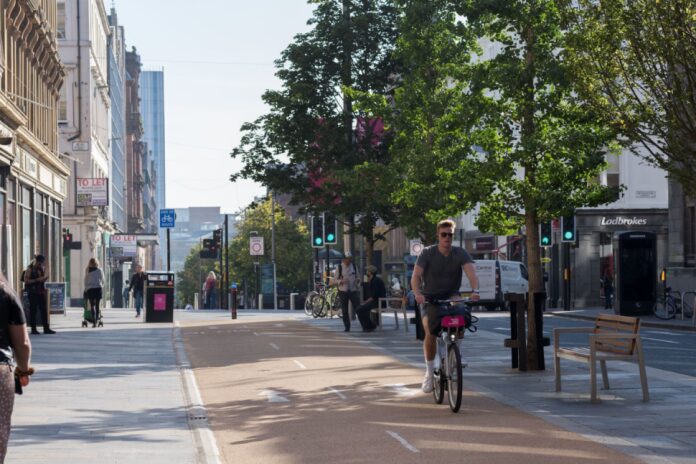
Its longer-term ambition is to increase Glasgow city centre’s residential population to 40,000 by 2035.
Other housing projects include an affordable housing pilot at Station House in St Enoch Square, involving West of Scotland Housing Association, and plans to convert former commercial buildings at 79 Trongate and 9 Duke Street.
The proposals are among the developments highlighted in an update on Glasgow’s City Centre Strategy, presented to a council committee on Tuesday (17 November).
The strategy, which runs until 2030, also sets out progress on Union Street, transport improvements, the night-time economy and plans for the banks of the Clyde.
One of the most prominent projects is the site of the Union Street fire, close to Glasgow Central Station.
Following the major blaze in March, clearance and stabilisation work was completed in July and the site was handed back to its owners.
Architects O’DonnellBrown are developing proposals for temporary uses of the site ahead of longer-term redevelopment.
A separate study will examine the future of Union Street and the area surrounding Central Station, with the aim of transforming it from a route through the city into a destination in its own right.
Elsewhere, plans to improve the area around Anderston railway station are approaching the final design stage.
Construction is expected to begin in summer 2027, with proposals including safer road crossings, a segregated cycle route, improved lighting and the removal of the pedestrian bridge.
The council is also progressing plans for both banks of the Clyde, including the Custom House Quay and Carlton Place project, which is nearing completion of its design process.
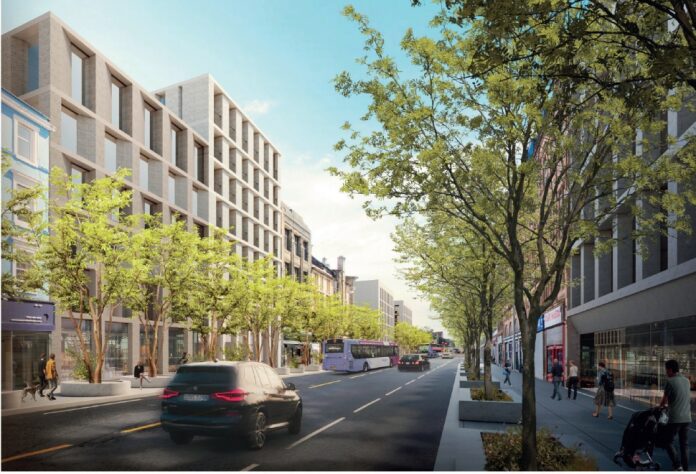
The recently approved North Laurieston Masterplan aims to create a more attractive residential district on the south bank, making better use of its riverside setting, historic character and connections to the wider city.
The update also provides a picture of how Glasgow city centre is performing.
Figures for the first half of 2026 show overall footfall down 2.9%, although the council says the decline has been slowing since April.
Glasgow continues to perform relatively well against cities including Edinburgh, Manchester and Leeds.
The commercial district, which includes the International Financial Services District and Barclays campus, recorded a 9.2% increase in footfall.
International footfall rose by 13.3%, while fashion retailers recorded an 8.3% increase in sales, helped by new store openings.
Overall sales were down 1.7%, with evenings and weekends continuing to perform relatively strongly.
The council says this reflects changes in how people use the city centre, with leisure, hospitality and evening activities becoming increasingly important.
Its Nightshift: Glasgow strategy aims to support businesses and workers operating between 6pm and 6am, while transport operators have introduced additional evening services.
These include extended Subway operating hours, more frequent evening rail services and additional buses.
Three night bus hubs were introduced in October, with marshals, CCTV and improved lighting intended to make travelling home safer.
Additional street cleaning, litter collections and power-washing have also been introduced, alongside the establishment of the Let’s Go Glasgow Business Improvement District.
The business-funded initiative will deliver a five-year programme focused on cleanliness, safety and encouraging more people to spend time in the city centre.
Councillor Angus Millar, Glasgow City Council’s convener for city centre recovery, said: “Over the last year, major progress has been made in the regeneration of Glasgow city centre despite some significant challenges. The transformation of city centre streets and places may be the most obvious change – but a lot of work between the council and our partners has made the city centre more successful than our competitors, provided resources to make the environment more attractive for everyone, and brought a real focus to improving transport options to and from the city centre, especially at night.
“We are laying the groundwork for the city centre’s future success, and we will continue to enhance the city centre’s look and feel and drive increased footfall while working with private building owners and developers to find solutions for key city centre sites.”
The City Centre Strategy is overseen by a task force co-chaired by Councillor Millar and Glasgow Chamber of Commerce chief executive Stuart Patrick.