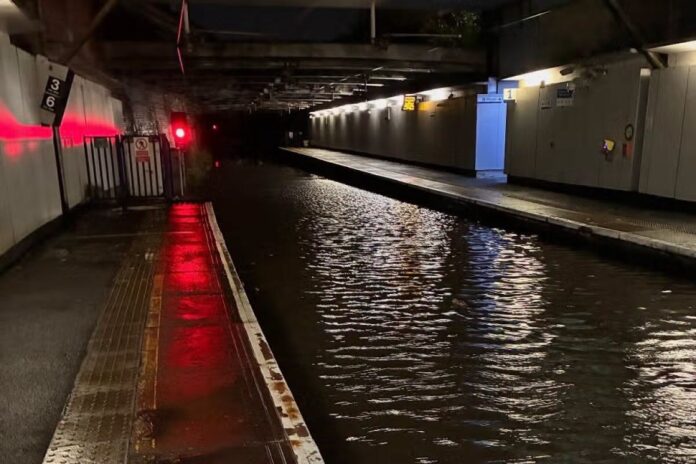
Glasgow City Council is pressing ahead with plans to improve drainage and reduce flooding across the city as new warnings highlight the growing threat posed by climate change and extreme rainfall.
A report being presented to councillors on Tuesday (24 November) warns that flooding remains a “significant” environmental risk, with existing drainage infrastructure struggling to cope during periods of intense rainfall.
The council is working with the Metropolitan Glasgow Strategic Drainage Partnership to develop improvements in areas where flooding affects homes, businesses and transport routes.
The programme aims to increase drainage capacity, improve water quality and introduce more green infrastructure to help manage rainfall.
The warning comes as separate flood risk assessments suggest that as many as 82,000 properties across Glasgow could be at risk of flooding by 2100.
Figures published earlier this year indicated that approximately 52,900 properties were in areas at risk of flooding in 2025, including around 49,000 residential properties and 3,800 non-residential buildings.
The projected increase reflects the growing challenge facing the city as climate change brings more frequent and intense rainfall.
The latest council report, which forms part of an annual review of Glasgow’s roads infrastructure, highlights the limitations of the existing sewer network.
During heavy downpours, the volume of surface water can exceed the capacity of underground pipes, causing water to back up through street drains and collect on roads.
Officials point out that flooding is not always caused by blocked gullies, despite these frequently being blamed when streets become submerged.
The council is increasingly turning to Sustainable Drainage Systems, known as SUDS, to help manage the problem.
These include rain gardens, landscaped drainage channels, retention ponds and tree pits designed to absorb or temporarily store rainwater rather than allowing it to flow directly into the sewer network.
Some of these features have already been introduced through Glasgow’s expanding cycle network and City Deal infrastructure projects.
The council says the approach can also improve neighbourhoods by creating additional green spaces and reducing pollution entering waterways.
The new infrastructure presents its own challenges, however, requiring specialist equipment and more frequent inspections and maintenance.
Officials are monitoring the cost of maintaining early projects to establish the longer-term financial implications.
Glasgow has also received £2.304 million from the Scottish Government to support flood resilience activities, including work to develop measures that could help protect individual properties.
A separate council initiative is examining the use of flood-resistant doors, specially designed air bricks and non-return valves to prevent water entering buildings in locations where larger drainage improvements may be difficult to deliver.
This could be particularly important in densely developed neighbourhoods where there is limited space to accommodate new flood storage infrastructure.
The latest report also highlights the seasonal problem of fallen leaves blocking street drains during autumn.
Residents are being encouraged to clear leaves from around drainage grates near their properties where it is safe to do so, with the council offering advice and basic assistance.
Across Scotland, the Scottish Environment Protection Agency estimates that around 400,000 properties are currently in areas at medium risk of flooding. That figure could rise to 634,000 by the end of the century.
Glasgow’s Environment and Liveable Neighbourhoods City Policy Committee will consider the roads infrastructure report on Tuesday.