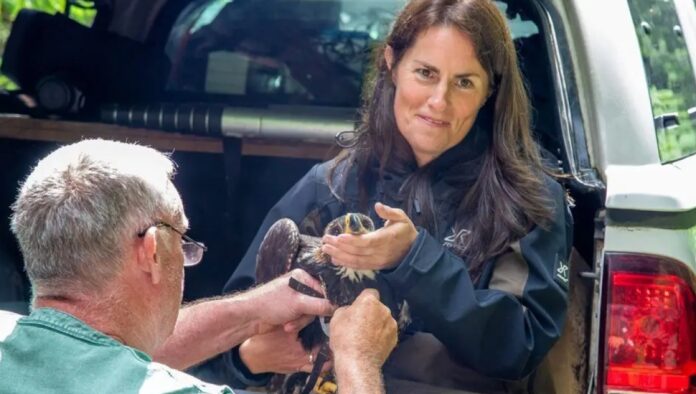
A golden eagle chick named by gamekeepers has become the first to fledge from a nest on a managed grouse moor in the south of Scotland.
Beaky Junior hatched at a secret location in the Moffat Hills, on an estate used for recreational game bird shooting.
The landmark has been hailed as a “hugely significant milestone” by the charity behind a project to bring the birds back to the Southern Uplands.
It is all the more striking because of where it happened. Grouse moors have long been under the spotlight over the illegal killing of birds of prey.
Earlier this year, an RSPB report recorded 182 confirmed persecution incidents involving raptors in Scotland over a decade. Almost two-thirds (64.3 per cent) took place on land managed for gamebird shooting.
Beaky Junior takes his name from his mother, Beaky, one of the first chicks moved from the Highlands to the south of Scotland in 2018 by the South of Scotland Golden Eagle Project, run by the charity Restoring Upland Nature (Run).
Gamekeepers on the estate were invited to name the youngster, in recognition of their part in helping the eagles settle. They have asked to stay anonymous to protect the nest site.
When the project began, golden eagles in the south of Scotland were down to a handful of breeding pairs. There are now more than 50 birds, the highest number in the region for three centuries, despite some birds being shot at or killed along the way.
Beaky Junior is one of four chicks this year which are directly descended from birds the charity translocated.
Five golden eagles fledged in the south of Scotland in total.
His fellow fledglings include GoldenEye, named by Dame Judi Dench, and Sassy, named by Outlander star Sam Heughan.
Run chief executive Dr Cat Barlow said: “It is wonderful to see a golden eagle hatch, fledge and fly freely from the newly established nest of a translocated golden eagle that has made its home on a managed grouse moor in the southern uplands.
“This reflects the incredible support we have had from landowners and gamekeepers – from translocations in the Highlands, to continued monitoring and protection of birds and eyries on their lands and estates.
“It shows that where there are healthy ecosystems, ample food sources and the risk of interference is low, translocated eagles can successfully integrate into native populations to breed successfully.”
She added that it gave “genuine hope” of reversing biodiversity decline, so that future generations across Scotland, England and Wales could experience “that incredible sense of awe when they see a golden eagle”.
Run chairman Michael Clarke said people “from all walks of life”, including gamekeepers, farmers and forestry workers, had played their part.
He said: “We are incredibly grateful for this and take every opportunity to celebrate the vital role in which gamekeepers and land managers have played in our achievements to date.”
Sarah-Jane Laing, chief executive of landowners’ body Scottish Land and Estates, said: “Beaky Junior’s arrival serves as a powerful example of what can be achieved when land managers and conservationists unite behind a shared vision, grounded in trust and genuine partnership.
“Seeing this magnificent species return to and flourish in these landscapes is something we can all take pride in.”
Speaking for the gamekeepers, Mark Ewart, regional co-ordinator at the Southern Uplands Moorlands Group, said: “Monitoring and providing the right habitats for golden eagles and other species to flourish is an important part of what gamekeepers do on a day-to-day basis.
“To encounter golden eagles daily is the ultimate indicator of the success of the project-gamekeeper partnership.”