Inside the former Edinburgh hospital named Scotland’s best building
For more than a century, generations of Edinburgh residents passed beneath the imposing clock tower of the Royal Infirmary on Lauriston Place.
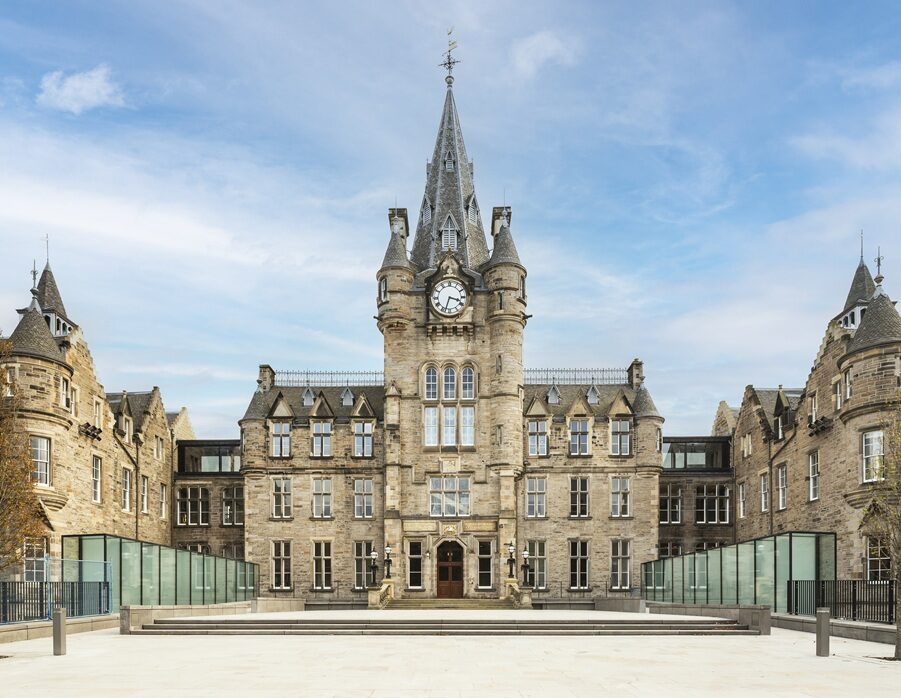
Restoring the Edinburgh Futures Institute
Keith HunterNow, more than two decades after the last patients left its wards, the Victorian landmark has been named Scotland’s best building following a £120 million transformation.
Edinburgh Futures Institute has won the 2026 Andrew Doolan Best Building in Scotland Award, presented by the Royal Incorporation of Architects in Scotland (RIAS).
The award recognises the work of Bennetts Associates in rescuing the former hospital from dereliction and transforming it into an ambitious centre for education, research and innovation for the University of Edinburgh.
Designed by Scottish architect David Bryce, whose other notable buildings include Fettes College and the Bank of Scotland headquarters on the Mound, the Royal Infirmary opened on Lauriston Place on 29 October 1879.
Its distinctive Scottish Baronial architecture incorporated what was then a pioneering approach to hospital design, influenced by the work of Florence Nightingale.
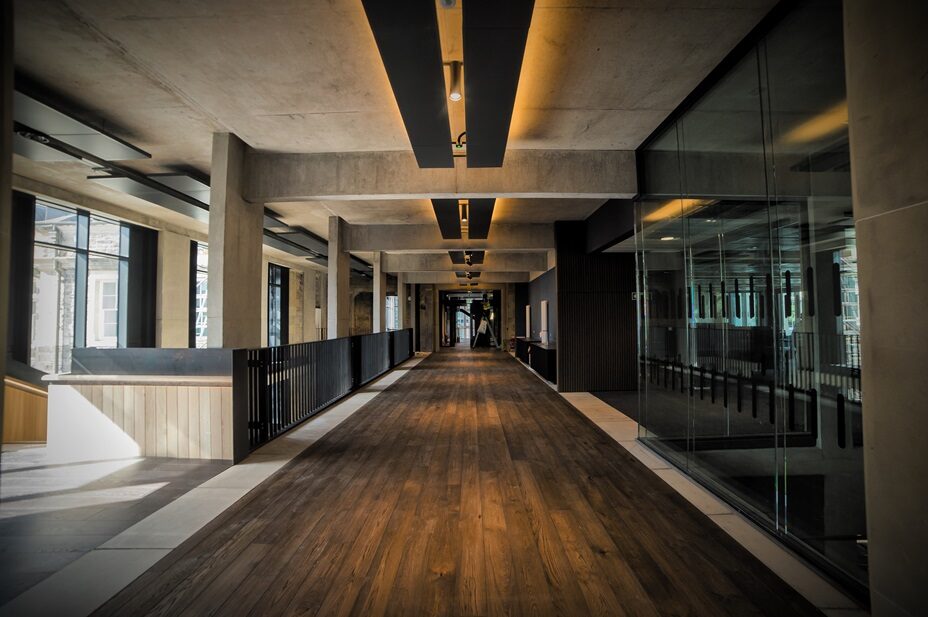
Inside the redesigned interiors
Bennett AssociatesLarge windows and spacious wards were intended to improve ventilation and provide patients with natural light.
The hospital remained at the heart of Edinburgh life until 2003, when services were transferred to the new Royal Infirmary at Little France.
The University of Edinburgh purchased the category A-listed building in 2015, with restoration work beginning two years later.
Following an extensive seven-year redevelopment, Edinburgh Futures Institute opened to the public in June 2024.
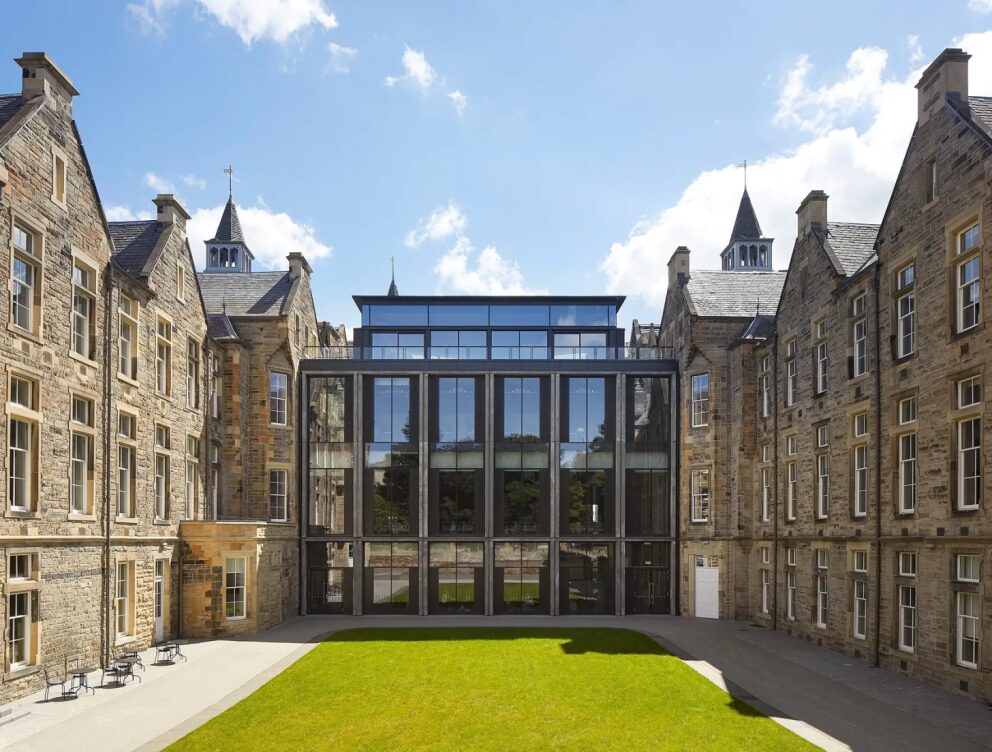
A new look for an old building
Bennett AssociatesThe transformation has seen new buildings and pavilions introduced alongside the original hospital wards and distinctive 150-metre corridors.
Six historic Nightingale wards have been restored, while five floors of the building accommodate teaching facilities, collaborative workspaces, digital laboratories and exhibition areas.
The architects have carefully integrated modern features into the historic building, incorporating new staircases, structural reinforcements and emergency escape routes within its distinctive corner turrets.
The original entrance beneath the clock tower has reopened, overlooking a new public square. Beneath the square is an auditorium capable of accommodating 450 people.
New pedestrian routes and landscaped gardens connect Lauriston Place with Middle Meadow Walk and the surrounding Quartermile development.
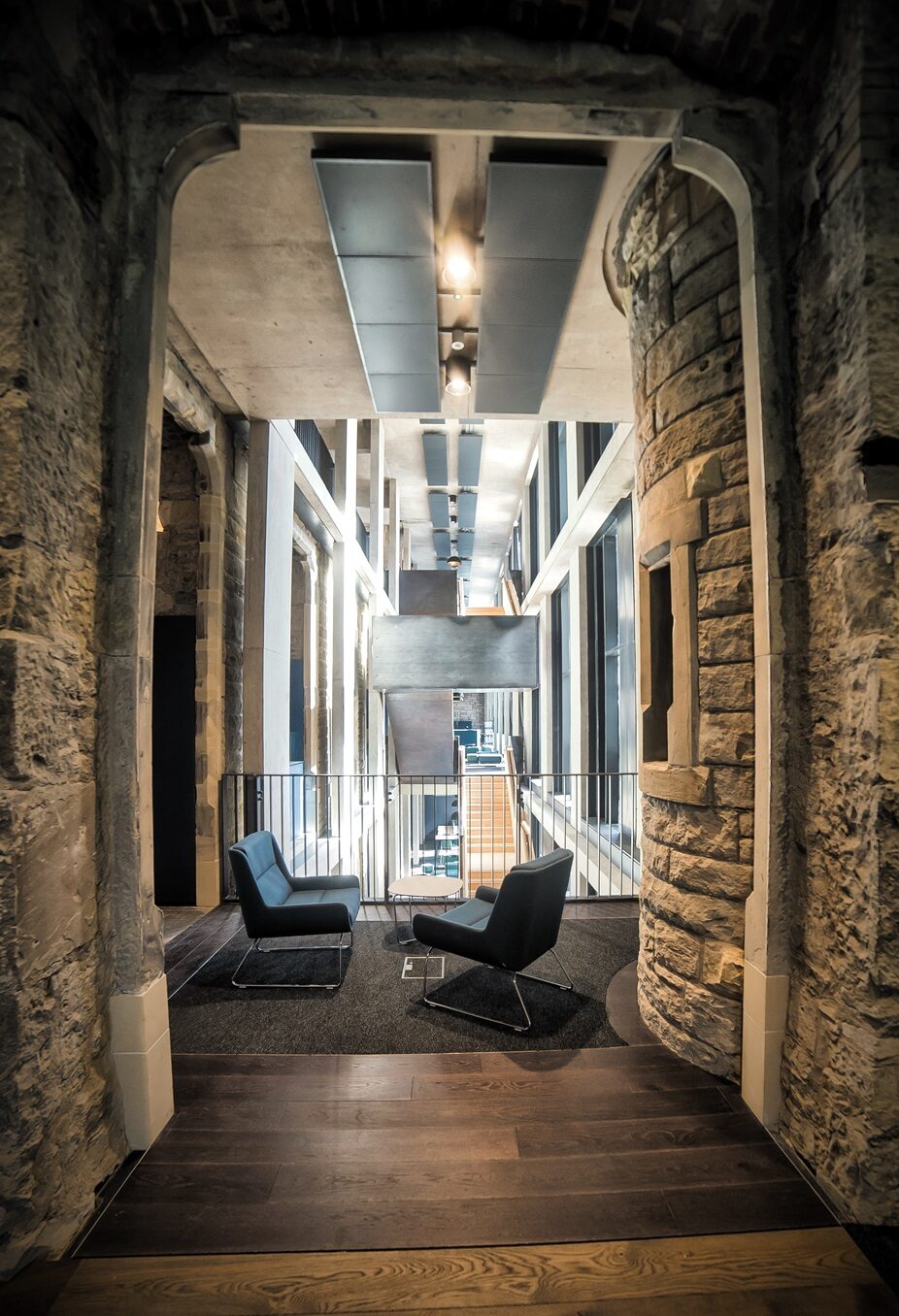
Old meets new
Bennett AssociatesThe former casualty department has been transformed into Canopy Kitchen & Courtyard, a café open to the public.
Elsewhere, reminders of the building’s years as a hospital have been preserved, including historic boards recording the names of individuals and organisations that contributed towards its funding.
A sculpture entitled The Spirit Case incorporates materials salvaged during the restoration, including roof slates, sandstone and timber from the original building.
Edinburgh Futures Institute has also become the permanent home of the Edinburgh International Book Festival.
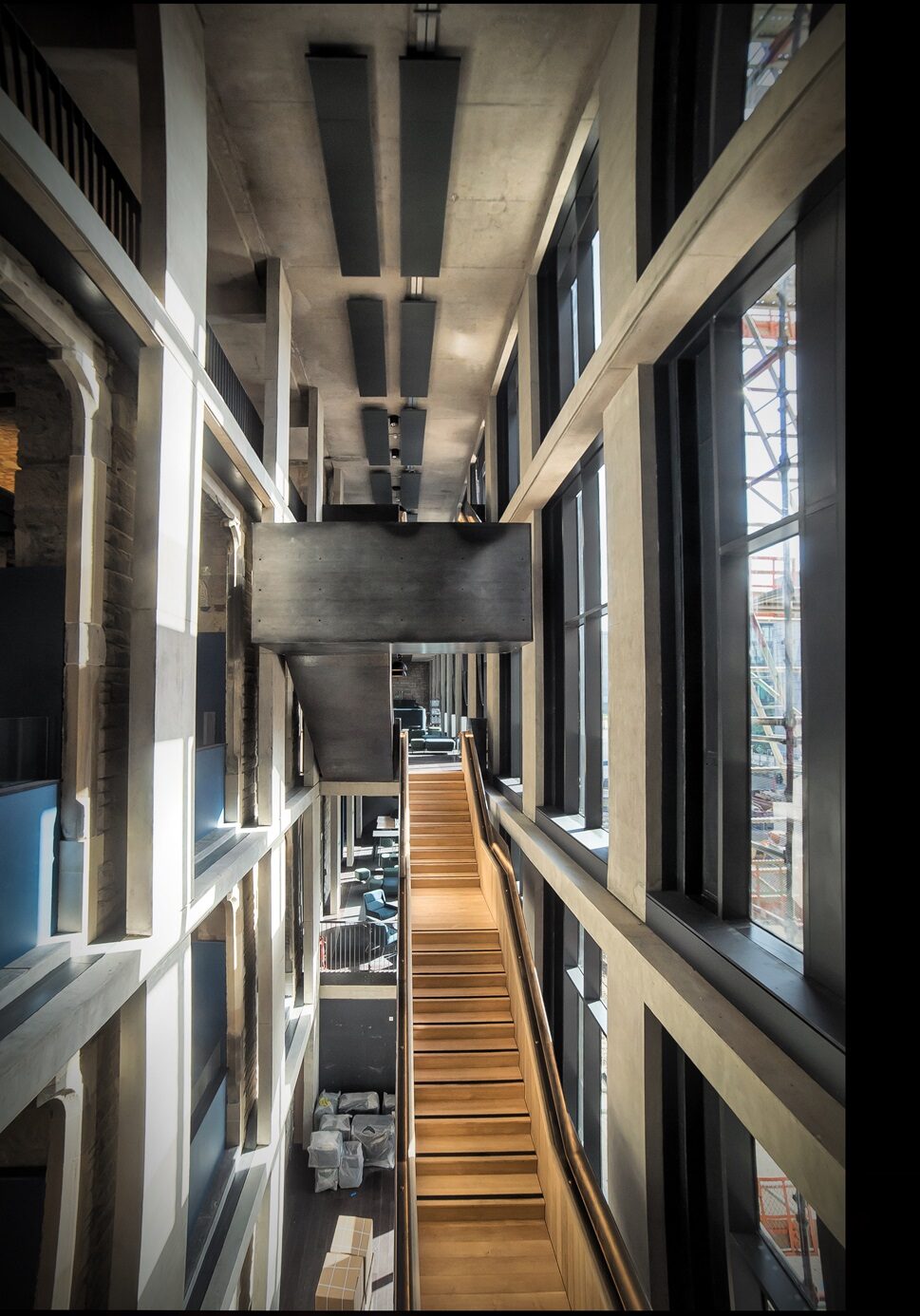
A dramatic transformation
Bennett AssociatesThe Edinburgh project was selected Scotland's Best Building ahead of two other finalists – Paisley Central Library, designed by Collective Architecture, and the restored Tarlair Outdoor Pool Pavilion in Macduff, designed by Studio Octopi.
The judging panel praised the integration of historic and contemporary architecture at Edinburgh Futures Institute, alongside the environmental considerations and social ambitions that informed the redevelopment.
RIAS president Libby Heathcote said: “Selecting this year’s Doolan Award winner was a real challenge, given the three shortlisted projects are testament to the quality, rich diversity and sustainability of building design in Scotland. Each displayed architectural integrity, functionality and exceptional execution, while tapping into important current conversations around community, collaboration, retrofit, and reuse across three very different contexts.
“However, when it came to the decision it was unanimous. The Edinburgh Futures Institute stood out for its civic generosity, scale and ambition. Balancing loyalty to David Bryce’s diagram with creativity in introducing bold new interventions is a remarkable achievement, blending historic Scottish Baronial architecture with modern innovation.
“The result is a modern, welcoming, clever, and stimulating place that people want to work in and return to. Congratulations to Bennetts Associates on a tremendous achievement.”
The annual award, named in memory of Scottish architect and developer Andrew Doolan, is the highest accolade in the RIAS awards programme.
The restoration of the former hospital has already received international recognition, winning a special prize for its interiors at the 2024 Prix Versailles architecture awards.
Members of the public can explore the building on a self-guided tour, discovering the history of the former hospital alongside its new facilities.
Above the entrance remains an inscription in Latin that has taken on renewed significance following the transformation of one of Edinburgh’s most familiar landmarks: Patet Omnibus – Open to All.