Twenty years after The Fratellis rocketed out of the Glasgow music scene with Costello Music, Baz Fratelli can look back and appreciate quite how extraordinary it all was.
The band’s debut album arrived in 2006 and produced Henrietta, Whistle for the Choir and Chelsea Dagger – songs which propelled the trio from Glasgow clubs to arenas, festivals and tours around the world.
This year Costello Music is being recognised at the GUITARGUITAR Scottish Music Awards, where The Fratellis will receive the Raymond Weil Classic Album Award for the record’s enduring impact.
The awards take place on 7 November and raise funds for music therapy charity Nordoff and Robbins.
It comes as The Fratellis prepare for a rescheduled 20th anniversary tour in early 2027, including two nights at Glasgow’s O2 Academy on 19 and 20 February.
For bassist Baz, the anniversary has offered the band an opportunity to enjoy a period of their lives which, first time around, seemed to pass almost too quickly to take in.
From recording Costello Music in Los Angeles to playing the Barrowlands, sharing stages with The Police and The Who and hearing Chelsea Dagger sung at football grounds, weddings and nights out, he says the band now understand just how unusual their journey has been.
Ahead of the Scottish Music Awards, ScottishNews.com spoke to Baz about Costello Music, the band’s remarkable rise and why hearing The Fratellis’ songs out in the wild still takes him by surprise.
Are festivals still a big part of the year for The Fratellis?
Oh yeah. There are so many festivals these days and we’re lucky enough to come back together and go and play them.
This year has been great and they’ve just been getting better and better. We’ve got loads lined up for next year as well.
That’s where you do your thing these days. Festivals are a big part of it.
When you play a festival you have your own fans, but you are also trying to win over people who might just be walking past. Does that change how you approach it?
There are a couple of ways to do it. People think you do festivals to sell yourself because obviously you’re getting a chance to play in front of people who aren’t fans of the band.
Back in the day, you wanted them to see you and maybe go and buy your records. Nobody buys records anymore because people can get anything anywhere.
So you can do it that way, to sell yourself, or you can just go on and enjoy it for what it is.
I think this year we did it for us, which was really nice. We turned towards each other and played the gig for us, which was something I noticed we’d never really done before.
That seemed to translate because everybody appeared to love it at the festivals. It was nice to do it that way.
What is the dynamic in the band like now? Are you writing a lot or do you have a clear direction for new music?
Not at all. We’re just enjoying playing.
We had a wee bit of time off and now we’re back together again. We’re really just enjoying playing. That’s probably a bit of a cliché answer, but it’s the truth.
We’re enjoying each other’s musicianship, playing together and enjoying the songs.
Obviously we’re getting to celebrate the old songs and we’re getting things organised for the tour next year.
We’d like to do some new music at some point, and I’m sure we will, but at the moment we’re focused on enjoying being in the band and feeling lucky that we still get the chance to do it.
When Costello Music came out, everything seemed to happen incredibly quickly. Is the experience different now that you can be more in the moment?
Totally. We can enjoy it now for what it is.
At the time it was a juggernaut. It’s amazing because you used to think: “This is just normal.”
Playing with The Who is normal. Playing with The Police is normal. This must be what happens next.
Then you look back and think: that is not normal. What happened, and the way it climbed like that, wasn’t normal.
Now we get to enjoy it and see it for what it is, which is an amazing thing. We’re very lucky. A lot of bands don’t get the opportunities we’ve had.
We’re aware of that.
We did some great shows this summer. We played on a bill with Cast and Richard Ashcroft. That’s cool, whatever way you look at it.
We did our job and then I rounded the night off watching Ashcroft do his thing. It’s not a bad job to have.
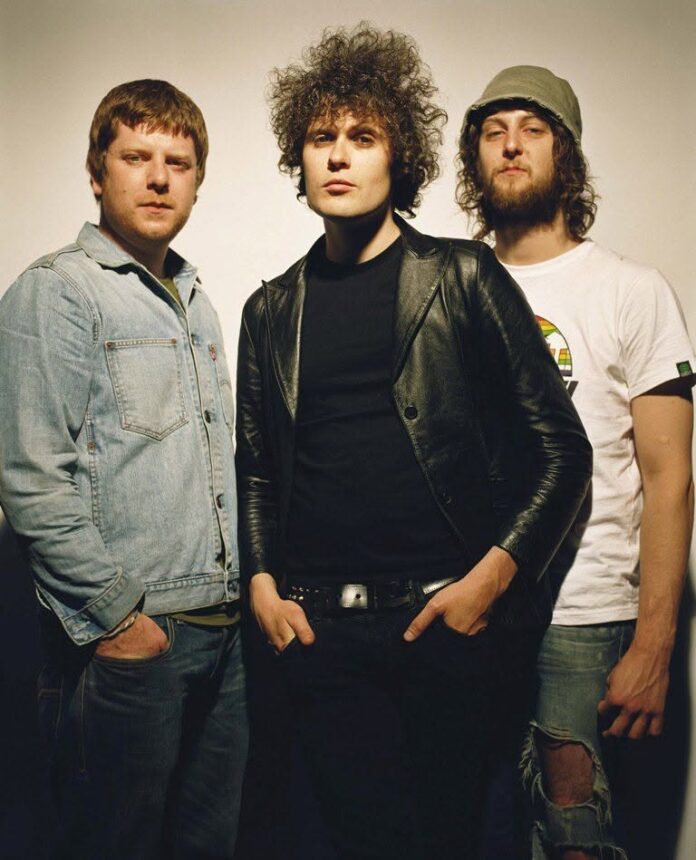
Costello Music era
What were the markers, when you first realised something big was happening with The Fratellis?
The markers are a good way to look at it. Your guitars get better.
That’s the comedy answer, but you could see it from the venues.
You go from the clubs to everything else and you can see that trajectory going up.
The Barrowlands was a big milestone. The SECC back in the day as well.
I can’t quite remember all the specific things, but you were very aware of it at the time. You start thinking: “This is normal. This must just be what happens.”
But it’s not normal, the way that happened.
You’re being recognised at the Scottish Music Awards for Costello Music. What do you remember about making that record?
Being lucky enough to be in LA for six weeks was nice.
We had the songs. We had the whole thing ready to roll by the time we got there.
We’d obviously met Tony Hoffer before, so we spent a few days in pre-production and kicked about some of the ideas we had for it.
I remember feeling that everything was tight and ready to go, and then seeing what somebody like that does – the magic dust they put on it, the equipment they’re using and those processes.
We were making a record. We were in LA making our record. Three guys from Scotland. Again, that’s an incredible thing to happen.
We could see how good the songs were going to be. It was very exciting to see: this is going to be our album. This is going to be our baby.
Luckily it has stood the test of time. Twenty years later we’re getting to celebrate it.
Did you know while you were recording it that it sounded special?
I remember it sounding that good when we did it.
It’s not like we got it back afterwards and suddenly went: “Oh, that’s amazing.” It sounded that good at the time in the studio.
We would do playbacks, usually at the end of the week, and all sit back and listen to what we’d done and be proud of ourselves.
It sounded that good then.
We’ve done other albums where it didn’t necessarily happen that way, but this one particularly was special because it sounded that good in the moment.
What was the experience of actually living in Los Angeles while you were making it?
We were all over that town, mate.
It was six weeks – I think it might even have been eight weeks. We ran it as long as we could.
When we turned up there we didn’t know how it worked. Do you do your day, nine to five, Monday to Friday? We didn’t know that sort of stuff.
It turns out Hoffer likes to work. I think we were scheduled something like 12 until eight, Monday to Friday, then the rest of the time was our own.
We enjoyed everything it had.
Me and Mince would hire cars and drive down to Santa Monica at the weekend. Again, that stuff isn’t normal when he’s from Paisley and I’m from the East End of Glasgow.
That’s not a normal thing to be doing with your time, then jumping back into work on Monday to finish recording your album.
It was a special time.
What do you remember about taking Costello Music on the road and seeing the reaction to songs like Chelsea Dagger for the first time?
The whole thing moved so fast. That whole period of touring was just non-stop. It really was.
The reactions we saw every night were something else.
We were playing with all these other great bands as well and knowing our thing was doing so well alongside everything else was just great.
Our own tours just kept getting bigger constantly, to the point where we ended up in arenas.
I think they wanted us to keep doing arena tours, but we were like: “Well, we can’t do that.” We didn’t have the ego for that. We’re not U2. We weren’t going to suddenly start playing stadiums.
We finished that whole thing with a couple of years playing the arena in Aberdeen and then the SECC. That was a nice place to end up.
Then a new album comes out and you start the whole thing again.
It was a great time and 20 years later we’re still getting to do it. That’s not lost on us.
Songs from that record have become part of Scottish life – at football matches, weddings, nights out. Does that give you a particular sense of satisfaction?
A hundred per cent.
For me, that’s what you strive for when you start a band. You want your music to be out there and be as well known as possible to as many people as possible.
For it to weave its way into situations like that is great.
It still takes me by surprise when I hear it somewhere randomly or you catch people singing it.
People send you clips of somebody doing their first dance to Whistle for the Choir. That’s a beautiful, amazing thing.
Then you’ve got football games every other weekend and thousands of people chanting your song, and you’re lucky enough to go and see your team and your crowd are chanting the song as well.
The whole thing is just brilliant.
I wouldn’t change any of it.
We’ve managed to weave ourselves into that kind of place. Movies, everything. We’ve sort of embedded ourselves in this wee bit of culture and I’m very proud of it.
I’m a big film fan, so when your music pops up in a film, that’s something I used to dream about when I was growing up.
It’s pretty cool. I wish I had a better way to describe it, but it is very cool and we’re very appreciative of it.
You’re wearing a Police T-shirt. Have you met many of your musical heroes along the way?
Yeah, we’ve met a few of them. That’s a pretty fantastic thing as well.
These are bands I grew up worshipping and we got to share a stage with a lot of them – The Who, The Police, bands like that.
It has been a wild ride for some of it.
This T-shirt particularly I’m quite proud of because this is the tour that we supported The Police on, but I had to buy it vintage a couple of weeks ago.
I didn’t have the foresight to grab a T-shirt at the time.
Meeting people like that and sharing stages with them was an honour. They’re still my heroes.
If you were plotting a map of the places which tell the story of The Fratellis, which landmarks would be on it?
Good question.
I can’t remember which music shop it was where we put the ads up originally. I want to say it was McCormack’s Music in Glasgow, but everybody used to be around Bath Street at the time. Wherever that shop was, that would certainly be one.
Then the first studio in the East End where we used to rehearse.
Back to King Tut’s, probably the Barrowlands, the SECC.
That’s obviously very Glasgow-based.
Then LA. New York was very special for us.
Japan was somewhere I’d always wanted to visit and we were very lucky to get to go there and tour. The reaction we had there was incredible and some of the best gigs we’ve ever done were in Tokyo.
We criss-crossed America because we love touring over there. We’ve had some great spots there.
And then we’d probably bring it back here.
It would be quite a nice map. Hover around Glasgow, go worldwide and then end up back here.