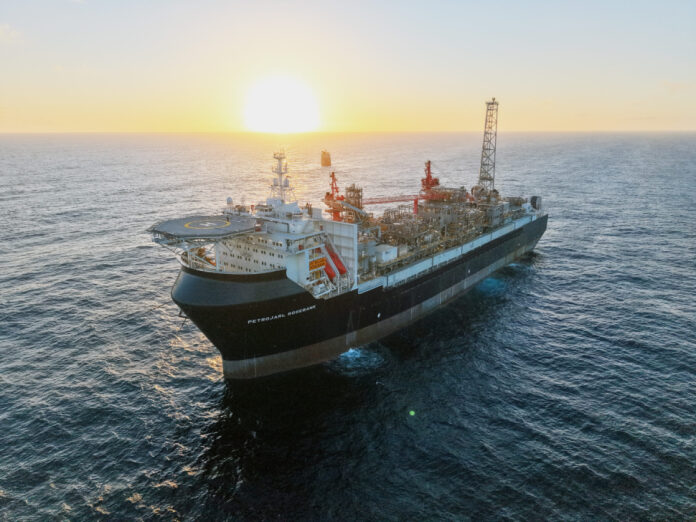
The controversial Rosebank oil field has received a major boost ahead of today’s Budget after it emerged that Treasury forecasts are already based on the assumption that the development will go ahead.
Government briefings have pushed the narrative that Rosebank could be approved without breaching the UK’s legally binding carbon budgets, strengthening the hand of Chancellor John Healey and other ministers pushing for the project to be given the green light.
The developments come as the future of the £8.7 billion project, around 80 miles north-west of Shetland, becomes one of the biggest unresolved questions facing the UK Government’s North Sea strategy.
Energy Secretary Miatta Fahnbulleh has been reported to have serious reservations about Rosebank, despite approving the smaller Jackdaw gas field last week.
The Chancellor is understood to take a different position, with supporters arguing Rosebank would protect skilled North Sea jobs, attract investment and deliver significant tax revenues.
Reports today suggest Treasury projections used for the Budget assume Rosebank will receive the required approval.
Production forecasts provided by the North Sea Transition Authority to the Office for Budget Responsibility include output from developments which have not yet received final consent, including Rosebank, on the assumption that the necessary approvals will eventually be granted.
Operator Adura has estimated Rosebank and Jackdaw could generate a combined £1.4 billion in tax revenues before the end of the current parliament, rising to £3.8 billion by the end of the next.
Rosebank could produce up to around 69,000 barrels a day, with first production targeted for 2027. Adura says the development would support an average of 525 UK-based full-time jobs during its operating life.
The field is operated by Adura, the company formed from the combination of Equinor and Shell’s UK offshore businesses, with Ithaca Energy holding a 20 per cent interest.
A further boost for supporters has come from the Government’s assessment of how Rosebank would affect the UK’s carbon targets.
Government insiders have argued that much of the oil produced would be exported, meaning emissions created when it is eventually burned overseas would be accounted for in other countries rather than against the UK’s domestic carbon budgets. The argument is likely to be strongly challenged by climate campaigners.
Rosebank’s original approval was ruled unlawful by the Court of Session in Edinburgh in January 2025 because the environmental assessment had failed to take account of downstream emissions caused when the oil and gas is burned.
Lord Ericht ordered the decision to be reconsidered, with those emissions included. Preparatory work was allowed to continue but no oil or gas can be extracted without fresh consent.
A revised environmental assessment has since been submitted and the Rosebank application remains formally under review.
Pressure on ministers has intensified ahead of the Budget. The Tony Blair Institute has called for Rosebank to be approved alongside a wider reset of UK energy policy, arguing that continued uncertainty risks accelerating the decline of the North Sea and damaging its supply chain.
The decision now threatens to become a defining test of how the Government balances its climate commitments with its promise to protect North Sea jobs and secure investment.