For Jim Reid, growing up in East Kilbride was a complicated experience.
The Jesus and Mary Chain frontman remembers the new town as an improvement on the Glasgow tenement his family left behind, with a proper bathroom, open spaces and seemingly endless stretches of greenery. Things were new, a utopian ideal. Isolated from Glasgow but in its sphere of influence.
By his teenage years, Jim and his older brother William were looking beyond its boundaries.
Punk had arrived. Bands like The Clash and Sex Pistols were invading mainstream radio stations. The brothers were receiving signals from a world that seemed a long way from the carefully planned existence in East Kilbride.
They tried to join the music scene in Glasgow. It didn’t work. A move to London would eventually help produce one of Scotland’s most enigmatic bands.
The Jesus and Mary Chain formed in East Kilbride in the early 1980s, with much of the sound and attitude that would define their landmark debut album Psychocandy taking shape while the Reids were still living in Calderwood.
I met the Reid brothers recently, backstage at the Hydro.
William was wearing an East Kilbride tshirt.
It reminded me of this interview, recorded in 2022, where Jim Reid talks about the origins of the band. Published in full here for the first time.
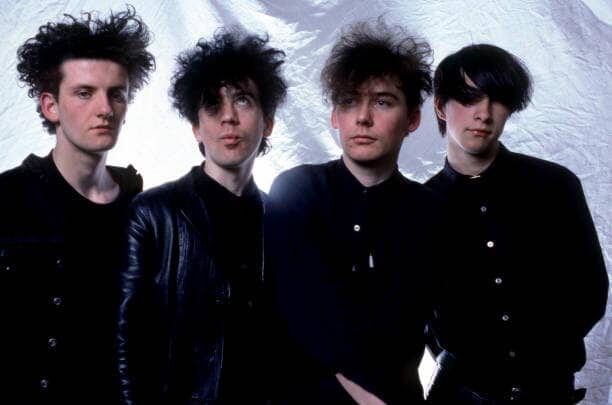
You moved to East Kilbride from Glasgow when you were very young. What do you remember about that?
We moved up in 1966. I was only four years old and William was seven.
There were a lot of people from Glasgow. East Kilbride used to pick up the overspill from Glasgow in the 50s, 60s and 70s, so there were a lot of Glaswegians around us. Almost everybody in East Kilbride at that time had moved quite recently from Glasgow.
To me, it kind of felt like an extension of Glasgow, but it just seemed more civilised – the open spaces and stuff like that.
We moved out of a tenement building with a shared toilet on the landing and nowhere to have a bath. It was kind of grim. So to move to East Kilbride definitely seemed like a step up.
Were you aware of East Kilbride being this modern, planned new town when you were growing up?
I became more aware of that later, in my teenage years, when you started to look around you a bit more and ask questions.
Around about the time punk rock happened, me and William started to wonder: do we want to be in a place like this?
It felt to us like we were on another planet from where it was all happening. You were reading in the music papers about punk clubs in London and all of that, and East Kilbride just seemed quite remote at that time.
That was the beginning of our ideas of getting away from East Kilbride. We didn’t for a few years after that, but that was when we started to become dissatisfied with what it had to offer.
Did punk give you the feeling that being in a band was something you could actually do?
Yeah, but we were getting those signals from far off.
The idea of being based in East Kilbride and forming a band that was going to change things, that was going to take on the music scene – we just felt as if it could never happen if we were based in East Kilbride.
We had to, at the very least, be based in Glasgow. We tried that and it wasn’t happening, so it ended up being London.
Everybody who arrives in London with a band brings something from where they came from. What do you think you brought from East Kilbride?
I think that sense of being outside of the music business, outside of everything.
We kept that when we moved to London. We still seemed like outsiders and that kind of stuck with us right up until now.
We never really felt that we fit in anywhere.
In a way, I used to hate that about us, but looking back on it, that’s a very important ingredient in the chemistry of the band.
Had we moved to London and been embraced with open arms, I think we would have been a completely different band.
Looking back now, do you think East Kilbride was a good place to grow up?
My mum and dad loved it there and we did as well. I hated it when I was in my teens, but looking back on it, it was a pretty good place to grow up.
I’m not saying it was ideal. We got out of there, so clearly not.
But there are much, much worse situations that we could have been in. If we had stayed in those tenement buildings in Glasgow, that would have been a much worse situation, I think.
How much of The Jesus and Mary Chain’s sound was already there before you went to London?
The sound of the band and the ethos of the band were all formed in East Kilbride.
We were writing Psychocandy when we lived in Calderwood and we tried to get gigs in Glasgow but couldn’t.
We ended up getting our first gig in London, but we were still based in East Kilbride.
At the very beginning of the band, when we went to play those initial London shows, we were based in East Kilbride. We’d go down there for the weekend or something like that, play a few shows, upset a few people and then come back on the bus overnight with no money to buy sandwiches and stuff.
That must have been a strange contrast – people beginning to take notice of you in London and then coming straight back home.
It was weird because the first few gigs nobody gave a f***, but it soon picked up.
We became kind of the toast of the town quite quickly, so it was a bit weird.
You were down there and everybody was making a fuss over you and then you’re sitting on a bus heading back to East Kilbride and you can’t afford to buy a sandwich.
I remember one time the woman on the bus felt sorry for us and gave us free sandwiches.
Where were you rehearsing in East Kilbride?
There were a couple of places, community centres and things like that, where you could get a hall for the afternoon.
We didn’t have any cars or anything. We couldn’t afford anything.
We literally used those old shopping trolleys that pensioners used. We’d stick amps on those things and have to wheel all of our gear about three-quarters of a mile down the road to the community centre.
We’d set up there and make a racket and then wheel it all back to our houses.
Is there an early Jesus and Mary Chain song that you think of as particularly Scottish?
I don’t really think of music like that. I think music is timeless and not of any actual place.
I know a lot of people disagree and a lot of people think their music is essentially about where they’re from and stuff like that. I never really bought into that.
We were sitting listening to the 13th Floor Elevators from Texas and the Velvet Underground from New York, and where those bands were based just seemed utterly irrelevant to us.
We felt the same.
We were just making this music that we hoped could be accepted by anyone, anywhere.
To wear a kilt and start going on about Scottishness would have been, A, phoney and, B, just limiting.
That was nothing that we were interested in.
How did you discover music when you were growing up? Was it radio, record shops, gigs?
Punk was the big awakening.
We’d been into music before that. We used to sit and listen to Radio Luxembourg in the early 70s, listening to glam rock music.
I remember lying under the covers with a little transistor radio and listening to Roxy Music and Bowie on the radio, and it would be terrible reception.
Then punk hit and we really got into the music papers. Through John Peel and through the music papers we felt closer to what was actually going on, to the point where the distance didn’t seem to matter that much anymore.
The kind of things you would read in interviews with The Clash and the Pistols – the idea was that anybody can do this. If you really want to do it, you can do it.
We loved that idea.
When we used to listen to music earlier, the guys in bands were exotic creatures that had nothing to do with us. We could never dream of being a rock star. It just seemed unachievable.
Then when punk came along, the idea seemed real.
It was still hard because we thought: okay, get a band together, but do what with it? Look where we are.
At least the idea of forming a band and actually getting out there seemed like something we could get our heads around.
But we were lazy and it took five years for us to get around to doing it.
How much of Psychocandy existed before you went in to record the album?
Jim Reid: There were a handful of songs that ended up on Psychocandy that we were already doing, rehearsing and playing at whatever shows we could get.
I’d say about half of it was there, and then the other half came about in ’84 and ’85 before we actually went into the studio to record it.
You’ve played the Barrowland in Glasgow a number of times. Is that still somewhere you particularly look forward to playing?
The Barrowlands crowd, they’re always mental, so why wouldn’t we like that?
You go to some places and there’ll be a bunch of people who are into the band, but it’s much more polite and people just clap their hands politely in between the songs.
At the Barrowland they’re climbing over each other.
We did the Darklands album there and there was a mosh pit, for Christ’s sake. For Darklands!
Is that important – still being able to look out and see a bit of anarchy in the audience?
Absolutely.
When you’re on stage, what you feed off is enthusiasm. It bounces back between the band and the audience.
Sometimes when you’re out there and people aren’t moving, you kind of think: are they enjoying this? What’s going on?
When you look back at East Kilbride itself now, what do you remember most fondly about it?
Coming out of Glasgow tenements, we had a decent house, a toilet and a bath in the house. It was like: “Whoa, f***** great.”
It seemed quite luxurious to us.
As I said, when you get to a certain age you start to look at your surroundings a bit more closely and notice that basically all the houses look like all the other houses.
The uniformity of it, and the kind of shoebox aspect to the council housing, just seemed like: you could have tried a bit harder, this could have been a bit better.
But there were a lot of wide-open green spaces and that’s what I actually loved about East Kilbride.
We had a family dog and I used to just pound the streets with my pals. Me and my pals and Patch, he was called.
I used to walk endlessly all over East Kilbride and there were loads and loads of green bits and trees.
That’s a great thing, I think, about East Kilbride.
You were really young when the band started making those trips to London. Where did that confidence come from?
The confidence came from our music.
We felt pretty good about what we were hearing.
We’d played a couple of shows and we thought: “F***, this is pretty good. We’re onto something here.”
That gave us the confidence.
We were also aware of the fact that it was now or never, and that gave us the guts to do things we wouldn’t otherwise have been able to do.
The first time we were ever down in London, we went to the NME offices and invited them to our show.
We told McGee – we’d met Alan McGee that afternoon – that we were going to do that and he was laughing at us, saying: “You guys are nuts. That’s never going to work.”
And we did it.
We went there and invited somebody to come and see us that night and they did. David Quantick came to the show and reviewed it.
Our first-ever gig got a review in NME.
We had the guts to do these things, but it was a feeling of: if we don’t, nobody else will.
And if we don’t do it now, the moment might pass.
We just didn’t want that.
When you look back at that period, are you glad you did it entirely on your own terms rather than trying to compromise?
Absolutely.
Compromise just wasn’t even in our vocabulary back then.
The idea was that we wanted to change the music scene.
The only way we could think to do that was to get into the music scene and, at least from our point of view, make it a little bit better.
We hated the music we heard on the radio at that time and we thought: “Well, let’s fix it. Let’s get our music on the radio.”
It’s kind of naive and it was never really going to happen.
But we thought we could change everything.