A new play will tell the story of 29 young women killed in one of Scotland’s greatest peacetime tragedies.
The Whitserface production of The Templeton Girls has been written by Maggie MacRitchie and Caroline Lewis.
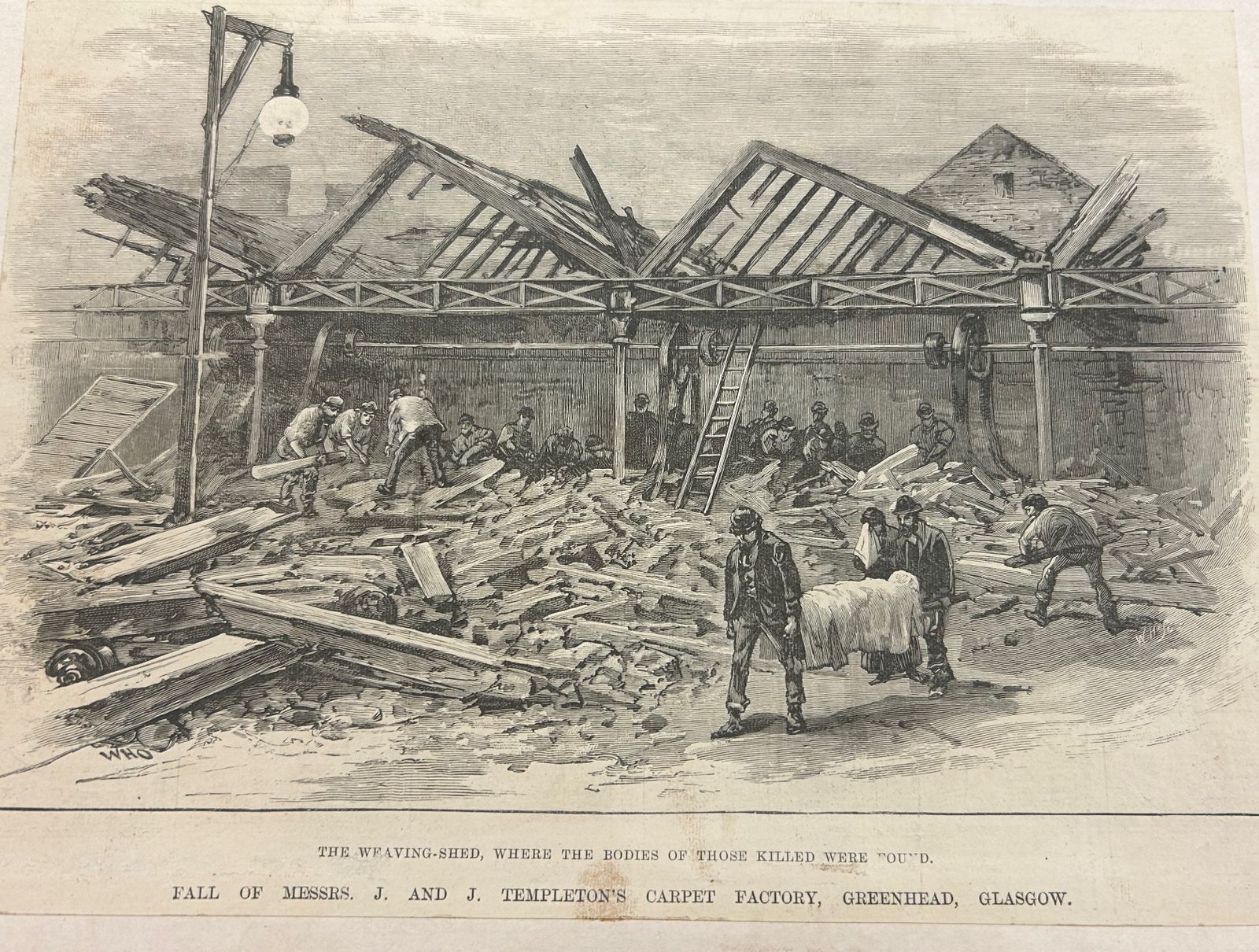
It depicts the Templeton disaster when part of the iconic Templeton building in Glasgow’s East End collapsed during a storm, on November 1, 1889.
As well as taking 29 young lives, 32 other women were injured.
Co-writer MacRitchie said: “Maureen Carr, who is the director of Whitserface, had always wanted to do a play about the tragedy.
“It was a huge press story at the time but now most Glaswegians probably don’t know about it.”
Work on a four-storey extension to the iconic Templeton building in Glasgow’s East End had been underway with only the roof to be added when construction workers knocked off for the day, 137 years ago.
During a storm, high winds caused part of the extension to collapse onto sheds on Glasgow Green at 5.15pm.
The women inside had been working at their looms because they were not allowed to finish their shifts until 6pm.
It wasn’t until the early hours of the following morning before all the women’s bodies were recovered. One woman had to be identified by her stockings.
Following an inquiry – in an era where safety regulations would have been virtually non-existent – strong winds were blamed for the accident.
MacRitchie said: “The building was being constructed at the time and it was a very ambitious project.
“Sir William Arrol, who built the Forth Railway Bridge, was at the inquiry as an expert witness.
“He identified that there may have been problems with the metal structure, but it all seemed to get hushed up.
“They blamed the wind.”
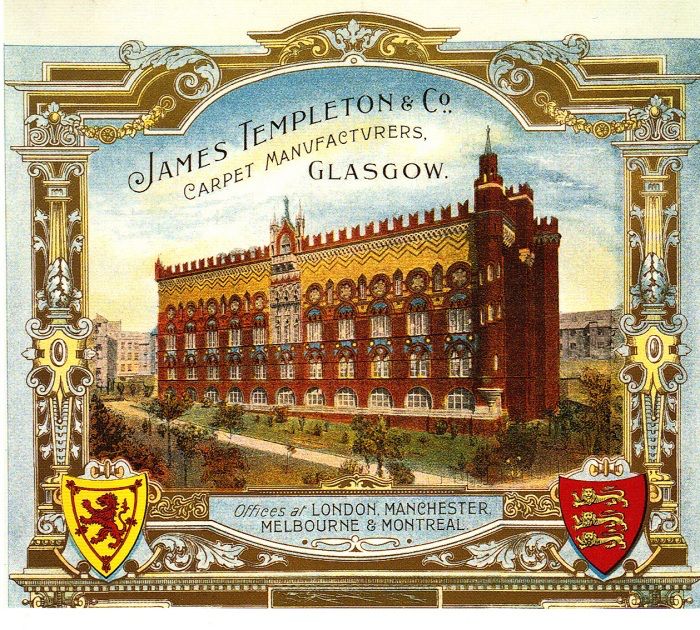
Templeton’s carpet factory was modelled on Venice’s famous Doge’s Palace. Started by James Templeton and Irish weaver William Quiglay, Templeton’s carpets were world famous.
The beautiful façade of the building was designed to match the elegance and grandeur of the upmarket carpets it produced for the Royal Family, Abraham Lincoln and his wife Mary Todd, and ocean liners.
After the tragedy, Templeton paid for all the funerals and a relief fund, started by Lord Provost James King, raised £9000 for the families of the women weavers who died.
The youngest person killed in the Templeton disaster was Annie Wilson, 14, while, at just 25, Elizabeth Sinclair was the oldest.
MacRitchie said: “Templeton Carpet Factory was famous. It was a huge disaster at the time and Queen Victoria sent a message of condolences.
“It was featured in the newspapers, but the story we are telling is the story of the women who died.
“The thrust of our play is the fact that these 29 women were killed. We wanted to bring them back to life and show the hard lives they lived.
“It is a moving play and sad but there are humorous scenes of them interacting at work and having a laugh.
“We have a lot of information based on research, but it is not a history lesson so that it can be entertaining as well.
“We are telling the stories of the people who worked there, using their real names, including one of the young women who had been off ill. She came back to work that day and was killed.
“We haven’t tried to find any descendants, but we hope they will be happy with what we have done.
“We have based the play on extensive research, but we had to take some dramatic liberties to tell the story.”
A sold-out reading of The Templeton Girls is being held at the Calton Heritage & Learning Centre on October 29, followed by music and an excerpt from the play at the Citizen’s Studio theatre’s ‘I’ll Scratch Yours’ night on Friday, October 30.
A band and the Whitserface choir, led by Sandra McNeeley, will provide musical accompaniment with songs by singer-songwriter Linnie Carson.
Further dates are to be announced.
MacRitchie said: “As we develop the play, we plan to take it to other venues.
“It is a play with wonderfil music.
“The songs Lynnie Carson has written are just lovely. One of the girls who died, Mary Ann Stewart, was from Antrim and Lynnie has written a beautiful song about her.
“There will not be a dry eye in the house though there is comedy too. It’s not all doom and gloom.
“We wanted to bring these girls back to life as it were and honour their memory.”
The Templeton building is now home to a business and residential centre and the West Brewery.