Police Scotland says it will need some 1,700 officers on the streets of Glasgow on and around 5 November. Not for a royal visit or a summit, but for an ordinary Thursday night on which Celtic’s European tie against the Turkish giants Beşiktaş and a planned demonstration in the city centre happen to collide with Bonfire Night.
Think about that. One of the three is a football match watched by sixty thousand people. Another is a march through the heart of Scotland’s largest city. And the event that tips the operation into the extraordinary is a 400-year-old commemoration that, for one night a year, hands explosives to anyone over 18 with a tenner and a lighter — and, all too often, to plenty under 18 without either.
It is time to ask whether the private firework has had its day.
Before I make my case, let me declare an interest, because a columnist who hides his prejudices is not worth reading.
When I was nine years old, a lad I did not know, and have spent the decades since not wishing to know, dropped a lit banger into my wellington boot. I remember the hiss, the bang, the smell of scorched rubber and the humiliation of hopping across a muddy field while grown-ups laughed until they realised I was crying. The burn healed. The view it gave me of private fireworks did not.
So when I argue that Bonfire Night should belong to public, organised displays alone, weigh that opinion against the boy with the smoking boot. This Walrus is not neutral. But he has tried to be fair, and the argument is closer than his left foot would like.
A plot against a Scottish king
The target of Guy Fawkes and his fellow conspirators in November 1605 was James VI of Scotland, two years into his reign as James I of England. Had the barrels of gunpowder beneath the House of Lords gone up, a Scottish monarch would have died with them.
Parliament responded with the Observance of 5th November Act 1606, making church services of thanks for the King’s survival compulsory. Sermons soon gave way to bells, bonfires and effigies, and the day became a rowdy, often sectarian festival. The Act was repealed in 1859, but by then the bonfires no longer needed permission.
Nor did Fawkes invent the idea of lighting fires as the nights close in. Communities across these islands marked the turn of the year with fire long before 1605. The fifth of November simply gave an ancient instinct a Protestant story and a fixed date.
The tradition is real and deep. But the tradition is the fire and the gathering. The box of rockets from a pop-up shop is a much more recent addition.
The case for public displays only
Safety. Every year A&E departments treat burns, eye injuries and hand wounds, many among children and young people. An organised display is fired by trained operators behind a cordon, with insurance and fire cover. A back garden has a dad, a lighter and hope.
Disorder. Scotland has watched fireworks turned into weapons, with rockets fired at police, buses and fire crews. Holyrood responded with the Fireworks and Pyrotechnic Articles (Scotland) Act 2022, and this year Edinburgh has fourteen Firework Control Zones in force from 30 October to 8 November, inside which setting off fireworks is an offence even in your own garden. Each zone is an admission that private use has gone wrong somewhere.
Animals and neighbours. Dogs shaking under beds, horses bolting through fences, veterans for whom sudden explosions in the dark are anything but entertainment. A fortnight of random bangs is a cost borne by people who never chose it.
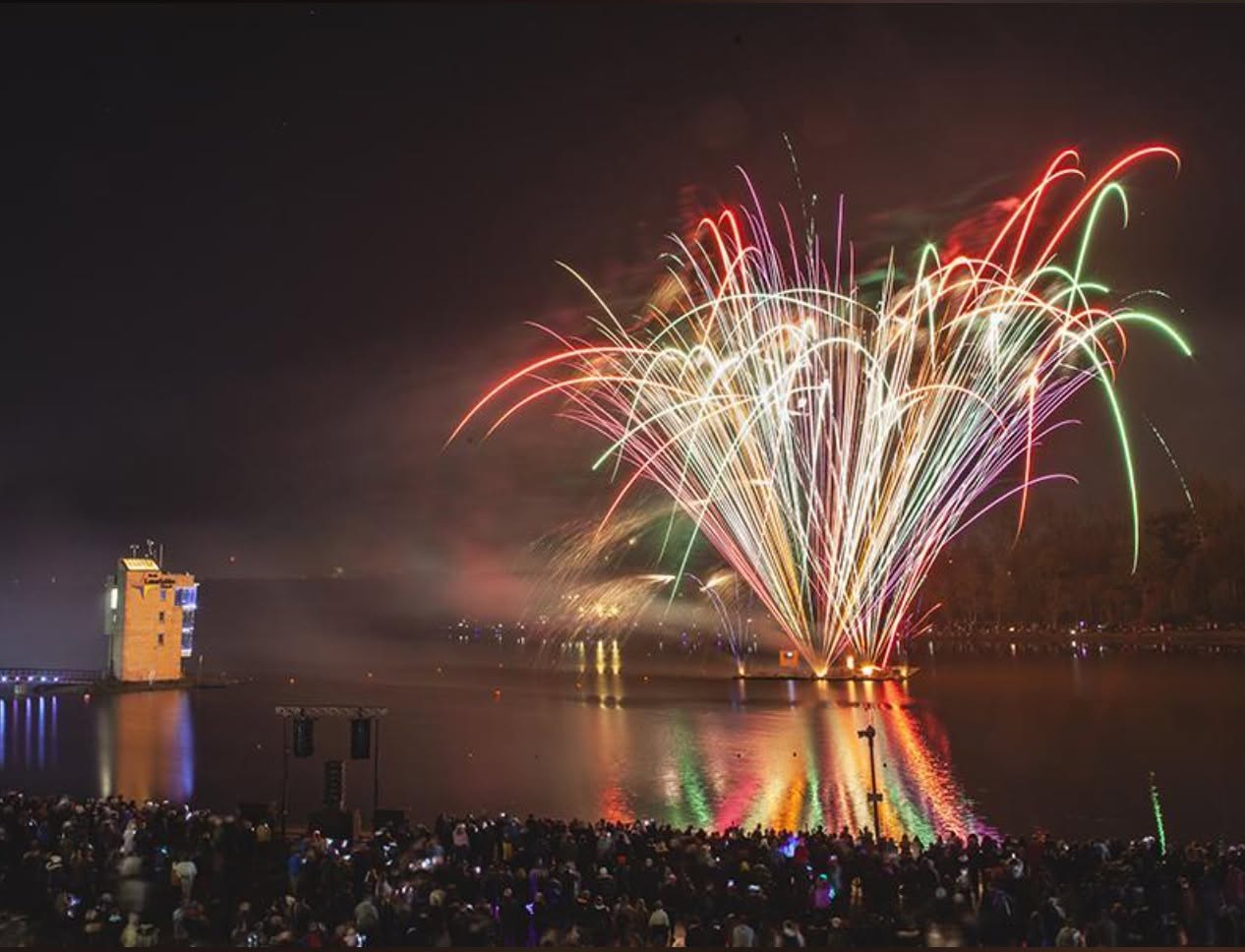
A better show. The municipal display is usually far more spectacular than anything a household can afford, with less risk, litter and smoke.
Enforcement. “Public displays only” is far easier to police than today’s patchwork of permitted hours, control zones and proxy-purchase offences.
The case against
Liberty. Most families who light a few fireworks in the garden do so carefully and legally. Punishing them for the conduct of a thuggish minority — the minority that included the lad who targeted my boot — is collective punishment, and the Scottish instinct against nanny-state overreach is a healthy one.
Tradition. For many households the garden display is the tradition: grandparents, sparklers, a pot of soup. It is intimate in a way a crowd behind a barrier never will be.
Access. Public displays are dwindling as council budgets shrink and insurance costs climb. A ban only works if every community has a display within reach, rural towns included. Otherwise we have not moved fireworks into the public realm; we have abolished them for half the country.
Other celebrations. Diwali, Hogmanay and wedding celebrations all could involve fireworks. Any rule must treat them fairly.
The black market. Prohibition redirects demand rather than removing it. The worst offenders already buy illegally or by proxy; a ban might hit law-abiding families hardest.
The Walrus’s verdict
Weighing it all - and yes, wearing the scar - I come down on the side of public displays. The law already accepts the principle: we restrict hours, ages, places and buyers, and Edinburgh’s control zones have created a public-display-only regime in some neighbourhoods. Do we keep expanding that patchwork street by street, or say plainly that explosives belong in trained hands?
But it cannot be a ban alone. If government takes fireworks out of the garden, it owes every community a properly funded display, free or cheap to attend, with provision for Diwali and Hogmanay. Make the public show so good that the garden rocket feels pointless, and the argument wins itself.
The UK banned bangers outright in 1997, years too late for one nine-year-old’s wellington. We should not wait another generation to finish the job.
Remember, remember the fifth of November. Just let someone qualified light the touchpaper.
- The Walrus