A dispute over where Scotland’s next ferries should be built has raised fresh questions about the future of the country’s last commercial shipyard on the Clyde.
The Scottish Government wants Ferguson Marine in Port Glasgow to construct two new vessels for island communities. The publicly owned organisation responsible for buying Scotland’s ferries has now made clear it opposes the plan.
Caledonian Maritime Assets Limited (CMAL) has warned ministers that awarding the contracts directly to Ferguson Marine could result in further delays and higher costs.
Its chief executive, Kevin Hobbs, has described the proposed arrangement as “problematic at best and folly at worst”.
The disagreement leaves the future of two vessels intended for the Sound of Harris and Sound of Barra uncertain, while placing renewed attention on the long-term prospects of Ferguson Marine and its workforce.
In March, the Scottish Government announced plans to award four new shipbuilding contracts to the Port Glasgow yard. Alongside the two CalMac ferries, Ferguson Marine would build replacements for the marine research vessel Scotia and the fisheries protection vessel Minna.
The announcement was intended to provide a pipeline of work that would support jobs in Inverclyde and allow the shipyard to invest in its future.
Eight months later, the contracts have still not been formally awarded.
At Holyrood’s transport committee on Wednesday, 18 November, CMAL’s leadership openly challenged the proposal to give the ferry contracts to Ferguson Marine without competitive tendering.
Hobbs said the organisation wanted the shipyard to survive but had serious concerns about its ability to deliver the new vessels on time and at a competitive price.
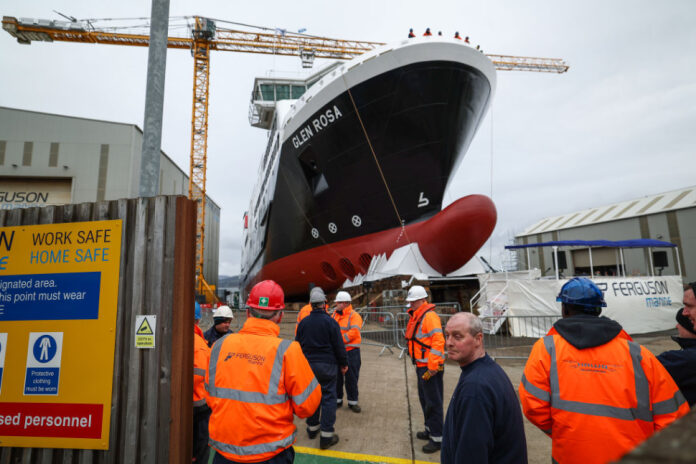
He pointed to the experience of MV Glen Sannox and MV Glen Rosa, the two ferries commissioned from Ferguson Marine in 2015.
Originally expected to cost £97 million between them, the vessels have been affected by years of delays and technical difficulties, with their combined costs rising to more than £400 million.
Glen Sannox was finally delivered in November 2024, more than six years late.
Its sister ship Glen Rosa began builder’s sea trials earlier this month but is not now expected to be handed over until February 2027.
CMAL argues that repeating those problems with the next generation of smaller ferries would have serious consequences for island communities already dependent on ageing vessels.
The organisation favours an open procurement process in which shipyards in Scotland and overseas could compete for the work.
Ministers stand by Ferguson Marine
Scottish Government ministers have rejected the suggestion that the ferry contracts should go elsewhere.
Cabinet Secretary for Economy, Tourism and Transport Stephen Flynn told the same parliamentary committee that the government remained committed to directly awarding the vessels to Ferguson Marine.
He expressed confidence in the yard’s ability to deliver and argued that maintaining commercial shipbuilding on the Clyde was an important part of the decision.
Ferguson Marine was brought into public ownership in 2019 after its former operator entered administration.
It remains a significant employer in Inverclyde and a source of specialist engineering and shipbuilding skills.
The company’s chief executive, Graeme Thomson, has challenged CMAL’s assessment of its capabilities.
He said Ferguson Marine had introduced new leadership, stronger governance and improved project management following the difficulties experienced with Glen Sannox and Glen Rosa.
The company maintains that it can deliver future vessels to the standards required and has highlighted its long history of building ferries for Scotland.
GMB Scotland has also criticised CMAL’s position, arguing that the workforce should not bear responsibility for all the failures associated with the previous contracts.
The union says the shipyard has already demonstrated its ability to construct smaller ferries and should be supported through a programme of new orders.
Why are Scotland’s ferries being built abroad?
The disagreement follows a series of major contracts awarded to overseas shipyards as Scotland attempts to replace its ageing ferry fleet.
CMAL has commissioned four large vessels from the Cemre shipyard in Turkey, including MV Isle of Islay, which entered service earlier this year.
Seven smaller electric ferries are being built by Remontowa Shipbuilding in Poland after the company secured a £147.5 million contract in 2025.
Another two freight vessels for the Northern Isles network were ordered from Guangzhou Shipyard International in China in March 2026.
Together, those contracts account for 13 vessels, although some have already entered service and others remain under construction.
The decision to award contracts overseas has prompted questions about whether public spending on Scottish ferry services should do more to support domestic shipbuilding.
CMAL maintains that procurement must deliver vessels that are suitable for the routes they serve, provide value for taxpayers and arrive within acceptable timescales.
The Scottish Government argues that maintaining Scotland’s shipbuilding capacity also delivers wider economic benefits.
What happens next?
The immediate priority for Ferguson Marine is completing Glen Rosa.
Once that vessel is handed over, the shipyard faces a gap in its confirmed order book.
In August, Ferguson Marine announced a voluntary redundancy programme involving up to 70 employees as it prepared for a reduction in work.
The Scottish Government subsequently backed plans to provide working capital for the construction of a small number of commercial tugboats, intended to help maintain activity while the proposed larger contracts are progressed.
The future ferry orders remain subject to due diligence, financial assessments and legal requirements surrounding public subsidy and procurement.
Transport Scotland chief executive Alison Irvine told MSPs that the due diligence process was expected to conclude by the end of March 2027.
That means there is still no confirmed date for construction to begin on the two new vessels serving the Sound of Harris and Sound of Barra.
Ministers must now decide whether to proceed with their commitment to Ferguson Marine despite CMAL’s objections, or pursue a competitive procurement that could see the contracts awarded elsewhere.
For island communities, the immediate concern is when replacement vessels will arrive.
For Port Glasgow, the outcome could help determine whether commercial shipbuilding on the Clyde has a sustainable future.